
Navigating Uncertainty: Contrarian Plays in Real Estate and Workforce Evolution
The U.S. economic landscape in mid-2025 is rife with uncertainty, as Federal Reserve projections signal slower growth, elevated inflation risks, and labor market headwinds. Yet, amid this volatility, contrarian investors can find asymmetric opportunities in overlooked real estate segments and skill-driven career pivots. Let's dissect how rising uncertainty creates value in industrial real estate, affordable housing, and AI-driven workforce transitions, supported by Federal Reserve policy trends and labor market data.
The Fed's Uncertain Crossroads: A Catalyst for Contrarian Strategies
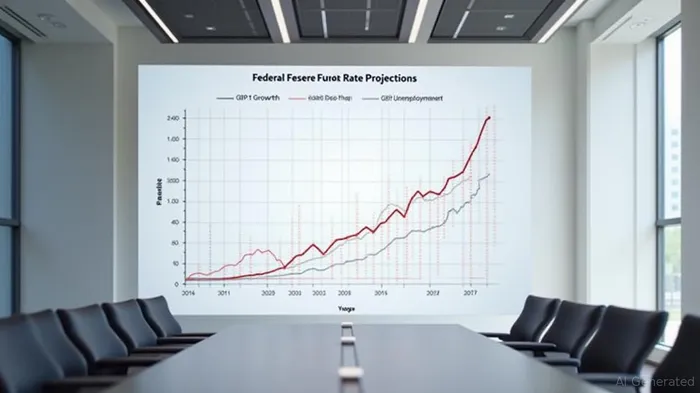
The Federal Reserve's March 2025 projections reveal a cautious outlook: GDP growth is expected to slow to 1.7% this year, unemployment will edge up to 4.4%, and inflation remains stubbornly above target at 2.7%. The central bank's federal funds rate is projected to peak at 3.9% in 2025 before gradual cuts. But risks loom large—18 of 19 Fed participants see downside risks to GDP, while inflation's pathPATH-- remains uncertain. This environment of high uncertainty and inconsistent policy signals creates a fertile ground for contrarian investors to exploit underappreciated assets and trends.
Real Estate: Industrial and Affordable Housing as Contrarian Plays
1. Industrial Real Estate: The Quiet Growth Engine
While the broader real estate market grapples with high mortgage rates and low inventory, industrial spaces—logistics hubs, e-commerce warehouses, and data centers—are thriving. The Fed's data highlights that industrial vacancy rates remain near historic lows, and rental growth outpaces other sectors. A key driver is the unstoppable rise of e-commerce, which now accounts for 22% of U.S. retail sales, up from 14% in 2020.
Why it's contrarian: Institutional investors have underweighted industrial assets due to near-term interest rate sensitivity. Yet, with global supply chains still fragile and automation demand rising, industrial real estate offers a long-term secular growth story. Look for REITs with exposure to last-mile logistics or green energy infrastructure.
2. Affordable Housing: A Necessity in a High-Rate World
The Fed's aggressive rate hikes have pushed 30-year mortgage rates to 6.7%, pricing out first-time buyers. Meanwhile, existing home inventory is at a 3.5-month supply, the lowest since 2007. This mismatch creates an opportunity in affordable housing, which serves the 35% of renters spending over 30% of income on housing.
Why it's contrarian: Affordable housing is often dismissed as low-margin or politically contentious. However, bipartisan support for housing affordability (e.g., the 2022 Inflation Reduction Act's tax credits) and rising demand for mixed-income developments could turn this sector into a policy-fueled winner. Investors might target companies like Enterprise Community Investment, which specializes in low-income housing tax credit (LIHTC) projects.
Workforce Transition: AI-Driven Roles as the New Blue Collar
The labor market's bifurcation—rising unemployment in traditional sectors versus acute shortages in tech and skilled trades—is a contrarian's goldmine. The Fed's projections show unemployment climbing to 4.4% in 2025, but this masks deeper shifts. For instance:- Construction labor shortages (30% of workers are immigrants) could worsen if restrictive policies limit immigration.- AI and automation roles are booming: U.S. Bureau of Labor Statistics projects 22% job growth in AI-related fields by 2030, compared to 4% for all occupations.
The contrarian bet: Invest in skill-agnostic platforms like Coursera (COUR) or Pluralsight (PS), which train workers for high-demand AI and tech roles. Alternatively, back companies enabling career pivots, such as App Academy, which re-skills displaced workers for coding careers. These firms benefit from both labor market shifts and government reskilling initiatives (e.g., Biden's CHIPS Act funding for tech education).
Risks and Considerations
- Fed Policy Missteps: If inflation spikes unexpectedly, the Fed might delay rate cuts, prolonging headwinds for real estate. Monitor core PCE inflation (currently at 2.8% in 2025) for signs of persistent pressure.
- Immigration Policy Impact: A crackdown on immigrant labor could exacerbate construction bottlenecks, making affordable housing projects costlier.
- Economic Downturn: If GDP growth slips below 1.5%, industrial demand might soften. Diversify holdings with dividend-paying REITs for income stability.
Investment Strategy: Go Against the Herd
- Real Estate: Allocate 15-20% of your portfolio to industrial REITs (e.g., PLD) and affordable housing funds. These assets benefit from rising e-commerce and policy tailwinds.
- Workforce Transition: Invest in education platforms (e.g., COUR) or ETFs tracking AI stocks (e.g., ARKQ). These bets capitalize on the long-term shift to tech-driven economies.
- Hedge with Bonds: Pair real estate exposure with Treasury inflation-protected securities (TIPS) to mitigate Fed policy uncertainty.
Conclusion: Uncertainty as an Ally
In an era of Fed-induced volatility and labor market transformation, contrarians can thrive by focusing on industrial real estate's growth, affordable housing's necessity, and AI-driven skill shifts. These sectors are underappreciated today but poised to gain traction as economic clarity emerges. As the saying goes: “Be fearful when others are greedy, and greedy when others are fearful.” In 2025, fear is widespread—seize the opportunity.

Stay ahead of the market.
Get curated U.S. market news, insights and key dates delivered to your inbox.






Comments
No comments yet