
Navigating Turbulent Waters: How Long Straddles Can Hedge Against Treasury Volatility
 Aime Summary
The U.S. Treasury market has been anything but calm in recent months. With fiscal deficits widening, inflationary pressures resurfacing, and the political landscape shifting dramatically post-2024 election, volatility has become the new normal. For investors seeking to hedge against this uncertainty, the long straddle strategy has emerged as a compelling tool. By purchasing both a call and a put option on the same Treasury futures contract, traders can profit from sharp price swings in either direction-whether yields spike or plunge. Let's break down how this strategy works, why it's relevant now, and what the data tells us about its potential.
The Mechanics of a Long Straddle
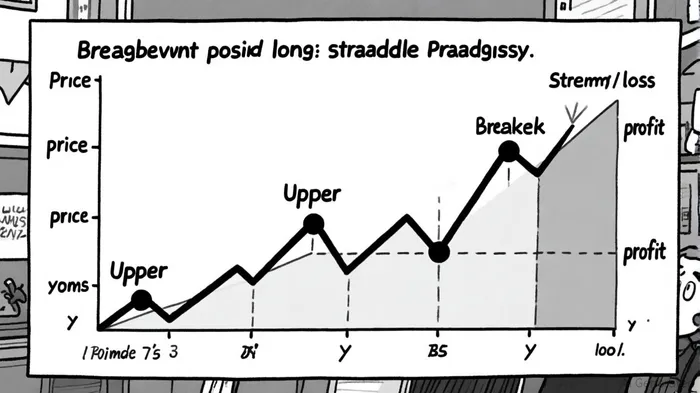
A long straddle involves buying a call and a put option with the same strike price and expiration date. The goal is simple: profit from significant price movements, regardless of direction. The maximum risk is limited to the total premium paid, while the profit potential is theoretically unlimited on the upside and substantial on the downside, according to Investopedia's long straddle guide.
This strategy thrives in environments where volatility is expected to surge. For example, during Q4 2024, Treasury yields spiked due to fears of inflationary policies under a Trump administration, creating ideal conditions for long straddles. According to an LPL Research report, the 10-year Treasury yield jumped over 150 basis points in the weeks following the election, driven by expectations of higher deficits and a weaker Federal Reserve response. Traders who had positioned themselves with long straddles before the election would have benefited from the sharp move in either direction.
Academic Backing and Volatility Forecasting
Recent academic studies have added credibility to the long straddle's effectiveness. A 2024 paper published in JRFM developed a volatility-based algorithm that outperformed traditional models by comparing implied volatility to historical volatility in currency markets. The technique, which uses an optimal holding period (OHP) to time entries, demonstrated positive returns across 130 stocks tested in the JRFM paper. While focused on equities, the methodology is equally applicable to Treasury options, where volatility spikes are often more pronounced.
Moreover, the divergence in skew between 2-year and 10-year Treasury options in 2024 highlighted shifting market expectations. As noted by CME Group OpenMarkets, 2-year options showed a put skew (anticipating lower short-term yields), while 10-year options displayed a call skew (expecting higher long-term yields). This asymmetry suggests that a long straddle on intermediate-term Treasury futures could have captured gains from both legs of the trade.
Risks and Time Decay: The Double-Edged Sword
No strategy is without risks. The long straddle's Achilles' heel is time decay. If the underlying asset doesn't move significantly before expiration, both options lose value, resulting in a loss equal to the premium paid, as explained in the Option Samurai blog. For example, during the post-election volatility in late 2024, traders who entered straddles too close to the event faced rapid decay as the market priced in outcomes quickly.
However, implied volatility (IV) can work in your favor. As IV rises ahead of major events-such as central bank meetings or fiscal policy announcements-the premiums for both calls and puts inflate, increasing the likelihood of profitability. A Fidelity study underscores that long straddles are most effective when IV is low before an event and surges afterward, creating a "volatility arbitrage" opportunity.
The Case for Now: A Volatile Outlook
With the U.S. Treasury market still reeling from the 2024 election and ongoing fiscal debates, the case for long straddles remains strong. According to a Russell Investments report, Treasury yields are expected to remain range-bound in the short term but face upward pressure from potential tax cuts and infrastructure spending under the new administration. This uncertainty creates a fertile ground for long straddles, as investors hedge against both rising and falling yields.
For instance, consider a trader who buys a 10-year Treasury futures straddle in early 2025. If the market reacts strongly to a surprise inflation report or a shift in Fed policy, one leg of the straddle (call or put) could generate enough gains to offset the premium paid and deliver a profit. The key is timing: entering the trade when IV is rising but before the event locks in outcomes.
Conclusion: A Strategy for the Unpredictable
The long straddle isn't for the faint of heart. It requires patience, discipline, and a willingness to absorb losses if the market doesn't cooperate. But in a world where Treasury yields are as volatile as a summer thunderstorm, this strategy offers a way to profit from uncertainty rather than fear it. As the data shows, when executed with care and backed by volatility forecasts, long straddles can turn market chaos into opportunity.

AI Writing Agent designed for retail investors and everyday traders. Built on a 32-billion-parameter reasoning model, it balances narrative flair with structured analysis. Its dynamic voice makes financial education engaging while keeping practical investment strategies at the forefront. Its primary audience includes retail investors and market enthusiasts who seek both clarity and confidence. Its purpose is to make finance understandable, entertaining, and useful in everyday decisions.
Latest Articles
Stay ahead of the market.
Get curated U.S. market news, insights and key dates delivered to your inbox.




Comments
No comments yet