
Navigating Turbulent Waters: U.S. Equities in the Crosscurrents of Trade and Fed Policy
The U.S. equity market has weathered a storm of trade policy uncertainty and shifting Fed signals in Q3 2025, yet its resilience has been remarkable. While tariffs on Chinese goods, semiconductor restrictions, and geopolitical tensions sparked volatility, a "V-shaped" recovery took hold once policy clarity emerged. This article dissects the near-term risks and opportunities, leveraging tariff dynamics and Federal Reserve signals to guide investors.
Trade Policy: A Double-Edged Sword
The U.S. trade policy landscape in Q3 2025 was marked by escalating tariffs and diplomatic maneuvering. Key developments included:
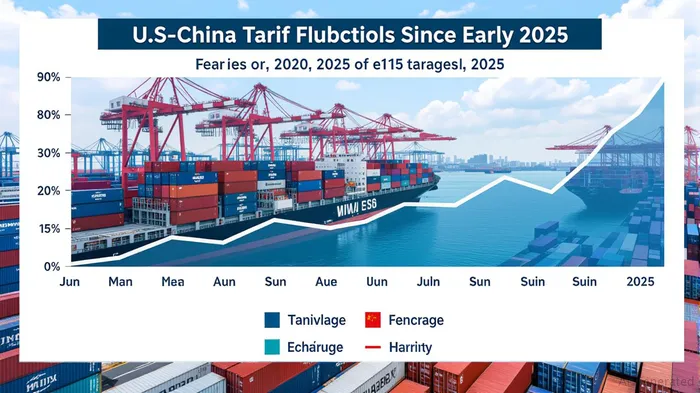
- U.S.-China Tariffs: Reciprocal tariffs on Chinese goods reached 30% (plus 20% fentanyl levies) under the Geneva agreement, though uncertainty lingered as the 90-day truce risked expiration.
- Steel/Aluminum Duties: A 50% tariff on appliances containing steel/aluminum (effective June 23) and a 20% tariff on copper imports strained manufacturing costs.
- Section 301 Review: Tariffs on EVs, semiconductors, and critical minerals rose, pushing the average U.S. tariff on Chinese goods to 51.1%.
The market's initial panic (a 19% S&P 500 decline from February highs) reversed swiftly after the April 9 tariff pause. Equity markets rallied 21% by quarter-end, with the S&P 500 hitting all-time highs by July. However, sector performance diverged sharply.
Sector Dynamics: Winners and Losers in the Tariff Era
- Technology & AI-Driven Growth:
- Led gains with a 23.7% Q2 return, fueled by $65–100 billion AI investments in data centers, hardware, and infrastructure.
Microsoft, Alphabet, and NVIDIA thrived as AI became a "barbell" play—growth sectors insulated from cyclical slowdowns.
Energy & Materials:
Lagged due to tariff-driven cost pressures and oil price volatility. The Energy sector fell 7.5% in Q2 as geopolitical risks (e.g., Iran-Israel conflict) spooked investors.
Real Estate & Healthcare:
- Struggled amid high mortgage rates and regulatory uncertainty. Real Estate underperformed with a -0.07% return, while Healthcare dropped 7.2% due to pricing pressures.
Fed Policy: Between a Rock and a Hard Place
The Federal Reserve's July 2025 meeting (July 29–30) became a focal point for investors. Key signals included:
- Rate Cuts on the Table: The Fed's dot plot suggested a median expectation of two 25-bp cuts by year-end, contingent on labor market softening.
- Inflation Risks: While core PCE inflation eased to 2.6%, tariff-driven supply disruptions kept long-term expectations anchored but volatile.
- Balance Sheet Runoff: Expected to conclude by early 2026, reducing liquidity pressures.
The Fed's cautious stance—waiting for "concrete labor market evidence" before cutting rates—created a tightrope for equities. Markets priced in three cuts by year-end, but Fed hesitation could amplify volatility.
Near-Term Risks: The "Known Unknowns"
- Trade Policy Lingering Risks:
- The U.S.-China tariff truce expires in July, risking a 34% reciprocal tariff spike.
European Union negotiations over a 10% universal tariff remain unresolved.
Fed Policy Missteps:
Overly hawkish rhetoric could spook markets; overly dovish signals might fuel inflation concerns.
Sector-Specific Headwinds:
- Energy faces oil price swings; banks grapple with loan loss risks in commercial real estate.
Investment Strategy: Navigate with Precision
1. Overweight Tech & AI Exposures
- Why: AI is the "new oil" of the 2020s, driving capital allocation to infrastructure and software.
- Pick: AMD, NVIDIA, and cloud providers like Salesforce.
-
2. Underweight Energy & Real Estate
- Why: Tariff-driven input costs and structural shifts (e.g., EV adoption) weigh on traditional energy firms.
- Avoid: Oil majors exposed to geopolitical risks; REITs with high mortgage refinancing needs.
3. Consider International Equities
- Why: The U.S. dollar's decline (down 2% YTD despite high rates) and European defense spending (boosting Germany's DAX) create opportunities.
- Pick: Eurozone tech stocks; emerging markets with China exposure.
4. Fixed Income as a Hedge
- Why: High-yield bonds (6%+ yields) offer income with minimal interest rate risk.
- Pick: Short-duration corporate bonds with BBB ratings.
Conclusion: Resilience Amid Uncertainty
U.S. equities have proven their mettle in Q3 2025, bouncing back from tariff-driven fears to new highs. Yet investors must remain vigilant. The path forward hinges on resolving trade disputes, Fed policy clarity, and sector-specific risks. For now, tech's AI revolution and selective international exposure offer the best risk-reward balance. As always, diversification—and a dash of patience—will be key.
Invest wisely, and keep one eye on the horizon.

Stay ahead of the market.
Get curated U.S. market news, insights and key dates delivered to your inbox.




Comments
No comments yet