
Navigating Turbulence: Resilient Sectors and Strategic Hedging in a Volatile Market


 Aime Summary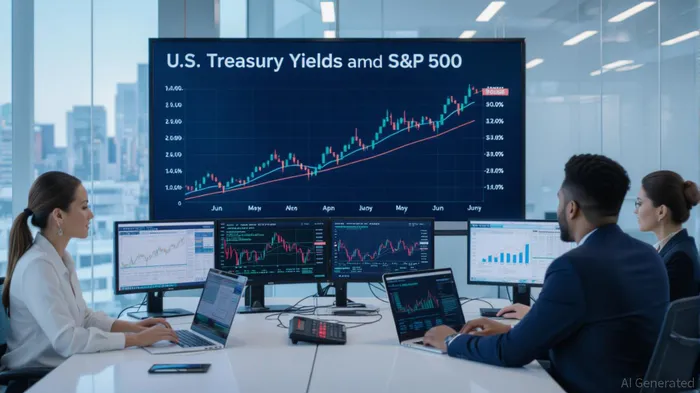
The U.S. stock market in 2025 is a study in contrasts. While the S&P 500 Tech Index has surged 10.99% year-to-date, driven by AI-driven growth and speculative fervor, the broader labor market signals caution. Recent Job Openings and Labor Turnover Survey (JOLTS) data reveals a cooling labor market, with job openings falling to 7.18 million in July 2025—the lowest since April 2021. This decline, coupled with a 12-year low in consumer confidence, underscores a fragile economic backdrop. Yet, within this volatility, certain sectors and strategies offer a path to resilience.
The JOLTS Signal: Divergence and Opportunity
The JOLTS report highlights a stark divergence between sectors. Healthcare and government employment remain robust, with healthcare adding 51,000 jobs in April and 62,000 in May 2025. These sectors are buoyed by structural demand—aging populations, rising birth rates, and policy-driven hiring in areas like Customs and Border Protection. In contrast, the technology and finance sectors face headwinds. Major tech firms like MetaMETA-- and AmazonAMZN-- have cut jobs, while financial sector openings have dropped from 460,000 in April to 319,000 in July.
This divergence is critical for investors. Sectors with sustained labor demand, such as healthcare, offer defensive characteristics. For example, UnitedHealth GroupUNH-- (UNH) and AbbVieABBV-- (ABBV) have shown resilience, with UNHUNH-- rising 2.8% in a single week. Meanwhile, the tech sector's stock market outperformance—despite labor market contractions—reflects speculative bets on AI-driven growth. AlphabetGOOGL-- (GOOGL), for instance, has surged on its dominance in generative AI, with illustrating its meteoric rise.
Bond Market Turbulence: A Double-Edged Sword
The bond market in Q2 2025 has been a rollercoaster. Yields on the 10-year U.S. Treasury briefly exceeded 5%, the highest since 2007, as investors priced in inflation risks and fiscal uncertainty. The yield curve steepened, with the 2-year Treasury yield falling to 3.8% from 4.4% since December 2024. This steepening reflects expectations of Fed rate cuts, which markets now price at an 89% chance for September.
However, bond volatility has created hedging opportunities. For instance, the narrowing of credit spreads—despite rising government debt—suggests investor complacency. Yet, as the JOLTS data indicates, this optimism may be misplaced. Sectors like manufacturing and construction, which underpin economic growth, show signs of slowdown. Investors who hedge with high-quality corporate bonds or Treasury locks can mitigate downside risk while capitalizing on yield differentials.
Strategic Allocation: Balancing AI Growth and Defensive Sectors
The key to navigating this environment lies in sector rotation and tactical hedging. AI-driven growth, particularly in semiconductors and software infrastructure, remains a compelling long-term bet. Alphabet's dominance in AI—evidenced by its 10.99% year-to-date gain—highlights the sector's potential. However, overexposure to cyclical tech stocks without hedging could amplify losses if the Fed's rate cuts fail to stimulate growth.
Conversely, defensive sectors like healthcare and utilities have outperformed cyclicals by 13.1% in Q3 2025. These sectors offer pricing power and stable cash flows, making them ideal for hedging against economic slowdowns. For example, healthcare's sustained labor demand and wage growth provide a buffer against weaker consumer spending. Similarly, utilities benefit from fixed-income-like returns and low volatility.
Hedging Strategies: Locking in Yields and Managing Exposure
Investors should also leverage bond market dynamics to hedge equity risk. Forward-starting interest rate swaps and Treasury locks can protect against further yield spikes, particularly for companies issuing debt in a high-rate environment. For instance, a cash-settled swap structure allows corporations to lock in favorable rates while managing swap spread risk.
Additionally, a tactical shift toward high-quality bonds and cash positions can provide liquidity during market dislocations. The recent surge in gold prices to record highs underscores the appeal of safe-haven assets. Meanwhile, short-term yields have fallen despite elevated long-term rates, offering a yield curve trade for those willing to accept lower returns for reduced risk.
Conclusion: A Nuanced Approach to Uncertainty
The 2025 market environment demands a nuanced strategy. While AI-driven growth and defensive sectors offer resilience, investors must remain vigilant against overvaluation and sector-specific risks. By aligning portfolios with industries experiencing strong labor demand—such as healthcare—and hedging with high-quality bonds or swaps, investors can balance growth and stability.
As the Fed contemplates rate cuts and global bond markets remain volatile, the interplay between policy and fundamentals will shape returns. Those who adapt swiftly—rotating into resilient sectors and hedging against downside risks—will be best positioned to navigate the turbulence ahead.

Delivering real-time insights and analysis on emerging financial trends and market movements.
Latest Articles
Stay ahead of the market.
Get curated U.S. market news, insights and key dates delivered to your inbox.
AInvest
PRO
AInvest
PRO



Comments
No comments yet