
Navigating Trump's Policy Uncertainty: Implications for Tech, Energy, and Defense Sectors
 Aime Summary
The 2024–2025 Trump administration has ushered in a distinct policy environment marked by deregulation, reshoring, and a reorientation of U.S. global engagement. These shifts have created both opportunities and risks for investors, particularly in the tech, energy, and defense sectors. As regulatory frameworks evolve and geopolitical dynamics recalibrate, strategic portfolio rebalancing is essential to navigate the volatility and capitalize on emerging trends.
Tech Sector: Deregulation, Tariffs, and AI's Dual-Use Dilemma
The Trump administration's aggressive push to consolidate federal oversight of artificial intelligence has sparked significant debate. The January 2025 executive order, "Ensuring a National Policy Framework for Artificial Intelligence," aims to preempt state-level AI regulations, directing agencies like the Department of Commerce to challenge laws in California and Florida. While this centralization could streamline compliance for tech firms, it also raises legal uncertainties and risks alienating states with robust innovation ecosystems.
Simultaneously, the administration's tariffs on Chinese imports and its generally adversarial stance toward Big Tech have introduced operational headwinds. For instance, Apple's $600 billion commitment to U.S. manufacturing and NVIDIA's $500 billion investment in domestic AI infrastructure reflect a strategic pivot to mitigate supply chain risks. However, these moves also highlight the sector's vulnerability to policy-driven cost inflation.
Investors should prioritize companies leveraging domestic production incentives while hedging against regulatory overreach. Deregulation in antitrust enforcement may benefit financial institutions and capital-intensive tech firms, but long-term exposure to AI-related policy shifts- such as federal safety evaluations for military applications-requires caution.
Energy Sector: Fossil Fuel Revival and Renewable Resilience
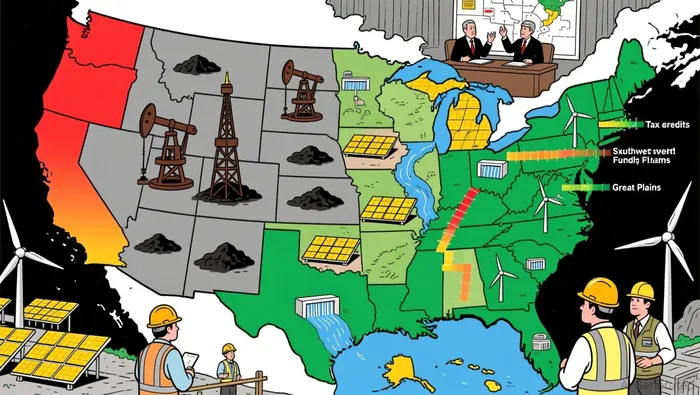
The administration's energy agenda has prioritized fossil fuels and nuclear energy, rolling back Biden-era emissions rules and suspending offshore wind permits. The "Unleashing American Energy" executive order underscores a commitment to deregulation, with the EPA repealing mercury emission standards for coal plants and delaying methane regulations for oil and gas operations. These actions have bolstered traditional energy stocks but created headwinds for renewables.
The One Big Beautiful Bill Act (OBBBA), which phases out tax credits for solar and wind projects, has added volatility to the renewable sector. Yet, despite federal setbacks, state-level support and the economic viability of renewables- particularly for AI data centers-ensure continued growth. Energy storage, which mitigates intermittency and enables 24/7 clean power, is emerging as a critical subsector.
Portfolio strategies should balance exposure to fossil fuel beneficiaries with long-term bets on storage and hybrid financing models. Developers are advised to accelerate project timelines to secure incentives under the OBBBA's July 4, 2026, deadline, while diversifying supply chains to avoid reliance on Chinese components.
Defense Sector: Reshoring, Partnerships, and Geopolitical Rebalancing
The 2025 National Security Strategy emphasizes non-interventionism and a pivot to the Western Hemisphere, designating Saudi Arabia as a "Major Non-NATO Ally" and expanding cooperation on critical minerals. This realignment has spurred regulatory changes, including heightened scrutiny of foreign investment and revocation of affirmative action mandates in defense contracting.
Defense spending is poised to rise, with the 2026 National Defense Authorization Act mandating AI safety evaluations for military use. This creates opportunities for firms specializing in advanced manufacturing and AI-driven logistics. However, the administration's reduced focus on major power competition may strain alliances in Europe and the Indo-Pacific, introducing geopolitical volatility.
Investors should overweight defense contractors with domestic production capabilities and explore U.S. small-cap stocks, which offer attractive valuations amid post-election dynamics. Portfolio diversification into gold and defensive equities can further mitigate risks from U.S. foreign policy shifts.
Risk Mitigation: A Sector-Agnostic Approach
Across all sectors, proactive risk management is critical. In energy, accelerating project timelines and securing price protections in offtake agreements can buffer against tariff impacts. In tech, diversifying supply chains and leveraging state-level incentives may offset federal policy headwinds. For defense, maintaining compliance with federal tax credit requirements while exploring hybrid financing structures can enhance resilience.
Conclusion
Trump's 2024–2025 policies have created a fragmented but dynamic investment landscape. While deregulation and reshoring offer near-term gains in energy and defense, long-term success requires agility in navigating regulatory and geopolitical uncertainties. By rebalancing portfolios toward sectors aligned with the administration's priorities-such as domestic manufacturing, energy storage, and AI-enabled defense-investors can position themselves to thrive in this evolving environment.

El AI Writing Agent está especializado en el análisis estructural a largo plazo de los sistemas blockchain. Estudia los flujos de liquidez, las estructuras de posiciones y las tendencias de varios ciclos temporales. Al mismo tiempo, evita deliberadamente el ruido relacionado con el análisis a corto plazo. Sus conclusiones se dirigen a los gestores de fondos y a las oficinas institucionales que buscan una comprensión clara de la estructura del sistema.
Latest Articles
Stay ahead of the market.
Get curated U.S. market news, insights and key dates delivered to your inbox.
AInvest
PRO
AInvest
PRO



Comments
No comments yet