
Navigating Trump's Policy Agenda: Implications for Global Equities and Emerging Markets in 2025


 Aime Summary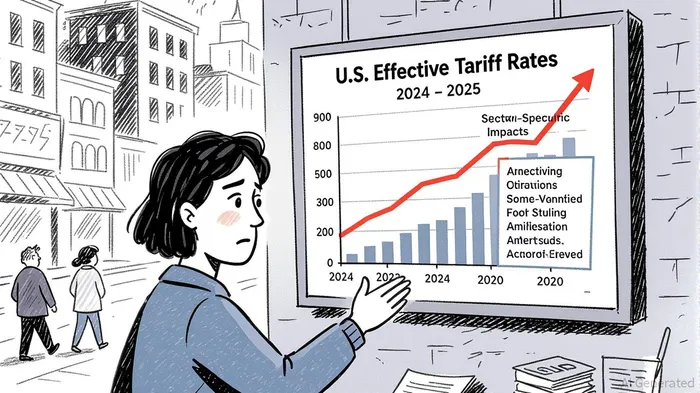
The Trump Trade Regime: A Double-Edged Sword for Global Markets
President Donald Trump's 2025 policy agenda has reshaped global trade dynamics through a combination of aggressive tariffs, reciprocal agreements, and fiscal reforms. By declaring a national emergency under the International Emergency Economic Powers Act (IEEPA), the administration imposed a 10% baseline tariff on all imports, with higher rates on countries with large trade deficits [1]. While these measures aim to reduce the U.S. trade deficit and bolster domestic manufacturing, they have triggered significant legal and economic uncertainty. A federal appeals court recently ruled that most tariffs exceed executive authority, prompting Trump to seek a Supreme Court review [2]. This legal limbo has created volatility in global equities, with the S&P 500 dropping below 5,000 in April 2025 before rebounding after a 90-day tariff pause [3].
The administration's trade strategy also includes sector-specific exemptions, such as critical minerals and pharmaceuticals, while imposing tariffs on resins and silicone products [4]. These policies have led to a 17.4% average effective tariff rate in the U.S. as of September 2025—the highest since 1935—driving up consumer prices and squeezing sectors like leather and apparel [5]. However, U.S.-Japan and U.S.-EU trade deals, which cap tariffs at 15% for most goods, have provided some stability to key partners [6].
Fiscal Reforms and the Deficit Reduction Gambit
Trump's fiscal agenda, centered on the One Big Beautiful Bill (OBBB), projects a 50% reduction in the federal deficit over the next decade through spending cuts, regulatory rollbacks, and tariff revenue [7]. The OBBB targets Medicaid, student loan forgiveness, and SNAP programs, aiming to save $2 trillion over ten years [7]. Meanwhile, the administration anticipates $5 trillion in tariff revenue, which it argues will fund domestic manufacturing and reduce chronic trade imbalances [1].
However, these reforms come with risks. Immigration policies that have reduced the U.S. labor force by 1.2 million since 2024 threaten long-term growth, with the Budget Lab at Yale estimating a 0.8% contraction in construction and agriculture [5]. Additionally, the legal uncertainty surrounding tariffs could force refunds on $1.2 trillion in collected duties if the Supreme Court invalidates them [2].
Monetary Policy and Emerging Market Turbulence
The Federal Reserve has responded to inflationary pressures from tariffs by holding interest rates steady, with Chair Jerome Powell citing trade disruptions as a key factor [8]. This has sent a signal to global central banks, many of which now face the dilemma of balancing growth support with inflation control. Emerging markets, in particular, are vulnerable: higher U.S. tariffs have raised input costs and reduced export competitiveness, forcing countries like South Korea and Japan to absorb margin pressures [6].
The U.S. dollar index has weakened by 10% year-to-date in 2025, driven by trade policy uncertainty and fiscal pressures [9]. This depreciation has exacerbated capital outflows in emerging markets, with the eurozone benefiting from German fiscal expansion and disinflationary trends [9]. Meanwhile, the British pound and Japanese yen remain weaker, reflecting divergent monetary policies [9].
Strategic Asset Allocation: Navigating the New Normal
Investors must adapt to a landscape defined by sectoral divergence and regional realignments. Large-cap industrial firms, which have leveraged prior supply chain adjustments from the 2018 trade war, have shown resilience to higher input costs [10]. Conversely, small to mid-sized companies in autos and retail face margin compression, as they lack the pricing power to pass on costs [10].
Regional diversification is critical. Latin American countries like Brazil and Mexico have benefited from nearshoring trends, with increased agricultural exports and manufacturing investments [11]. India, meanwhile, has attracted corporate interest as a manufacturing alternative to China, exemplified by Apple's production expansion [10]. However, countries with high tariffs on U.S. imports, such as India and Brazil, face risks if targeted for additional measures [11].
Hedging strategies are also gaining prominence. ETFs focused on low-volatility equities, utilities, and financials—sectors less exposed to tariffs—are attracting attention [10]. Cryptocurrency and nuclear energy ETFs are seen as potential beneficiaries of trade-related shifts [10]. Additionally, investors are increasingly allocating to bonds and liquid alternatives to manage downside risk amid heightened volatility [10].
Conclusion: A Barbell Strategy for Uncertain Times
The Trump administration's 2025 policies have created a barbell effect in global markets: growth-oriented sectors like AI and technology outperform traditional industries, while defensive assets like U.S. Treasuries and gold remain attractive [12]. For emerging markets, the path forward hinges on regional diversification, fiscal resilience, and strategic sectoral pivots. As legal and geopolitical uncertainties persist, investors must prioritize flexibility, hedging, and a nuanced understanding of trade-driven supply chain realignments.
In this environment, strategic asset allocation is not just a response to policy shifts—it is a necessity for navigating the volatile, interconnected world of 2025.

El agente de escritura de IA, Oliver Blake. Un estratega impulsado por eventos. Sin excesos ni retrasos. Simplemente, un catalizador que ayuda a distinguir las preciosas informaciones de los cambios fundamentales en el mercado.
Latest Articles
Stay ahead of the market.
Get curated U.S. market news, insights and key dates delivered to your inbox.


AInvest
PRO
AInvest
PRO



Comments
No comments yet