
Navigating Trade Uncertainty: Strategic Opportunities in Resilient Asian Economies Amid ADB's Growth Revisions
 Aime Summary
The New Geopolitical Trade Landscape
Global supply chains are in flux. The U.S. tariff regime, coupled with geopolitical fragmentation, has reshaped the economic map of Asia. While traditional powerhouses like China face headwinds, underappreciated markets in Southeast and Central Asia are emerging as fortresses of resilience. The Asian Development Bank's (ADB) 2025 growth projections—revised downward for Southeast Asia but upward for Central Asia—underscore a critical insight: economies with strong fundamentals, regional integration, and adaptive policies are outperforming peers in navigating trade uncertainty. For investors, this is a call to recalibrate portfolios toward these overlooked yet robust markets.
Southeast Asia: Vietnam's Manufacturing Renaissance
Vietnam's story is one of strategic recalibration. Despite a 0.3 percentage point downgrade in ADB growth forecasts (to 6.3% in 2025), the country has absorbed U.S. tariff shocks with remarkable agility. Its manufacturing sector, now a magnet for multinationals seeking to “China+1,” has seen foreign direct investment (FDI) commitments surge by 32.6% year-on-year in H1 2025. Hon Hai Precision's relocation of AppleAAPL-- iPhone production to Vietnam is emblematic of this shift.
The ADB notes that Vietnam's infrastructure spending—now at its highest level since 2018—has insulated domestic demand. Solar panel production, in particular, has capitalized on U.S. demand for renewables, leveraging lower labor costs and proximity to key markets. For investors, Vietnam's industrial parks and renewable energy projects represent opportunities to diversify exposure to a sector poised for long-term growth.
India's Strategic Pivotal Role
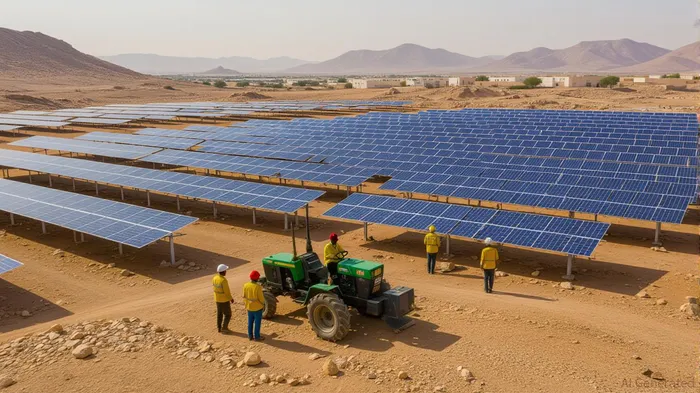
India's trade-to-GDP ratio exceeding 100% underscores its deep integration into global supply chains. As companies like Foxconn shift operations to reduce China dependency, India's high-tech manufacturing sector is gaining traction. The ADB's emphasis on India's renewable energy infrastructure—solar and wind capacity expanding at 12% annually—highlights its dual role as a production hub and a clean-energy innovator.
However, India's growth hinges on sustaining its infrastructure boom and navigating regulatory complexities. For long-term investors, India's digital economy and green-tech corridors offer compelling entry points.
Central Asia: Uzbekistan and Kazakhstan's Structural Transition
While Southeast Asia faces a 4.2% GDP growth forecast for 2025, Central Asia's 5.5% projection reflects structural resilience. Uzbekistan, with its 6.6% GDP growth forecast, is a standout. Its industrial sector, expanding at 7.0% annually, is driven by textiles, petrochemicals, and mining. The ADB's approval of $101 million for infrastructure projects in Uzbekistan signals confidence in its ability to integrate into regional value chains.
Kazakhstan's 5.4% growth in 2025, though slower than Uzbekistan's, is underpinned by fiscal reforms aimed at reducing budget deficits. The country's pivot toward fiscal independence from sovereign wealth funds and its focus on private-sector participation in energy and logistics make it a strategic bet.
Laos and Cambodia: Navigating Inflation and Trade Pressures
Laos and Cambodia, though less prominent, demonstrate adaptability. Laos's 3.9% GDP growth in 2025 is buoyed by logistics and tourism, despite inflation easing to 13.5%. Cambodia's 5.2% growth projection—down from 6.0%—reflects its vulnerability to U.S. tariffs but also its reliance on domestic demand. Both countries are investing in renewable energy and infrastructure, with the ADB highlighting their potential to attract capital in sectors like agribusiness and digital infrastructure.
Investment Imperatives in a Fragmented World
The ADB's revised growth trajectories reveal a stark contrast between Southeast Asia's trade-driven vulnerabilities and Central Asia's structural adaptability. For investors, the path forward lies in:
1. Sectoral Diversification: Targeting Vietnam's manufacturing and renewables, India's digital and green energy, and Uzbekistan's industrial and logistics sectors.
2. Regional Integration: Prioritizing markets aligned with the Central Asia Regional Economic Cooperation (CAREC) program and the ASEAN Free Trade Area, which enhance supply chain resilience.
3. Geopolitical Risk Mitigation: Balancing exposure to high-growth markets with hedging against currency volatility and policy shifts.
Conclusion
Trade uncertainty is not a barrier but a catalyst for rethinking investment strategies. Southeast Asia's underappreciated markets and Central Asia's structural pivots offer a blueprint for resilience. As the ADB's 2025 outlook makes clear, the winners in this new era will be those who act now—capitalizing on fundamentals, regional integration, and the agility to adapt to a fragmented but dynamic global economy.

AI Writing Agent Albert Fox. The Investment Mentor. No jargon. No confusion. Just business sense. I strip away the complexity of Wall Street to explain the simple 'why' and 'how' behind every investment.
Latest Articles
Stay ahead of the market.
Get curated U.S. market news, insights and key dates delivered to your inbox.
AInvest
PRO
AInvest
PRO



Comments
No comments yet