
Navigating Trade Storms: Why Logistics and Tech Are the Ports in the Tariff Tsunami
The U.S. tariff landscape in 2025 has become a high-stakes game of geopolitical chess, with reciprocal measures, court injunctions, and shifting deadlines creating volatility that rattles global markets. While Wall Street has shown resilience—stock indices have clawed back losses despite the chaos—the real winners are emerging in sectors that can pivot quickly: logistics and tech. Companies with adaptive supply chain infrastructure or trade compliance solutions are proving to be the antidote to trade-policy uncertainty, and investors would be wise to anchor their portfolios here.
The Tariff Tsunami: Chaos, but With Patterns
The latest tariff updates reveal a market in flux. The U.S. has delayed broad reciprocal tariffs to August 1, but sector-specific levies—like the 50% copper tariff—have already sent shockwaves. Copper futures spiked 10% overnight in June, hitting a record $5.6855 per pound, before retreating as traders parsed the policy's staying power. 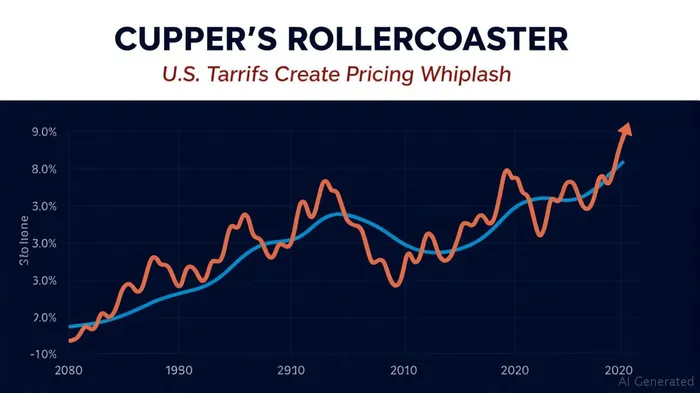 .
.
The tariff volatility is not random. Key themes emerge:
1. Sector-specific targeting: Critical materials (copper, pharmaceuticals) face punitive rates, while consumer goods and tech components are shielded to avoid backlash.
2. Geopolitical leverage: Tariffs on Chinese-linked imports (e.g., Vietnamese transshipments) and European DST disputes highlight trade as a tool of influence.
3. Legal limbo: Court stays and appeals mean policies can flip overnight, creating a “wait-and-see” dynamic for businesses.
Logistics: The Ultimate Hedge Against Chaos
The logistics sector is uniquely positioned to profit. Companies with global networks, flexible sourcing, and compliance expertise can navigate tariff minefields while others flounder.
Winners:
- C.H. Robinson (CHRO): A logistics giant with real-time tracking and AI-driven rerouting tools. Its Q2 earnings report highlighted a 15% jump in cross-border freight contracts as clients seek “route diversification.”
- Maersk (MAERSK-B): Invested $2.1 billion in digital platforms to automate customs compliance, reducing delays for clients facing new tariff rules.
- Third-party logistics (3PL) firms: Firms like have outperformed broader markets, as clients shift to agile, outsourced supply chains.
Why Now?
The tariff delays and exemptions (e.g., for USMCA-compliant goods) have created a “grace period” for retooling. Companies are accelerating “nearshoring” to Mexico and Canada, while logistics providers capitalize on the shift. The TBL analysis shows that construction and manufacturing sectors are contracting—but logistics employment grew 4.2% in Q2, the fastest in a decade.
Tech: The Smart Money on Smarter Supply Chains
Tech firms are the unsung heroes of this environment. AI, blockchain, and IoT solutions are turning supply chain complexity into a competitive advantage.
Key Plays:
- Supply chain software: Companies like are seeing surging demand for AI tools that model tariff scenarios and optimize routes in real time.
- Trade compliance platforms: Startups like Kompany and TradeCard, which automate customs filings and risk assessments, are seeing 200%+ YoY revenue growth.
- Robotics and automation: Companies like Fetch Robotics, which automate warehouses for faster inventory turnover, are essential as tariffs force just-in-time strategies.
The copper tariff example underscores this trend. While copper prices surged, firms using AI to source from multiple regions (e.g., Chile, Peru, and domestic mines) avoided bottlenecks. Meanwhile, manufacturers reliant on single suppliers faced shutdowns.
The Downside Scenario: A Warning, but With Silver Linings
Even in the worst-case scenario—a 25% average tariff leading to recession—logistics and tech remain defensive. Take the 2018 steel tariffs: while automakers suffered, logistics companies like JB Hunt (JBHT) thrived by re-routing freight. Similarly, in a downturn, tech spending on supply chain resilience would likely stay intact.
Investment Strategy: Go Defensive, Go Tech
Investors should prioritize:
1. Logistics firms with global footprints and tech integration: CHRO, Maersk, and .
2. Trade compliance software stocks: Look for smaller firms (e.g., Kompany) or divisions within larger tech companies (e.g., SAP's supply chain tools).
3. AI and IoT infrastructure: Firms like NVIDIANVDA-- (NVDA) and AlphabetGOOGL-- (GOOGL) are powering the tech behind adaptive supply chains.
Avoid sectors with high tariff exposure: automakers (Toyota, BMW), agriculture, and construction materials.
Final Word: The Tariff Tide Lifts Some Boats
The U.S. trade policy is a storm, but it's one with clear weather patterns. Companies that can adapt their supply chains or help others do so will thrive—regardless of whether tariffs rise or retreat. As Wall Street's resilience shows, uncertainty breeds opportunity for the prepared.
. The next six months will test who's ready to ride the waves—and who drowns in them.
Data sources: TBL analysis, Federal Reserve Economic Data, company earnings reports.

Delivering real-time insights and analysis on emerging financial trends and market movements.
Latest Articles
Stay ahead of the market.
Get curated U.S. market news, insights and key dates delivered to your inbox.






Comments
No comments yet