
Navigating Trade Barriers: Chinese Steelmakers Redefine Global Supply Chains and Emerging Market Opportunities
 Aime Summary
In an era of escalating geopolitical tensions and trade barriers, the global steel industry is witnessing a quiet revolution. Chinese steelmakers, facing a domestic market constrained by overcapacity and weak demand, have devised a strategic workaround: exporting semi-finished steel billets to countries with laxer trade rules. This shift is not only reshaping global supply chains but also unlocking new investment opportunities in emerging markets.
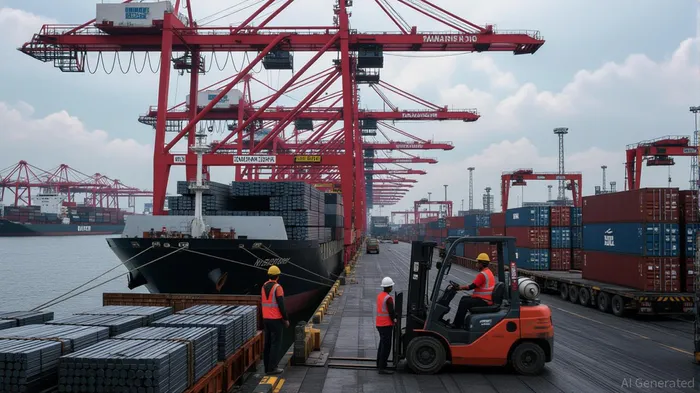
The Billet Strategy: Bypassing Tariffs, Expanding Markets
Chinese steel exports of semi-finished billets—blocks of steel used as raw material for downstream processing—surged to 4.72 million metric tons in the first five months of 2025, tripling compared to the previous year. This growth is driven by a simple but effective logic: while tariffs on finished steel products in markets like Indonesia, Turkey, and Saudi Arabia range from 5% to 20%, billets face minimal or no restrictions. By exporting billets, Chinese producers avoid anti-dumping duties and high tariffs on finished goods, enabling them to maintain profitability despite global protectionism.
The strategy also exploits trans-shipment networks. For example, Indonesian and Philippine steel mills import Chinese billets, process them into rebar or sheets, and re-export the finished products to the U.S. and Europe. This circumvents Trump-era tariffs (50% on U.S. steel imports) by inserting a middleman. As Mysteel analysts note, the value added to billets in processing is relatively low (400–500 yuan per ton), but the cost advantage—Chinese billets trade at $426–427 per ton, undercutting Indonesian producers by $9–14 per ton—ensures competitive pricing in global markets.
Reshaping Global Supply Chains
This shift has transformed supply chains into dynamic, multi-tiered systems. Emerging markets are no longer passive consumers of Chinese steel; they are becoming intermediaries and value-adding hubs. Countries like Saudi Arabia and the Philippines, with growing infrastructure needs and limited domestic production capacity, are leveraging low-cost Chinese billets to meet local demand while also exporting surplus output.
The implications are profound. First, it underscores the adaptability of Chinese manufacturers, who now prioritize flexibility over traditional scale. Second, it highlights the role of intermediate markets in globalizing trade. For instance, Turkey, a major importer of Chinese billets, is repositioning itself as a regional steel hub, exporting processed goods to the EU. Third, it reveals the fragility of trade barriers in the face of innovative supply chain strategies.
Investment Opportunities in Emerging Markets
For investors, this trend signals a reorientation of capital toward regions where Chinese steel billets are processed and re-exported. Key opportunities include:
- Steel Processing Firms in Southeast Asia: Companies like Indonesia's PT Krakatau Steel or Vietnam's Hoa Phat Group are expanding billet-to-finished-product capabilities. These firms benefit from low-input costs and growing regional demand for construction materials.
- Logistics and Infrastructure: Ports and transportation networks in countries like the Philippines and Saudi Arabia are upgrading to handle increased steel imports and re-exports. This creates demand for container terminals, rail links, and warehousing.
- Greenfield Manufacturing Hubs: Chinese investors are funding new steel mills in ASEAN and the Middle East, often in partnership with local firms. These projects offer exposure to long-term industrialization trends.
The MSCIMSCI-- Emerging Markets Index has outperformed developed markets in 2025, reflecting broader capital flows into regions integrating into Chinese supply chains. However, investors must balance opportunities with risks: policy shifts in China (e.g., a potential export tax on billets) or retaliatory tariffs from the U.S. and EU could disrupt trans-shipment routes.
Policy Risks and Long-Term Outlook
Chinese authorities are already signaling concern. The China Iron and Steel Association (CISA) has urged Beijing to impose an export tax on billets to curb low-value exports and promote higher-margin products like specialty steel. While no immediate policy has been enacted, such measures could reduce billet exports by 10–15% in 2026.
Meanwhile, importing countries are grappling with their own dilemmas. For example, Turkey and Indonesia face pressure to develop domestic steel industries rather than relying on Chinese inputs. Investors should monitor trade policy developments and capacity-building initiatives in these markets.
Conclusion: A New Era of Supply Chain Agility
The rise of Chinese steel billet exports exemplifies the ingenuity of global trade in the face of geopolitical headwinds. By bypassing tariffs through intermediate processing, Chinese producers have not only sustained their export volumes but also catalyzed industrial growth in emerging markets. For investors, this trend offers a blueprint for navigating an increasingly fragmented global economy: focus on flexible, multi-tiered supply chains and the regions that enable them.
The key takeaway is clear: in a world of shifting trade barriers, the ability to adapt is as valuable as the product itself. Emerging markets that position themselves as processing hubs or innovation centers will reap the rewards—provided they act swiftly and strategically.

Stay ahead of the market.
Get curated U.S. market news, insights and key dates delivered to your inbox.


AInvest
PRO
AInvest
PRO



Comments
No comments yet