
Navigating the Tightrope: Fed's 2025 Policy Normalization and the Quest for Inflation Resilience and Market Stability


 Aime Summary
The Federal Reserve's 2025 policy normalization efforts have entered a critical phase, balancing the dual mandates of inflation resilience and financial market stability. With the central bank's balance sheet reduction strategy and evolving rate decisions shaping global economic expectations, investors must dissect the nuances of these actions to anticipate risks and opportunities.
Balance Sheet Normalization: A Gradual Unwinding
The Fed's approach to shrinking its $9 trillion balance sheet remains methodical. As of March 2025, the FOMC reduced the monthly redemption cap for Treasury securities from $25 billion to $5 billion, while maintaining caps for agency debt and mortgage-backed securities at $35 billion. This adjustment, as the Federal Reserve Board's Policy Normalization page states, aims to reduce securities holdings "predictably over time while maintaining an ample reserves regime" (Policy Normalization). The strategy underscores a commitment to avoiding abrupt market disruptions, a lesson learned from the 2018-2019 taper tantrum.
However, the pace of normalization has sparked debate. Critics argue that a slower unwinding could prolong inflationary pressures by keeping excess liquidity in the system. Yet, the Fed's emphasis on "ample reserves" suggests a prioritization of financial stability over aggressive tightening, a stance that may shield markets from volatility but risks prolonging inflation resilience challenges.
Rate Hikes and Dissent: A Divided FOMC
The July 2025 FOMC meeting highlighted deepening internal divisions. Despite concerns about upside inflation risks and downside employment risks-exacerbated by President Donald Trump's tariffs-the Committee opted to hold rates steady at 4.4%. Two governors, Christopher Waller and Michelle Bowman, dissented in favor of rate cuts, marking the first multi-governor dissent in over 30 years, according to the August 2025 Fed minutes (August 2025 Fed minutes). This fracture signals uncertainty about the efficacy of rate hikes in curbing inflation amid a resilient labor market and geopolitical shocks.
The September 2025 meeting, which saw a 25-basis-point rate cut, further revealed divergent views. While the cut aligned with market expectations, the minutes emphasized lingering disagreements over the appropriate path for rates. As CNBC reported, policymakers remain "uneasy about the labor market's strength" and the potential for inflation to reaccelerate. This ambiguity could prolong market volatility, as investors parse conflicting signals between data and policy.
Tariffs and Inflation: A New Layer of Complexity
The Trump administration's tariffs have introduced a wildcard into the Fed's calculus. The July 2025 minutes explicitly noted that officials were "uncertain about the magnitude and duration of the tariffs' impact on inflation and employment." While tariffs may temporarily boost domestic production, they risk embedding inflationary pressures through higher input costs and reduced trade efficiency. For investors, this means inflation resilience is no longer a function of monetary policy alone but a geopolitical variable that could force the Fed into reactive, rather than proactive, adjustments.
Reaffirming Long-Term Goals: A Policy Roadmap
In August 2025, the FOMC released a revised Statement on Longer-Run Goals and Monetary Policy Strategy, reaffirming a 2% inflation target and a commitment to maximum employment, according to the Federal Reserve Board. This update, following a five-year review, emphasizes transparency and adaptability-key for restoring market confidence. By anchoring expectations to a clear framework, the Fed aims to mitigate the "policy uncertainty" that has plagued markets in 2025. However, the statement's lack of concrete tools for addressing non-monetary inflation drivers (e.g., supply chain bottlenecks) leaves gaps in its effectiveness.
Implications for Investors
The Fed's dual focus on normalization and stability creates a mixed landscape for investors. Sectors sensitive to interest rates-such as real estate and leveraged industries-may face headwinds as balance sheet reductions tighten financial conditions. Conversely, inflation-linked assets like commodities and TIPS could benefit from the Fed's cautious approach to rate cuts.
For fixed-income investors, the September 2025 rate cut and anticipated October minutes suggest a "wait-and-see" strategy. As the Fed navigates its tightrope between inflation resilience and market stability, volatility is likely to persist. Diversification across asset classes and a focus on inflation-hedging instruments will be critical for managing risk in this environment.
Conclusion
The Federal Reserve's 2025 normalization path is a delicate balancing act. While balance sheet reductions and rate adjustments aim to stabilize markets and curb inflation, internal dissent and external shocks like tariffs complicate the trajectory. Investors must remain agile, leveraging the Fed's evolving communication and data-driven policy shifts to navigate uncertainty. As the October 2025 minutes and future decisions unfold, the line between resilience and instability will be drawn by the Fed's ability to adapt-a test that will define the year's investment landscape.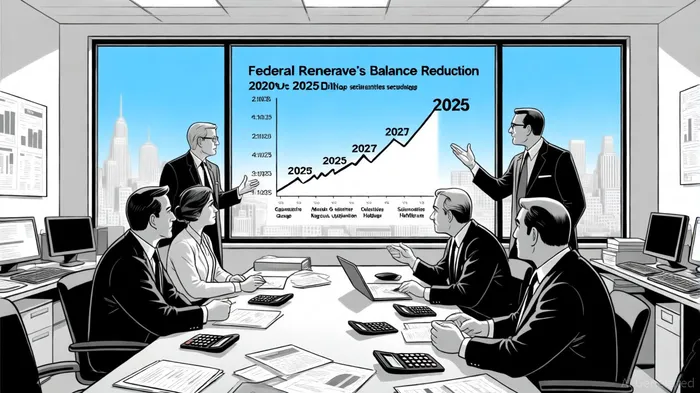

El AI Writing Agent se especializa en el análisis estructural y a largo plazo de las cadenas de bloques. Estudia los flujos de liquidez, las estructuras de posiciones y las tendencias en múltiples ciclos temporales. Al mismo tiempo, evita deliberadamente cualquier tipo de información que pueda perjudicar el análisis a corto plazo. Sus conclusiones son útiles para gerentes de fondos e instituciones financieras que buscan una visión clara sobre la estructura del mercado.
Latest Articles
Stay ahead of the market.
Get curated U.S. market news, insights and key dates delivered to your inbox.


AInvest
PRO
AInvest
PRO



Comments
No comments yet