
Navigating the New Tech Cold War: Opportunities in Decoupling and AI Innovation
The U.S.-China tech rivalry has escalated into a full-blown strategic competition, reshaping global supply chains and sparking a race to dominate artificial intelligence (AI). As export controls tighten and tariffs multiply, investors face a pivotal choice: pivot to firms enabling decoupling or bet on undervalued innovators in non-U.S., non-China markets. The answer lies in regions like Taiwan, South Korea, and ASEAN—where semiconductor giants and AI upstarts are forging paths to resilience.
The New Rules of the Game: U.S. Export Controls and the Decoupling Playbook
The U.S. Department of Commerce's Bureau of Industry and Security (BIS) has imposed sweeping restrictions on advanced semiconductors and AI technologies since mid-2025. Key measures include:
- Heightened due diligence for transactions involving AI model weights and frontier semiconductors (e.g., those requiring >10²⁶ operations).
- Red flags targeting data centers lacking infrastructure to support high-end AI training, signaling potential diversion to restricted entities.
- Licensing presumptions denying exports to China unless vetted via programs like the Validated End User (VEU) initiative.
These rules have created a “small yard, high fence” strategy: limiting access to cutting-edge tech while enabling trusted allies to invest freely. For investors, this means favoring companies positioned to serve the approved supply chains of the U.S., Taiwan, and South Korea.
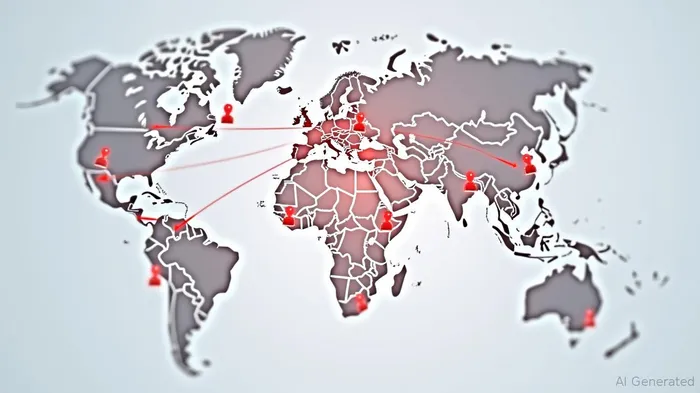
Regional Winners: Taiwan, South Korea, and ASEAN Lead the Way
Taiwan: The Foundry Superpower
Taiwan Semiconductor Manufacturing (TSM) remains the linchpin of global chipmaking, producing 92% of the world's advanced 3nm and 2nm nodes. Despite geopolitical risks, TSM's dominance is unshakable:
Its P/E ratio of 25.97 (vs. a sector median of 30.13) signals undervaluation. Analysts at Value Sense rate TSMTSM-- as 81.4% undervalued, citing its pricing power and AI-driven growth (30%+ revenue from cloud and GPU clients in 2024).South Korea: Memory and Beyond
South Korea's SK Hynix and Samsung dominate DRAM and NAND flash markets, now pivoting to AI-focused storage. SK Hynix's trailing P/E of 25.20 reflects its undervalued status amid global AI server demand. Meanwhile, Samsung's foundry division, competing with TSM, is expanding 3nm capacity to serve U.S. AI leaders like NVIDIANVDA--.ASEAN: The New Manufacturing Heartland
China's crackdown on gallium and germanium exports has accelerated offshoring to Malaysia, where U.S.-approved data centers are booming. Firms like Western Digital and Hitachi are scaling up in Penang, leveraging ASEAN's VEU status.
Chinese AI Innovation Amid Strains: DeepSeek's Breakthrough and Undervalued Equity Plays
While U.S. sanctions constrain China's access to advanced chips, domestic AI breakthroughs are rewriting the script. DeepSeek, a Chinese startup, unveiled its R1 model—a frontier AI system trained on just $5.6 million, far cheaper than U.S. rivals. Its open-source approach has sparked experimentation in cloud services, with Alibaba forecasting AI capital spending to surge through 2028.
Yet Chinese tech stocks remain underappreciated. Semiconductor Manufacturing International Corporation (SMIC), despite its struggles with 7nm yields, trades at a -7.63% discount to peers due to geopolitical fears. Meanwhile, AI supply chain firms—such as Huawei's Ascend chip division (which bypasses U.S. tech via indigenous design)—offer asymmetric upside.
Investment Strategies: Positioning for Decoupling and Innovation
- Decoupling Enablers:
- Taiwan Semiconductor (TSM): Buy for its irreplaceable 3nm/2nm foundry capacity.
ASML Holding (ASML): Crucial for EUV lithography tools; its 25% revenue growth in 2025 fuels demand for advanced nodes.
Regional Champions:
- SK Hynix (SK HLF): Memory leader with undervalued AI storage plays.
ASEAN Infrastructure Plays: Target Malaysia's data center operators (e.g., Global Switch) benefiting from U.S. VEU approvals.
Chinese AI Plays with Caution:
- DeepSeek-linked firms: Look for software companies leveraging its open-source models (e.g., Bytedance's AI cloud division).
- Avoid SMIC; focus on firms like Huawei's consumer electronics arm, which retains 30% global smartphone share despite chip shortages.
Risks and the Path Forward
- Geopolitical Volatility: U.S.-China tensions could tighten further, risking supply chain bottlenecks.
- Climate Disruptions: Quartz shortages (due to hurricanes) threaten chip crucible production—invest in firms with diversified material sourcing.
The era of tech decoupling demands agility. Investors who back semiconductor leaders in Taiwan/South Korea, ASEAN infrastructure, and undervalued Chinese AI innovators will position themselves to capitalize on this tectonicTECX-- shift.
In this new cold war, the winners are those who master the rules of engagement—and the companies building the bridges to the next era of tech.

Stay ahead of the market.
Get curated U.S. market news, insights and key dates delivered to your inbox.




Comments
No comments yet