
Navigating Tariff Volatility: How Supply Chain Shifts Are Shaping Investment Winners and Losers
The U.S. decision to extend its tariff deadline to August 1, 2025, has turned global supply chains into a high-stakes chessboard. Sectors like automotive, tech, and pharmaceuticals now face heightened uncertainty as companies scramble to adapt. Yet within this chaos, opportunities are emerging for investors willing to parse the noise.
The New Reality: Tariffs as a Weapon of Volatility
The delayed tariff deadlines have created a "wait-and-see" environment, with manufacturers and tech firms caught between rising costs and geopolitical risks. The U.S. tariffs—ranging from 25% on metals to a staggering 200% on pharmaceuticals—have forced industries to pivot. For example, automakers like HondaHMC-- and Ford are reshoring production to avoid punitive levies, while tech giants like IntelINTC-- leverage government subsidies to build domestic chip capacity.
Sector-by-Sector Breakdown: Winners and Losers
Automotive: Reshoring Brings Both Costs and Clout
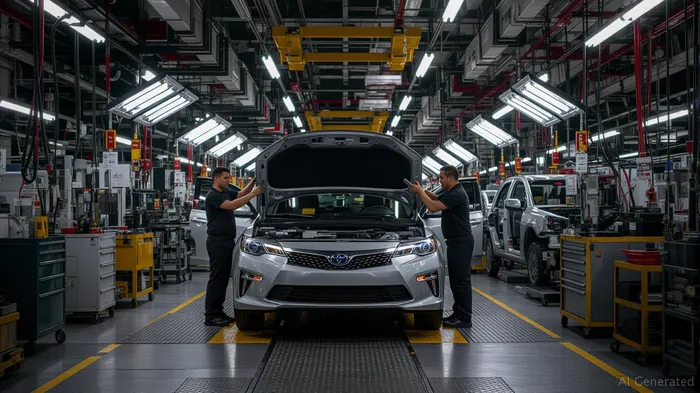
Automakers are among the hardest-hit sectors, with tariffs on imported vehicles spiking to 27.5%. While U.S. reshoring efforts have buoyed companies like Ford and General MotorsGM--, Asian competitors face margin erosion. BYD, however, stands out as a global beneficiary, expanding its electric vehicle (EV) sales by 21% year-over-year.
BYD's success contrasts sharply with TeslaTSLA--, whose sales dropped 14% amid regulatory scrutiny. Investors should consider BYD's valuation—currently trading at 28x forward earnings versus Tesla's 45x—as a better entry point for EV exposure.
Tech and Semiconductors: Betting on Resilience
The U.S. tariffs on chips (50%) and batteries (25%) have accelerated domestic manufacturing. Intel, which secured $52 billion from the CHIPS Act, is expanding U.S. production capacity. Meanwhile, Texas Instruments and NXP are focusing on automotive chips, a niche with strong demand for autonomous driving features.
The semiconductor sector's reshoring push makes it a long-term bet, though near-term volatility remains. Investors should prioritize companies with strong R&D pipelines and government support.
Healthcare: A Tale of Two Markets
While U.S. generic drugmakers like Teva and Mylan gained from 20% tariffs on Indian and Chinese rivals, the 200% pharma tariffs have hurt global supply chains. Moderna's 8.8% surge after challenging restrictive policies highlights the sector's regulatory minefield.
Utilities: Steady as She Goes
The suspension of renewable energy tax credits caused short-term pain for solar firms like SunRun (down 11.4%), but NextEra Energy remains a stalwart, leveraging its diversified portfolio. Utilities are now a defensive play in this volatile environment.
Supply Chain Shifts: The Path to Stability
The data is clear: companies that embrace reshoring or regionalization are gaining an edge. Flex's expansion of U.S. data center manufacturing and Inventec's Texas server facility exemplify this trend. Even Apple is reshoring iPhone production to dodge U.S.-China trade friction.
Meanwhile, the EU's manufacturing sector shows signs of recovery, with the HCOB PMI rising to 49.0 in April. However, U.S. tariffs on EU automotive exports could curb this progress.
Investment Strategy: Navigate Volatility with Precision
- Sector Rotation:
- Utilities: NextEra Energy offers stable cash flows amid uncertainty.
- Automotive: BYD's global growth and undervalued multiples make it a top pick.
Tech: Intel and Texas InstrumentsTXN-- benefit from structural tailwinds in chip reshoring.
Hedging Moves:
- Use puts on cyclical sectors like automotive to protect against margin pressures.
Pair with calls on energy ETFs (e.g., XLE) to capitalize on rising oil prices.
Global Diversification:
- Allocate to European industrials like Siemens and Daimler, which are underpriced due to tariff fears but poised for recovery.
Final Considerations: August 1 Deadline Looms
The August 1 deadline is a critical inflection point. If negotiations fail, sectors like automotive and pharmaceuticals could face renewed turmoil. However, investors who focus on companies with resilient supply chains and government support will position themselves to capitalize on stabilization.
The key takeaway? Volatility is here to stay, but so are opportunities. Look for companies turning tariffs into a competitive advantage—and avoid those clinging to outdated supply models.
Disclosure: This analysis is for informational purposes only and does not constitute financial advice. Investors should conduct their own research or consult a professional before making decisions.

Stay ahead of the market.
Get curated U.S. market news, insights and key dates delivered to your inbox.
AInvest
PRO
AInvest
PRO



Comments
No comments yet