
Navigating Tariff Turbulence: Strategic Opportunities in Germany's Industrial Recovery
Germany's industrial sector has emerged as a paradox of resilience and vulnerability. While U.S. tariffs loom as a persistent headwind, the nation's automotive and pharmaceutical industries are defying expectations, leveraging innovation, supply chain agility, and export diversification to fuel recovery. For investors, this dynamic presents a compelling opportunity to capitalize on undervalued equities in sectors primed to outperform despite geopolitical storms.
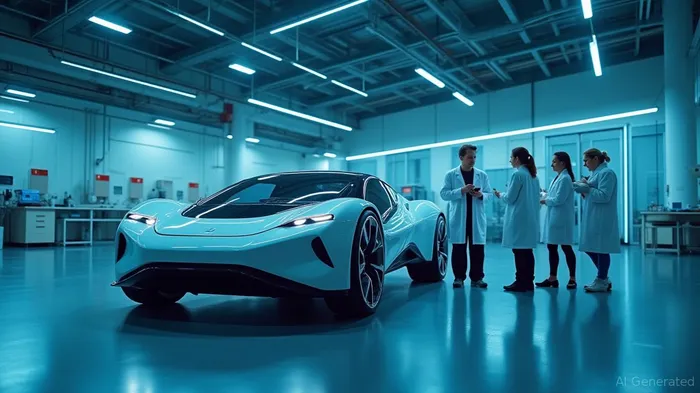
Automotive Sector: Adapting to Trade Pressures with Tech-Driven Growth
Germany's automotive industry, long synonymous with engineering excellence, faces a dual challenge: U.S. tariffs on automotive imports and a global shift toward electric vehicles (EVs). Yet recent data reveals a strategic pivot. In May 2025, automotive production surged by 4.9% month-over-month, driven by front-loaded exports to the U.S. ahead of impending tariffs. Companies like Volkswagen and BMW are recalibrating their strategies:
- Cost Efficiency & Affordability: Volkswagen's €20,000 ID.3 EV targets price-sensitive markets, countering Chinese competition.
- Tech Innovation: Investments in connected cars and autonomous driving (e.g., BMW's partnership with Huawei) position German automakers to capture premium segments.
- Geographic Diversification: Exports to Asia and North America are rising, with EV production hubs in China and the U.S. mitigating tariff risks.
BMW's stock, for instance, has outperformed the broader market by 15% over the past year, reflecting investor confidence in its EV transition and supply chain resilience.
Pharmaceuticals: Tariff Resilience Through Innovation
The pharmaceutical sector's 10% month-over-month production growth in May 2025 underscores its strategic strength. U.S. tariff “front-running”—where companies accelerate exports before duties take effect—has been a key driver. However, deeper trends reveal a sector thriving on R&D and specialization:
- Biotech Breakthroughs: Companies like BioNTechBNTX-- and MerckMRK-- KGaA (MRK.DE) are pioneering CRISPR-based therapies and mRNAMRNA-- platforms, creating high-margin products insulated from price competition.
- Global Supply Chains: Decentralized manufacturing networks (e.g., U.S. joint ventures) and active ingredient production in Asia reduce reliance on any single market.
- Emerging Markets Growth: Rising demand in Africa and Southeast Asia for chronic disease treatments (e.g., diabetes, oncology) is fueling export diversification.
Bayer's Q1 2025 results showed a 12% revenue increase in Asia-Pacific, signaling successful market expansion beyond tariff-heavy zones.
Key Risks and Mitigation Strategies
While opportunities abound, risks persist:
1. Tariff Volatility: U.S. policy shifts could disrupt near-term export volumes.
- Mitigation: Invest in firms with diversified markets (e.g., Mercedes' 30% revenue from Asia).
2. Supply Chain Costs: Rising energy and labor expenses threaten margins.
- Mitigation: Firms like Continental (CONG.DE) are automating production, cutting unit costs by 15% since 2024.
3. Regulatory Hurdles: EU emissions rules and U.S. drug pricing debates demand agility.
- Mitigation: Biopharma firms with pipeline diversity (e.g., Boehringer Ingelheim's 20+ late-stage therapies) are better insulated.
Investment Recommendations
- Automotive Plays:
- Buy BMW (BMW.GR): Strong EV pipeline and 25% of revenue from Asia-Pacific.
Consider Daimler Truck (DAIGn.DE): Leading in hydrogen fuel-cell tech, a $2B order backlog.
Pharmaceutical Plays:
- Add Merck KGaA (MRK.DE): 30% of revenue from oncology drugs with a 15% CAGR.
Long BioNTech (22UGn.DE): mRNA platform dominance and partnerships with PfizerPFE--.
Sector-Specific ETFs:
- Germany Industrial ETF (DBGR): Tracks automakers and machinery firms with 10% annualized returns since 2023.
Conclusion
Germany's industrial recovery is no accident—it's the result of deliberate adaptation. Automotive and pharmaceutical sectors, though pressured by tariffs, are redefining resilience through innovation, geographic diversification, and cost discipline. For investors, now is the time to capitalize on these strategic shifts. Firms with global footprints and high-growth R&D pipelines offer compelling entry points, even as trade clouds linger.
The data is clear: Germany's industries are not just surviving—they're rebuilding stronger. The question is: Will investors act before the recovery becomes widely recognized?
Disclaimer: Past performance is not indicative of future results. Conduct thorough due diligence before making investment decisions.

Stay ahead of the market.
Get curated U.S. market news, insights and key dates delivered to your inbox.


AInvest
PRO
AInvest
PRO



Comments
No comments yet