
Navigating Tariff Turbulence: How Northeast Ohio Businesses Build Resilience Amid Volatility
The manufacturing and logistics hubs of Northeast Ohio are in the throes of a new era of economic uncertainty, as shifting tariff policies and global trade tensions reshape their operational and financial landscapes. From automotive assembly lines to steel mills and industrial warehouses, businesses are grappling with rising input costs, disrupted supply chains, and a volatile pricing environment. Yet amid the chaos, a clear narrative is emerging: operational resilience and strategic cost management are the keys to thriving—or even surviving—in this high-stakes environment.
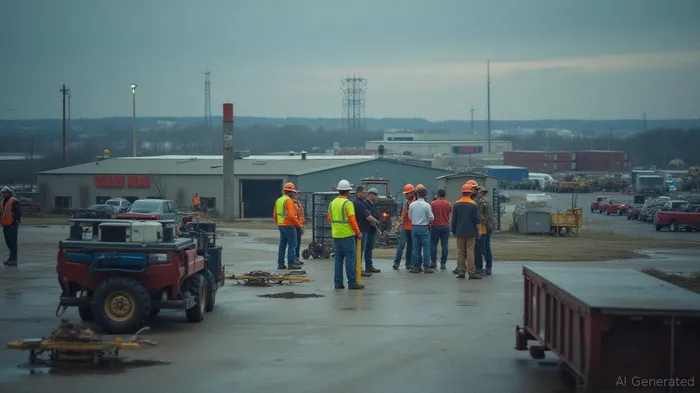
The Tariff Impact: A Perfect Storm of Costs and Uncertainty
The latest round of tariffs, targeting imported automobiles, parts, and raw materials, has sent shockwaves through Northeast Ohio's industrial core. A 25% tariff on imported vehicles, effective April 2025, and a parallel 25% levy on auto parts (implemented in May) have driven up production costs for manufacturers like KTM North America and Procter & Gamble. Meanwhile, construction firms face a 5–7% rise in material costs, exacerbated by labor shortages.
The Federal Reserve Bank of Cleveland's April 2025 Beige Book report underscores the scale of disruption: two-thirds of regional businesses anticipate higher input costs, with 46% planning to raise prices—a strategy already tested by consumers' reluctance to pay more. Auto dealers saw a temporary sales surge as buyers raced to avoid future hikes, but the broader retail sector faces declining demand as households brace for inflation.
The market's volatility is reflected in the stock performance of regional giants like Cleveland-CliffsCLF--, which fell 15% in early April before rebounding after a 90-day tariff pause. Similarly, TransDigmTDG-- (TDG) and Lincoln ElectricLECO-- (LECO) faced declines tied to supply chain concerns, illustrating how tariff uncertainty can destabilize even seasoned industrial players.
Building Resilience: Strategies for Survival and Growth
Amid the chaos, Northeast Ohio businesses are adopting a playbook of operational and financial agility:
Leveraging Foreign-Trade Zones (FTZs):
Dozens of manufacturers have enrolled in the 89-year-old FTZ program, which allows companies to defer tariffs on imported goods until they enter U.S. commerce. Lorain County's recent surge in FTZ adopters—a doubling over three months—highlights this as a critical cost-saving tool. For example, a company importing steel could avoid tariffs on stored inventory until it's sold domestically, effectively creating a “tax-free warehouse.”Supplier Diversification and Domestic Sourcing:
With 29% of businesses pivoting to domestic suppliers to reduce reliance on imports, Northeast Ohio's automotive sector is retooling factories to meet U.S.-Mexico-Canada Agreement (USMCA) content thresholds. Ford's Michigan plant, operating three shifts to boost USMCA-compliant production, serves as a blueprint for Ohio-based manufacturers seeking tariff relief.Inventory Management and Strategic Contracts:
Companies like Sherwin-WilliamsSHW-- (SHW) are accelerating purchases of critical inputs to stockpile before tariffs rise further. Legal teams are renegotiating contracts to include clauses allowing price adjustments if tariffs escalate—a move critical to avoiding margin erosion.Price Transparency and Customer Collaboration:
While 46% of businesses are passing costs to customers, 48% report difficulty doing so compared to 2024. The lesson? Companies must engage consumers proactively. Procter & Gamble's decision to adjust product sizes rather than raise prices outright—a tactic used in 2023—shows how creativity can mitigate backlash.
Investment Insights: Where to Look—and What to Avoid
For investors, the Northeast Ohio story is a mosaic of risk and opportunity:
- Buy the FTZ Play: Companies like Lincoln Electric (LECO), which already use FTZs for international shipments, could see margin stability as peers catch up.
- Focus on Domestic Champions: Manufacturers like Cleveland-Cliffs (CLF) and KeyBank (KEY)—which finances FTZ-enrolled firms—may benefit from long-term demand for U.S.-made steel and capital infrastructure.
- Avoid Auto Parts Imports: Firms overly reliant on foreign components without a USMCA or FTZ strategy—such as niche auto suppliers—face margin squeezes as tariffs bite.
The Bottom Line: Resilience Requires Long-Term Vision
Northeast Ohio's businesses are proving that volatility need not spell doom. Those prioritizing FTZ adoption, domestic partnerships, and adaptive pricing are building buffers against the next tariff shock. Investors, meanwhile, should favor companies with diversified supply chains and flexible pricing power—qualities that will define winners in this era of economic turbulence.
As one Lorain County CEO advised: “Stay the course, but don't be blind to the course ahead.” In Northeast Ohio, that means turning uncertainty into an advantage—one strategic move at a time.

Stay ahead of the market.
Get curated U.S. market news, insights and key dates delivered to your inbox.
AInvest
PRO
AInvest
PRO



Comments
No comments yet