
Navigating Tariff Turbulence: Why Defensive Sectors and Dividend Stocks are the New Safe Havens
The U.S. equity market has been buffeted by a series of tariff delays in 2025, creating a climate of uncertainty that has reshaped sector dynamics and investor behavior. While cyclical sectors like industrials and materials face mounting headwinds, defensive sectors such as healthcare and technology have emerged as resilient safe havens. This article examines how tariff-induced volatility is altering market sentiment, identifies vulnerabilities in tariff-sensitive industries, and outlines strategic opportunities for investors seeking stability in turbulent times.
The Uncertainty Tax: Cyclical Sectors Under Siege
The repeated postponement of tariff implementations—most recently extended for China until August 12—has left businesses and investors in limbo. Sectors reliant on global supply chains, such as industrials and consumer discretionary, are bearing the brunt of this uncertainty.
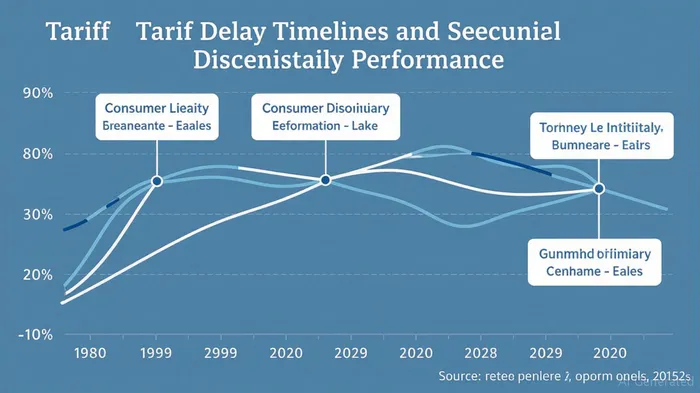
The consumer discretionary sector, which includes retailers and auto manufacturers, now leads all U.S. sectors in credit rating downgrades, with 30 downgrades since early 2025. General MotorsGM--, for instance, projects tariffs could cost it $4–$5 billion in 2025, while Best BuyBBY-- cited tariff-driven price hikes as a key factor in lowering its 2026 guidance. The sector's median probability of default rose to 2.95% in Q2, second only to healthcare, underscoring its fragility.
Meanwhile, industrials face dual pressures: rising steel and aluminum tariffs (25% for U.K.-origin products, 50% for others) and delays in resolving trade disputes with EU nations. The sector's earnings growth forecasts have been repeatedly revised downward, with companies like BoeingBA-- and CaterpillarCAT-- struggling to pass rising input costs to consumers.
The Resilience of Defensive Sectors: Tech and Healthcare Lead the Charge
While cyclical sectors falter, defensive sectors are proving their mettle. Technology stocks, particularly those in AI and semiconductors, have surged amid a "risk-on" market bias. Despite valuation concerns—tech P/E ratios hit the 96th percentile of the past 20 years—companies with pricing power, such as NVIDIANVDA-- and MicrosoftMSFT--, are outperforming.
Healthcare, too, has shown remarkable stability. With tariffs on pharmaceuticals delayed until August, companies like PfizerPFE-- and MerckMRK-- are insulated from immediate cost pressures. The sector's defensive nature—driven by steady demand for drugs and medical services—has also attracted investors fleeing cyclical volatility.
Dividend Stocks: A Shield Against Tariff-Induced Volatility
Amid this environment, dividend-paying stocks are becoming critical portfolio anchors. Companies with strong cash flows and pricing power, such as Coca-ColaKO-- and Procter & Gamble, offer both income and stability.
DAC Capital's "3D Double Digits" universe—stocks with 10%+ dividend yields and consistent payout growth—has outperformed the S&P 500 by 4.2% year-to-date. As DAC analyst Sarah Lin noted, "Dividend growers act as inflation hedges and provide ballast in uncertain markets. Investors should prioritize firms with pricing power and low debt."
The energy sector, meanwhile, has become a mixed bag. While U.S. producers benefit from exemptions under USMCA, companies exposed to sanctioned oil (e.g., Venezuela) face retaliatory tariffs. This bifurcation makes sector-wide bets risky; instead, investors should target companies with diversified supply chains.
Strategic Rebalancing: Where to Allocate Now
- Favor Tech with Pricing Power: Invest in AI leaders like NVIDIA and semiconductor firms with global scale, but avoid speculative crypto/tech stocks trading at bubble valuations.
- Healthcare as a Haven: Target pharmaceuticals and medical device companies with diversified revenue streams.
- Dividend Stocks Over Speculation: Reallocate to utilities (e.g., NextEra Energy) and consumer staples (e.g., Kimberly-Clark) for steady income.
- Avoid Tariff-Exposed Materials: Steel and aluminum equities remain vulnerable to further rate hikes post-August.
Final Take: Caution Amid the Rally
The Q2 rebound—driven by tariff pauses and strong earnings—has been misleading. Beneath the surface, job growth has slowed to 0.39% YTD, a near-recessionary pace, while manufacturing PMIs remain contractionary. As one Wall Street strategist warned, "The market is pricing in a tariff ceasefire, but the Fed's flexibility to cut rates won't offset a profit squeeze if tariffs bite in Q4."
Investors should treat the rally as an opportunity to reposition portfolios toward defensive sectors and dividend stocks. As tariffs linger, resilience, not speculation, will define the next phase of market leadership.
In the words of Facet Investment's Q2 report: "Defensive posturing may underperform in speculative rallies, but it's the right trade for a world where tariffs and economic slowdowns are twin risks."
This article is for informational purposes only. Always consult a financial advisor before making investment decisions.

Delivering real-time insights and analysis on emerging financial trends and market movements.
Latest Articles
Stay ahead of the market.
Get curated U.S. market news, insights and key dates delivered to your inbox.
AInvest
PRO
AInvest
PRO



Comments
No comments yet