
Navigating Tariff Turbulence: Contrarian Opportunities in a Volatile Market
The Federal Reserve's June meeting minutes laid bare a central bank torn between easing monetary policy and waiting for clarity on trade wars' economic impact. Meanwhile, President Trump's tariff deadlines in Q3 2025 threaten to amplify volatility, creating fertile ground for contrarian investors. While headlines focus on uncertainty, the interplay of Fed caution and tariff-driven sector dislocations presents a rare chance to identify undervalued equities poised to rebound if trade tensions ease or the Fed pauses its tightening cycle. Here's how to parse the noise.
The Fed's Dilemma: Data Dependence or Policy Paralysis?
The June minutes revealed a Fed split over whether to cut rates in July, with some officials citing the need to “avoid premature easing” amid unresolved trade risks. The central bank's revised forecasts—lower GDP growth (now 1.4% for 2025) and higher core inflation (3.1%)—reflect this tension. Crucially, the Fed signaled it will await clearer data on how tariffs are affecting prices and hiring. This hesitation creates a critical contrarian angle: the market may overreact to near-term tariff headlines, pricing in worst-case scenarios while overlooking the Fed's potential pivot if inflation moderates.
Trade Tensions: Catalysts for Volatility and Opportunity
Trump's tariff calendar in Q3 is a minefield of potential market-moving events. Three deadlines stand out:
- July 31: The Federal Circuit's oral arguments on the injunction against “fentanyl” tariffs could either lift a cloud over Canadian/Mexican trade or prolong uncertainty. A ruling to uphold the injunction might trigger a relief rally in industrials and materials stocks.
- August 1: Reciprocal tariffs resume for most countries after a July delay. Companies with exposure to European or Asian supply chains—such as semiconductor manufacturers—could face renewed margin pressure unless exemptions materialize.
- August 12: China's tariff suspension ends, reverting to a 10% baseline rate. This could pressure tech firms reliant on Chinese components unless Beijing signals willingness to negotiate.
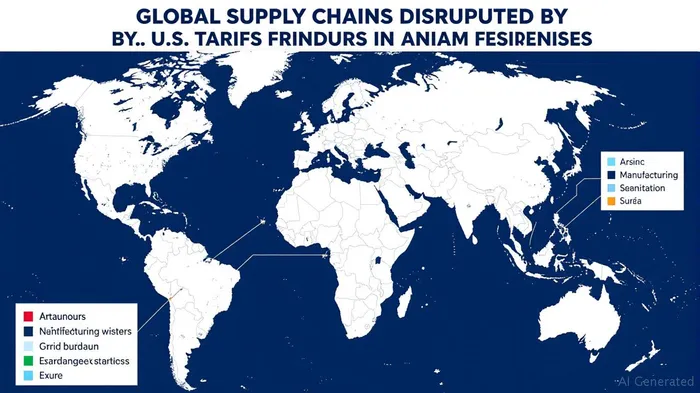
Sector-Specific Contrarian Plays
The volatility is most acute in manufacturing and technology, but both sectors hold hidden gems:
1. Manufacturing: Steel and Auto Parts
- Steel: Despite 25%-50% tariffs on imports, companies like Nucor (NUE) or Allegheny Technologies (ATI)—which emphasize domestic production and aerospace exemptions—could benefit from reduced foreign competition. The Fed's reluctance to cut rates quickly also supports demand for capital goods.
- Auto Parts: BorgWarner (BWA) or Lear (LEA), which source components compliant with USMCA rules, face less tariff exposure than peers. Their stocks have lagged due to trade fears but could rebound if the Fed pauses rates, easing financing costs.
2. Technology: Semiconductors and Critical Minerals
- Semiconductors: Texas Instruments (TXN) or Broadcom (AVGO), with diversified supply chains and exposure to U.S. defense contracts, are insulated from broad tariff impacts. The Fed's focus on inflation could also reduce fears of rate hikes undermining tech valuations.
- Critical Minerals: Freeport-McMoRan (FCX) or Albemarle (ALB)—key suppliers of copper and lithium—are undervalued despite their strategic importance. A de-escalation in trade wars would lift their multiples.
The Contrarian Edge: Timing and Patience
The Fed's data-dependent stance means investors should wait for clarity on two metrics before committing:1. July Employment Report: Strong hiring data could delay rate cuts, but weak data might force the Fed's hand.2. Tariff Impact on Inflation: If June's CPI shows tariff-driven price spikes are temporary, the Fed's terminal rate could drop, boosting equities.
Investment Strategy
- Buy the dips around key tariff deadlines (July 31, August 1). For example, consider averaging into semiconductor ETFs (e.g., SOXX) as fears about supply chains peak.
- Focus on balance sheets: Companies with strong cash reserves and minimal debt—like Danaher (DHR) or Crown Castle (CCI)—can weather trade headwinds.
- Hedging: Pair tariff-impacted stocks with short positions in the U.S. Dollar Index (DXY), which often rallies during trade disputes but could weaken if Fed cuts materialize.
Conclusion
The Fed's hesitation and tariff deadlines have created a paradox: heightened short-term risk and long-term opportunity. For contrarians, the key is to separate signal from noise. Sectors like manufacturing and tech, though pummeled by trade fears, offer asymmetric upside if the Fed pauses rates or trade talks turn constructive. As always, volatility is the friend of the patient investor.

Stay ahead of the market.
Get curated U.S. market news, insights and key dates delivered to your inbox.


AInvest
PRO
AInvest
PRO



Comments
No comments yet