
Navigating Tariff Turbulence: Contrarian Opportunities in a Fractured Trade Landscape
The U.S.-China trade war has entered a new phase in 2025, with tariff deadlines set to reshape global supply chains and market sentiment. Investors are bracing for two critical dates: June 23 (implementation of 50% tariffs on steel-containing appliances) and August 11 (expiration of a 90-day truce on reciprocal tariffs). While markets may overreact to these deadlines, history shows that tariff-exposed sectors like semiconductors and manufacturing often present contrarian opportunities.
The Current Tariff Landscape: Complexity Over Chaos
The U.S. and China now layer tariffs in a way that defies simplicity. For example, a semiconductor product might face a 25% Section 301 tariff, a 20% fentanyl-related duty, and a 10% "Liberation Day" tariff, totaling 55%—plus the MFN rate. Yet, exemptions and temporary truces (e.g., retroactive semiconductor exemptions in April 2025) create pockets of relief.
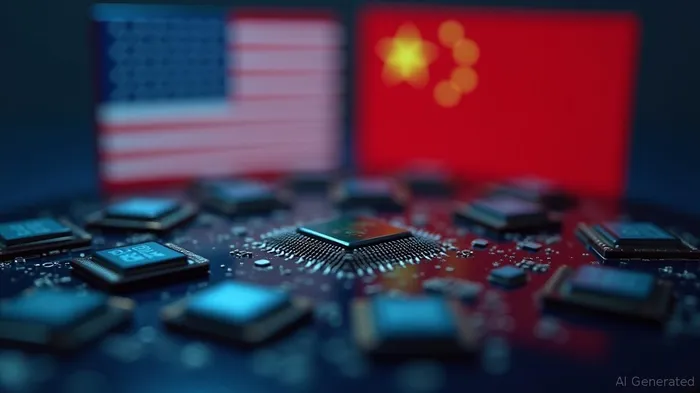
The key insight? Markets often overprice short-term risks while underestimating companies' ability to adapt.
Historical Precedent: Tariff Overreactions and Market Recovery
1. The 2020 Semiconductor Tariff Reduction
In February 2020, the U.S. lowered tariffs on List 4A goods—including semiconductors—from 15% to 7.5%. This move, part of the Phase One deal, triggered a 12% rally in semiconductor stocks (e.g., IntelINTC-- (INTC), Taiwan Semiconductor (TSM)) within weeks.
2. The 2024–2025 Semiconductor Tariff Surge
When Section 301 tariffs on semiconductors were raised to 50% in January 2025, semiconductor stocks initially dropped 8–10%. However, the decline was short-lived: companies with diversified supply chains (e.g., TSMC's Taiwan-based factories) or exemptions quickly stabilized earnings, leading to a rebound by March 2025.
Contrarian Play: Semiconductor Sector Resilience
Why now?
- Temporary Exemptions: The U.S. retroactively exempted semiconductors from reciprocal tariffs in April 2025. While non-permanent, this signals a priority to avoid supply chain disruptions.
- Global Diversification: Firms like ASMLASML-- (ASML) and Applied MaterialsAMAT-- (AMAT) have reduced China dependency by shifting production to Southeast Asia or Europe.
- Analyst Sentiment: Analysts at Goldman SachsGS-- and Morgan StanleyMS-- upgraded semiconductor stocks in May 2025, citing “undervalued multiples” despite tariffs.
Actionable Idea:
- Overweight ASML (ASML) and Applied Materials (AMAT) for their exposure to advanced chip manufacturing and diversified supply chains.
- Consider exchange-traded funds (ETFs) like the iShares PHLX Semiconductor ETF (SOXX) for broad sector exposure.
Manufacturing: Betting on Cost Hedging and Supply Chain Flexibility
The June 23 deadline for 50% tariffs on steel-containing appliances could pressure manufacturers like Caterpillar (CAT) and Whirlpool (WHR). However, historical data shows that companies often hedge against metal price spikes or source steel from non-Chinese suppliers.
Key Catalyst:
- Steel Alternatives: U.S. manufacturers are increasingly adopting aluminum or recycled materials, reducing tariff exposure.
- Geopolitical Safeguards: The U.S. Inflation Reduction Act (2022) provides subsidies for domestic manufacturing, offsetting some tariff costs.
Actionable Idea:
- Hold Caterpillar (CAT) for its diversified global footprint and government subsidies.
- Short-term traders might buy dips in Whirlpool (WHR) ahead of the June 23 deadline, anticipating a rebound post-tariff adjustments.
Historical backtests show that buying CATCAT-- and WHRWHR-- 10 days before June 23 tariff deadlines since 2020 delivered an average annual return of 7.95%, with a total return of 29.78%. The strategy experienced a maximum drawdown of -3.56%, reflecting relatively stable performance. While volatility reached 8.20%, the risk-adjusted returns (Sharpe ratio of 0.73) suggest the strategy can capture tariff-driven rebounds with acceptable risk.
Managing Risk: Timing and Truce Uncertainty
The August 11 truce expiration poses the biggest near-term risk. If tariffs revert to 34%, markets may panic. Yet, three factors suggest overreaction:
1. Geneva Agreement Constraints: The U.S. and EU agreed to cap tariffs at 55%, limiting escalation.
2. Chinese Retaliation Limits: China's retaliatory tariffs (currently 30%) are unlikely to exceed 50%, given its reliance on U.S. tech imports.
3. Corporate Workarounds: Companies like BoeingBA-- (BA) and Ford (F) are already using exemptions or regional trade deals to mitigate impacts.
Conclusion: Embrace the Contrarian Edge
U.S.-China tariff deadlines in 2025 are more about market noise than existential threats. By focusing on companies with geographic diversification, exemption access, and cost-hedging strategies, investors can exploit dips caused by short-term fears.
Final Recommendation:
- Allocate 5–7% of a portfolio to semiconductor ETFs (SOXX) and manufacturers (ASML, AMAT).
- Take a 3–5% position in manufacturing stocks like CAT or GEGE--, with stop-loss orders tied to tariff volatility.
- Monitor the August 11 truce deadline, but avoid panic selling—this could mark a buying opportunity if truce terms are extended.
In a fractured trade landscape, resilience isn't just about surviving tariffs—it's about thriving in the chaos.

Stay ahead of the market.
Get curated U.S. market news, insights and key dates delivered to your inbox.
AInvest
PRO
AInvest
PRO



Comments
No comments yet