
Navigating Tariff Turbulence: Which Consumer Discretionary Stocks Are Rising to the Challenge?
The U.S. tariff landscape has undergone seismic shifts in 2025, reshaping the consumer discretionary sector in profound ways. From auto sales declines to retailer margin squeezes, companies are grappling with rising costs, supply chain disruptions, and shifting consumer behavior. Yet amid this upheaval, a divergence in stock performance has emerged. This article dissects how Costco (COST), McDonald's (MCD), and Home Depot (HD) are navigating these challenges—and what investors should watch next.
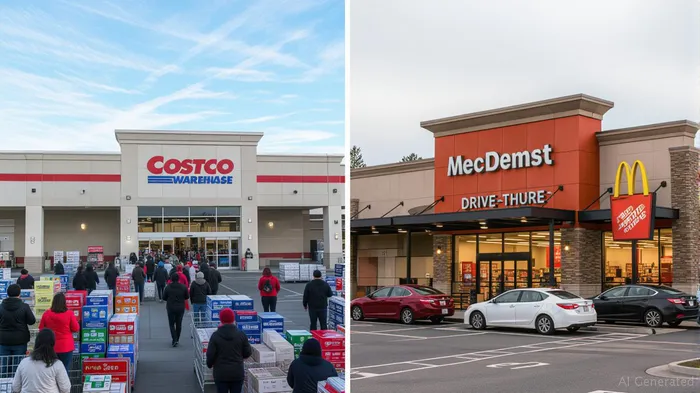
The Tariff Tsunami: Immediate Impacts on Retail and Autos
The July 2025 tariffs, including a 25% levy on imported vehicles and parts, have triggered cascading effects:
- Auto sales surged 11% in March as consumers rushed to beat price hikes, but this “pull-forward” demand left April sales flat and inventories strained.
- Retailers face margin pressures as tariffs on imported goods (e.g., appliances, apparel) hit profit margins. S&P warns that weak demand for discretionary items like dining and travel could worsen the pain.
Case Study 1: Costco—Diversification as a Shield
Costco has emerged as a relative winner by proactively addressing tariffs:
- Price Strategy: Raised prices on select items (e.g., flowers) but stabilized staples like bananas. CFO Gary Millerchip emphasized absorbing costs where possible.
- Supply Chain Overhaul: By 2026, no single foreign country will account for more than 10% of its sourcing. Over half of its products are now U.S.-made.
- Result: Outperformed peers in maintaining sales growth, with shares up 8% YTD despite broader sector headwinds.
Investment Takeaway: Costco's diversification and selective pricing give it a resilience edge. Investors should monitor its sourcing progress and inflation-linked sales trends.
Case Study 2: McDonald's—A Cautionary Tale of Consumer Caution
McDonald's is a stark example of tariff-driven demand shifts:
- Q1 2025 Sales Decline: U.S. same-store sales fell 3.6%, the worst since the pandemic, as households prioritized essentials over discretionary spending.
- The Bigger Picture: Rising prices for essentials (food, housing) have sapped consumer budgets. 54% of U.S. adults now plan to cut back on dining out.
Investment Takeaway: McDonald'sMCD-- faces a “wait-and-see” consumer mindset. Investors should watch for signs of stabilization in discretionary spending and cost-control measures.
Case Study 3: Home Depot—Walking the Tightrope of Pricing
Home Depot is balancing margin preservation and customer retention:
- Pricing Pledge: CFO Richard McPhail vowed to “maintain current pricing levels” despite tariffs. The company absorbed costs via domestic sourcing (over 50% of products) and supplier partnerships.
- Trade-Offs: Some tariff-affected products may be discontinued. CEO Ted Decker noted that items no longer economically viable could “just end up going away.”
Investment Takeaway: Home Depot's scale and localization offer stability, but reduced product variety could test customer loyalty. Investors should track inventory management and new sourcing deals.
Sector Resilience: Where to Find Opportunities
- Winners: Companies with domestic supply chains (like Home Depot) or pricing power (Costco) are better positioned.
- Losers: Retailers reliant on tariff-heavy imports (e.g., apparel) or discretionary spending (restaurants) face prolonged pain.
- Macro Risks: Prolonged tariffs could push auto prices $5,855 higher, worsening affordability. Investors should watch for policy shifts or exemptions.
Actionable Investment Strategies
- Buy the Resilient: Costco and Home Depot offer defensive plays. Their strategies to diversify sourcing and control pricing provide a buffer against inflation.
- Avoid the Fragile: Steer clear of retailers with heavy international sourcing or reliance on discretionary spending (e.g., mall-based retailers).
- Monitor Policy Developments: A potential August 1 tariff hike on Canadian goods (from 25% to 35%) could trigger further volatility. Stay agile.
Conclusion
The tariff-driven reshaping of the consumer discretionary sector is far from over. While retailers like CostcoCOST-- and Home DepotHD-- are adapting, McDonald's underscores the vulnerability of businesses tied to discretionary spending. Investors must prioritize companies with supply chain flexibility, pricing discipline, and exposure to essential demand. In this turbulent environment, preparation—not panic—is the best strategy.
Disclosure: This analysis is for informational purposes only and should not be construed as investment advice.

Stay ahead of the market.
Get curated U.S. market news, insights and key dates delivered to your inbox.
AInvest
PRO
AInvest
PRO



Comments
No comments yet