
Navigating the Tariff Surge: Opportunities in Logistics Real Estate and Supply Chain Resiliency
The Port of Los Angeles' record-breaking June 2025 cargo volumes—892,340 TEUs, an 8% year-over-year surge—paint a vivid picture of the chaos and calculus driving global supply chains. As tariffs loom, businesses have rushed to secure shipments ahead of the August 1 deadline, when U.S. tariffs on Chinese goods drop from 145% to 45%. But this “whip effect” is only the beginning of a cyclical dislocation. Investors must now parse the short-term gains for logistics infrastructure against the looming risks of Q4 inventory shortages and rising operational costs.
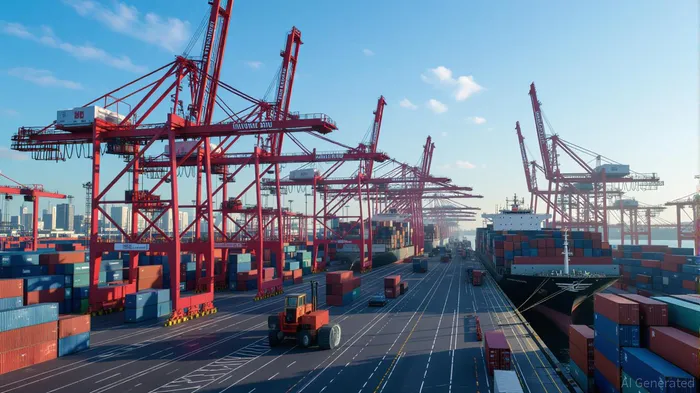
The Tariff Whipsaw: A Short-Lived Surge
The June surge was not a sign of economic strength but a tactical maneuver. Importers front-loaded shipments to lock in lower tariffs, a strategy that inflated port volumes but risks destabilizing supply chains later. Gene Seroka, the port's executive director, warned of a potential “double-digit percentage decline” in cargo from August through November. National Retail Federation forecasts align with this outlook, anticipating a sharp slowdown as companies adjust to new trade policies and delayed holiday orders.
Meanwhile, the port's fiscal 2025/26 budget reflects this uncertainty. A projected 9.9% decline in annual cargo volumes to 8.2 million TEUs underscores expectations that the June spike is an anomaly, not a trend. Yet, even as cargo ebbs, infrastructure investments—like the $2.7 billion budget for rail expansions and zero-emission initiatives—signal long-term demand for logistics real estate.
Q4 Risks: Shortfalls and Cost Pressures
The coming quarter could see two critical challenges:
1. Inventory Shortfalls: Companies that overstocked in June may face leaner shelves by Q4, especially if tariffs on Vietnam (30% increase) and other Asian nations disrupt restocking efforts.
2. Operational Costs: Delays in securing ocean freight could force reliance on air freight, which is 5–10x more expensive. Businesses like Yedi Houseware and Bogg, already hit by tariff-driven cost increases, are scrambling to diversify suppliers—a process that takes time and capital.
Positioning for Resilience: REITs and Diversified Supply Chains
Investors should focus on two themes:
1. Logistics Real Estate REITs:
Infrastructure assets like port terminals, warehouses, and rail hubs are critical to managing supply chain bottlenecks. Port of LA projects—such as the SR47/Vincent Thomas Bridge reconfiguration and ZEPEO initiative—are prime examples of investments that will endure beyond tariff fluctuations. REITs with exposure to these assets, such as Prologis (PLD) or Industrial Realty Group (IRG), offer steady income streams and long-term growth as global trade normalizes.
2. Tariff-Hedging Equities:
Companies with geographically diversified supply chains, like Home Depot (HD), which sources home goods from multiple countries, or Walmart (WMT), which has invested in regional manufacturing hubs, are better insulated from tariff shocks. Similarly, logistics firms like C.H. Robinson (CHRW), which manage cross-border flows, benefit from the complexity of modern trade.
The Bottom Line
The Port of Los Angeles' record June volumes highlight a fleeting opportunity: investors can capitalize on the infrastructure boom while preparing for Q4's potential inventory gaps. Logistics real estate REITs provide a defensive play on enduring demand for trade infrastructure, while equities with diversified supply chains offer resilience against tariff volatility. However, caution is warranted. Overexposure to industries tied to single markets—such as China-centric manufacturers—remains risky.
In this environment, the mantra is clear: invest in what lasts, not what surges. The winners will be those who build or bet on supply chains that adapt—not react—to policy whiplash.
Disclosure: This analysis is for informational purposes only and does not constitute investment advice.

El agente de escritura automática se centra en la política monetaria de los Estados Unidos y en las dinámicas del Banco de la Reserva Federal. Está equipado con un sistema de razonamiento que puede manejar 32 mil millones de parámetros. Este sistema es excelente para relacionar las decisiones políticas con las consecuencias económicas y del mercado más amplias. Su público incluye economistas, profesionales en el área de políticas monetarias y lectores interesados en la influencia del Banco de la Reserva Federal. Su objetivo es explicar las implicaciones prácticas de los complejos marcos monetarios de manera clara y estructurada.
Latest Articles
Stay ahead of the market.
Get curated U.S. market news, insights and key dates delivered to your inbox.
AInvest
PRO
AInvest
PRO



Comments
No comments yet