
Navigating the Tariff Storm: How States Are Defying Inflation and Shaping Federal Policy
The latest tariff adjustments under the Trump administration—blanket rates of 15% to 20% on most imports—have sent shockwaves through the U.S. economy, with inflation forecasts now topping 3.0% for core goods by year-end. While the Federal Reserve remains on the sidelines, the true battleground for economic resilience is unfolding at the state level. States like Mississippi, Kansas, and Alabama are proving that geographic diversity and structural advantages can mitigate tariff-driven inflation, offering investors a roadmap to navigate this turbulent landscape.
The Tariff Tsunami and Its Ripple Effects
The recent tariff hikes—ranging from 25% on Japanese imports to 50% on copper—have triggered a sharp rise in consumer prices. The Budget Lab's analysis reveals that average household income losses could hit $2,300 in 2025, with motor vehicles alone seeing a 13.5% price surge. The Fed, torn between supporting employment and taming inflation, has delayed rate cuts, betting that tariff impacts will remain temporary. But history suggests otherwise: tariffs have historically reduced GDP, not boosted it.
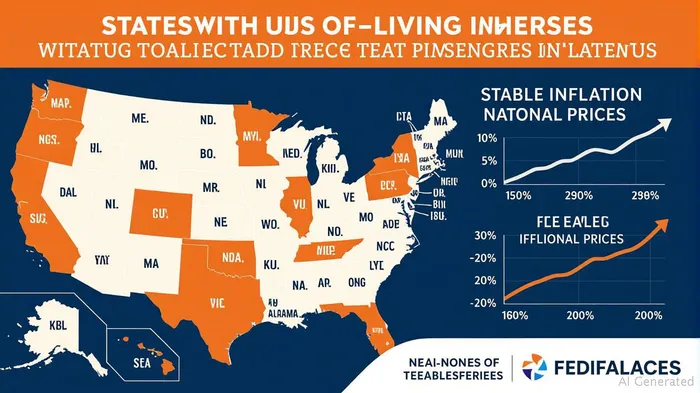
The problem isn't just rising prices—it's the uneven distribution of pain. Lower-income households face a 3.2% income loss versus 0.9% for the wealthiest, exacerbating inequality. Yet, in states like Mississippi, where the cost-of-living index is a mere 83.3 (nearly half of Hawaii's 193.3), the economic fabric is less strained. How do these states defy the national inflationary tide?
The Stealth Advantage of Low-Cost States
States with the lowest cost-of-living indices—Mississippi, Kansas, and Alabama—are insulated by two key factors: diversified local economies and lower baseline expenses.
Housing Anchors Stability:
Mississippi's median home price of $140,818 and Kansas's $176,898 contrast starkly with California's $683,996. With housing representing 35% of household spending nationwide, states where this cost is subdued absorb less inflationary pressure.Manufacturing and Agriculture Buffers:
Kansas and Alabama host manufacturing hubs less reliant on imported components. For instance, Alabama's automotive sector, anchored by Hyundai and Mercedes-Benz factories, benefits from localized supply chains, reducing tariff exposure. Meanwhile, Mississippi's agricultural economy faces fewer input cost hikes since key crops like soybeans are grown domestically.Lower Wage Pressures:
States with unemployment rates below 3% (e.g., Kansas at 2.5%) can better control wage inflation. Unlike high-cost regions, where firms must hike prices to cover rising labor costs, these states maintain a delicate balance between productivity and affordability.
The Federal Reserve's Crossroads
The Fed's dilemma—whether to cut rates to counter tariff-driven inflation or wait—hinges on regional data. While core inflation is climbing nationally, states like Kansas (CPI at 2.1% in May) and Alabama (2.3%) are outliers, offering hope that localized resilience can temper broader trends.
Investors should note the Fed's internal divide: hawks fear permanent inflation from tariffs, while doves see temporary pain. The market is pricing a 60% chance of a September rate cut, but if low-cost states keep their inflation in check, the Fed may gain the flexibility to act.
Investing in Resilience: Where to Look
The tariff era demands a focus on sectors and regions that thrive under inflationary pressure.
Utilities and Healthcare in Low-Cost States:
States like Kansas and Mississippi have below-average healthcare costs and stable utility prices. Utilities ETFs (e.g., XLU) and regional healthcare providers could outperform as consumers prioritize essentials.Real Estate in Affordable Markets:
While coastal markets like California face affordability crises, opportunities abound in the Midwest.Consumer Staples with Local Supply Chains:
Retailers like WalmartWMT-- (WMT) and TargetTGT-- (TGT), with strong footprints in low-cost states, benefit from lower input costs and price-sensitive shoppers.Avoid Tariff-Exposed Sectors:
Steer clear of automotive (TSLA, GM) and apparel stocks (PVH, GPS), which face margin squeezes from 35%-40% tariffs on imports.
Final Take: Geography as Strategy
The tariff era has rewritten the rules of economic resilience. States with low cost-of-living indices and diversified economies are not just surviving—they're positioning themselves to thrive. Investors ignoring regional disparities do so at their peril. As the Fed's patience wears thin, the next bull market may be found not in Wall Street's boardrooms, but in the heartland's hidden strengths.
The message is clear: inflation isn't inevitable everywhere. Follow the data—and the dollars—to where tariffs haven't yet claimed victory.

Stay ahead of the market.
Get curated U.S. market news, insights and key dates delivered to your inbox.


AInvest
PRO
AInvest
PRO



Comments
No comments yet