
Navigating the Tariff Storm: How Smart Companies Are Seizing Opportunities in the Semiconductor and EV Supply Chain
The U.S.-China trade war has escalated into a full-blown supply chain crisis, with tariffs on semiconductors and electric vehicles (EVs) reaching unprecedented levels. While headlines focus on the conflict's costs, a deeper analysis reveals a hidden opportunity: companies that proactively adapt to tariff risks and exploit regulatory shifts are poised to dominate their markets. Investors should look beyond the noise to uncover underappreciated winners in this high-stakes game.
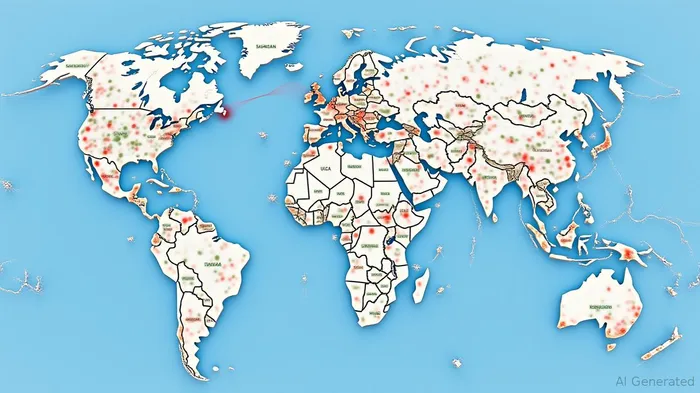
The Tariff Landscape: A Catalyst for Innovation
The U.S. has imposed a labyrinth of tariffs targeting China's dominance in semiconductors and EVs. Semiconductor tariffs under Section 232 threaten up to 50% duties on imports, while EVs face a staggering 100% tariff. China retaliates with rare earth export controls and its own 84–125% tariffs on U.S. goods. Yet amid this chaos, companies are rewriting the rules of the game.
Strategy 1: Localization and Supplier Diversification
The most astute players are moving production closer to end markets. For instance, Tesla (TSLA) and Ford (F) are accelerating their shift to North American batteryABAT-- production, leveraging Mexico's tariff exemptions and Canada's critical mineral reserves. . This localization strategy reduces reliance on Chinese supply chains and qualifies companies for U.S. government incentives.
Strategy 2: R&D in Alternative Materials and Designs
Semiconductor firms like Broadcom (AVGO) and ON Semiconductor (ON) are investing in advanced packaging technologies to reduce chip size and complexity, minimizing exposure to export controls. Meanwhile, EV battery makers such as LG Energy Solution and CATL are diversifying their cathode materials, substituting rare earths with abundant alternatives like lithium iron phosphate (LFP). .
Strategy 3: Exploiting Regulatory Loopholes
Companies are exploiting temporary tariff exemptions and regional trade agreements. For example:- Stellantis (STLA) avoided U.S. automotive tariffs by restructuring supply chains to comply with USMCA rules of origin.- NXP Semiconductors (NXPI) shifted production of critical automotive chips to Malaysia, a country exempt from China's rare earth export restrictions.
Underappreciated Opportunities to Watch
Regional Semiconductor Foundries
While Taiwan's TSMCTSM-- dominates headlines, smaller players in Malaysia (e.g., Silterra Malaysia), Singapore (e.g., ASE Group), and Poland (e.g., Siltronic) are gaining traction. These firms benefit from proximity to EV manufacturers and lower geopolitical risks. .Recycled Critical Minerals Plays
Companies like Redwood Materials (private) and American Manganese (AMYNF) are pioneers in battery recycling, reducing reliance on Chinese imports. Their ability to recover cobalt, lithium, and nickel from EV waste positions them as critical partners for automakers.Software-Defined EVs
Firms such as NVIDIA (NVDA) and Mobileye (MBLY) are shifting EV value from hardware to software. By decoupling advanced driver-assistance systems (ADAS) from physical components, they mitigate supply chain risks and command higher margins.
Investment Thesis: The Winners Will Be the Adapters
The trade war's volatility creates a clear divide between companies that view tariffs as a threat and those that see them as a catalyst. Investors should prioritize:- Diversified supply chains (e.g., BYD (BYDDF)'s global battery partnerships).- Technological differentiation (e.g., Intel (INTC)'s 20A chip process).- Regulatory arbitrage (e.g., Volkswagen (VLKAY)'s U.S. battery joint venture with QuantumScape).
Risks and Considerations
The path is not without pitfalls. Sudden tariff changes or diplomatic breakthroughs could disrupt strategies overnight. However, the structural shifts—toward localization, recycling, and software—are irreversible. Companies that fail to adapt risk obsolescence, while innovators will capture disproportionate gains.
Final Recommendation
Investors should overweight companies with three traits:
1. Geographic flexibility (e.g., Amphenol (APH), which sources EV connectors from multiple regions).
2. Material independence (e.g., Albemarle (ALB), a lithium producer with U.S. reserves).
3. Regulatory foresight (e.g., Microchip Technology (MCHP), which lobbied successfully for semiconductor exemptions).
The U.S.-China trade war is a marathon, not a sprint. Those who bet on adaptive, agile companies will finish ahead of the pack.
Avi Salzman is a seasoned analyst specializing in global trade dynamics and technology investing. This article reflects his deep-dive analysis of supply chain strategies and emerging opportunities in a fractured trade landscape.

Stay ahead of the market.
Get curated U.S. market news, insights and key dates delivered to your inbox.
AInvest
PRO
AInvest
PRO



Comments
No comments yet