
Navigating the Tariff Storm: How to Protect Your Portfolio in 2025's Trade War
The U.S. tariffs on the EU and Mexico—scheduled to take effect on August 1, 2025—mark the latest escalation in President Trump's trade war playbook. With rates at 30%, these measures threaten to disrupt $2 trillion in annual trade and amplify market volatility. For investors, the question is clear: How do you shield your portfolio from the fallout while capitalizing on opportunities in this high-stakes environment?
A Familiar Dance: Tariffs and Market Volatility
History shows that tariffs and trade disputes are potent volatility triggers. During the 2018–2019 U.S.-China trade war, the S&P 500 swung wildly, dropping 19.8% in late 2018 before rebounding. The current situation mirrors that pattern. Since Trump's July 2025 tariff announcements, the VIX volatility index has surged 25%, signaling heightened investor anxiety.
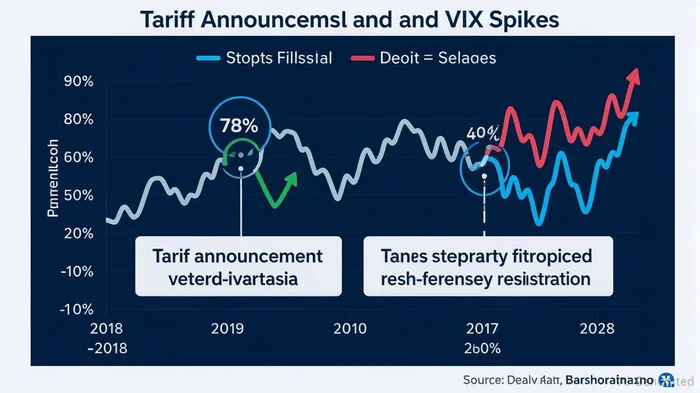
The stakes are higher now, however. The EU and Mexico account for 20% of U.S. trade, and the 30% tariffs target critical sectors like autos, pharmaceuticals, and agriculture. Wealth Enhancement's analysis warns that the Fed's reluctance to cut rates—a result of tariff-driven inflation—could prolong market turbulence.
Winners and Losers in the Tariff Landscape
The current tariff regime has created clear winners and losers. Let's break it down:
Winners:
- Tech & Cloud Computing: Firms like MicrosoftMSFT-- (MSFT) and AlphabetGOOGL-- (GOOGL) are thriving as businesses invest in cloud infrastructure to bypass trade bottlenecks.
- Utilities: Defensive plays like NextEra EnergyNEE-- (NEE) and Dominion EnergyD-- (D) have gained 9% YTD in 2025, outperforming broader markets.
- Consumer Staples: Procter & Gamble (PG) and Coca-ColaKO-- (KO) remain resilient as households prioritize essential goods.
Losers:
- Auto & Parts: TeslaTSLA-- (TSLA) has slumped 15% since March 2025 amid supply chain disruptions and retaliatory tariffs from Mexico.
- Retail: WalmartWMT-- (WMT) and Target (TGT) face margin pressure as tariffs raise the cost of imported goods.
Defensive Strategies: Building a Resilient Portfolio
Wealth Enhancement's playbook for tariff volatility hinges on diversification, sector selection, and policy awareness. Here's how to apply it:
- Prioritize Low-Volatility Assets:
- ETFs: Consider the iShares MSCIMSCI-- USA Min Vol Factor ETF (USMV), which tracks low-volatility stocks. It has returned 12% YTD in 2025.
Utilities: Firms like EDP (Portuguese utility giant) and Verbund (Austrian energy company) offer 5–6% dividends and stability.
Focus on Trade-Resistant Sectors:
- Cloud & AI: Allocate to cloud leaders like NVIDIANVDA-- (NVDA) and PalantirPLTR-- (PLTR), which are insulated from physical trade barriers.
European Banks: European banks like UniCredit (CRDI) and CaixaBank (CABK) trade at 0.6x price-to-book ratios—historically cheap—and offer 5–7% dividends.
Hedge with Bonds and Alternatives:
- Short-Term Treasuries: The iShares Short Treasury Bond ETF (SHY) provides liquidity and stability amid Fed rate uncertainty.
Private Equity: Wealth Enhancement notes that private markets, especially infrastructure and real estate, offer lower correlation to public equities.
Monitor Geopolitical Levers:
- Fed Policy: A 50-basis-point rate cut by year-end has a 60% probability, per Wealth Enhancement. Track the CPI—currently at 2.4%—to gauge Fed flexibility.
- Trade Deals: Watch for negotiations between the U.S. and the EU/Mexico. A delayed tariff start or reduced rates could spark a rally.
The Elephant in the Room: Inflation and Recession Risks
While tariffs are a key driver of volatility, their secondary effects—like inflation and recession fears—are equally dangerous. The Fed's 4.25–4.5% rate corridor is a double-edged sword: It keeps inflation in check but risks slowing GDP growth to 1.4% in 2025. Wealth Enhancement's “downside” scenario—a 25% tariff spike—could trigger a recession by late 2025, with bond yields soaring to 5%.
Final Take: Stay Nimble, Stay Defensive
The 2025 tariff storm requires a portfolio that's both defensive and opportunistic. Focus on:
- Dividend-rich sectors (utilities, European banks),
- Tech leaders shielded from trade wars, and
- Policy hedges (Treasuries, low-volatility ETFs).
As Trump's trade war enters its next phase, remember: The market's noise is loud, but disciplined diversification is your best defense.


Stay ahead of the market.
Get curated U.S. market news, insights and key dates delivered to your inbox.




Comments
No comments yet