
Navigating the Tariff Storm: Where to Bet on Japanese Manufacturing Resilience
The U.S.-China trade war has entered a new phase in 2025, with tariffs still high and geopolitical tensions simmering. While the truce announced in June offers temporary relief, the fragility of the deal leaves global supply chains in limbo. For Japanese manufacturers, this environment is a double-edged sword: some sectors are buckling under tariff pressure, but others are thriving by capitalizing on exemptions, shifting supply chains, and betting on long-term trends. Here's where to focus your investment dollars.
The Tariff Landscape: A Fragile Truce, Persistent Pain
The U.S. and China's June agreement reduced some tariffs, but the damage remains. U.S. tariffs on Chinese goods average 55%, while China's retaliatory levies linger at 10%. The truce, set to expire in August, has done little to ease the strain on trade flows. U.S. imports from China fell 7% in early 2025, and consumer prices rose 2.3% due to tariff-driven inflation.
For Japan, the stakes are high. President Trump's threat to impose 24% tariffs on Japanese exports—delayed until July 9—has forced companies to scramble for alternatives. Yet amid this chaos, certain sectors are proving remarkably resilient.
Sector Spotlight: Automation & Robotics—Japan's New Growth Engine
The Japanese robotics sector is a standout winner. The manufacturing PMI rebounded to 50.4 in June 2025, ending 13 months of contraction, driven by automation demand.
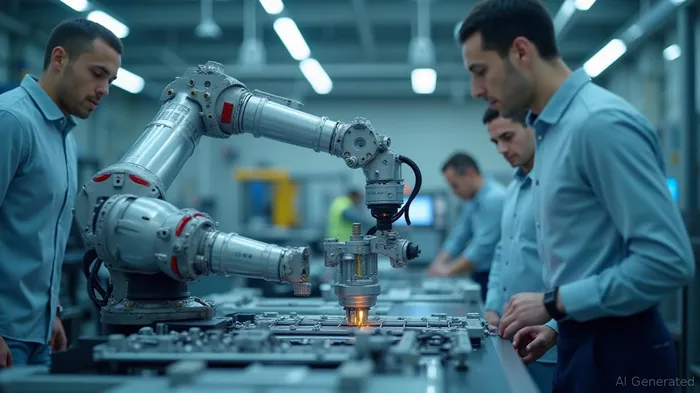
Key Plays:
- Fanuc (6954.T): The industrial robotics giant has seen its stock rise 14% year-to-date, fueled by contracts with EV manufacturers like TeslaTSLA--. Its equipment is critical for battery production and smart factories.
- Advantest (6857.T): This semiconductor-testing specialist is benefiting from global chip shortages. Its tools are essential for 5G and AI hardware.
Green Tech: Riding Japan's Carbon Neutrality Push
Japan's pledge to achieve carbon neutrality by 2050 has created a boom in clean energy infrastructure.
- Daikin Industries (6471.T): A leader in energy-efficient HVAC systems, it's capturing demand from governments and corporations seeking to cut emissions.
- Fujitsu (6702.T): Its semiconductor design work for renewable energy grids positions it to profit from global grid modernization.
Investors can access this theme via ETFs like the Invesco Solar ETF (TAN), which includes Japanese innovators.
Niche Manufacturing: Precision Parts, Big Returns
Japan's mastery of specialized components—think sensors, industrial printers, and medical devices—has insulated it from tariff shocks.
- Canon (7751.T): Its industrial printers are vital for precision manufacturing in EVs and semiconductors.
- Keyence (6864.T): A sensor technology leader, it's a favorite for industrial automation upgrades.
These firms are also expanding into Southeast Asia, using Thailand's North-South Industrial Corridor to dodge U.S. tariffs.
Exemptions and Policy Tailwinds
The U.S. has granted Section 232 exemptions for Japan's robotics and semiconductor equipment, delaying 24% tariffs until July 2025. This breathing room has fueled a 17% rise in Japanese robotics exports to the U.S. in Q1 2025.
Sectors to Avoid: Auto and Steel—Beware the Tariff Hangover
The auto sector is a cautionary tale. U.S. tariffs have slashed automaker profits by 18% year-to-date, with ToyotaTM-- (7203.T) and HondaHMC-- (7267.T) stocks under pressure. Steel producers face similar headwinds from Section 232 levies.
Investment Strategy: Play the Long Game
- Focus on Robotics Leaders: Fanuc and Advantest are core holdings.
- Green Tech ETFs: The Invesco SolarTAN-- ETF (TAN) offers diversified exposure.
- Hedging: Use yen-linked ETFs like iShares MSCI Japan (EWJ) to offset currency risk.
- Avoid Auto/Steel Until July: Wait for tariff clarity before investing.
Risks and Timing
The July deadline looms large. If exemptions expire, robotics and semiconductor firms could face renewed pressure. Geopolitical risks—like supply chain disruptions—also persist.
Conclusion: Innovation Over Tariffs
Japan's manufacturing renaissance isn't about avoiding tariffs—it's about out-innovating them. Sectors like automation, green tech, and niche manufacturing are proving that resilience comes from specialization and foresight. Investors who bet on these themes now may find themselves on the right side of history, even if trade wars rage on.
This article reflects analysis as of June 19, 2025. Always consult with a financial advisor before making investment decisions.

Stay ahead of the market.
Get curated U.S. market news, insights and key dates delivered to your inbox.
AInvest
PRO
AInvest
PRO



Comments
No comments yet