
Navigating the Tariff Labyrinth: How Logistics Giants Like FedEx Are Turning Trade Tensions into Strategic Opportunities
The U.S.-China trade war has evolved into a complex web of tariffs, geopolitical posturing, and supply chain upheaval. For logistics giants like FedExFDX-- (FDX), these challenges are not merely risks but catalysts for redefining resilience, diversification, and profitability. As tariff rates on Chinese imports surge to historic highs—reaching 132% for electric vehicles and 58% for nuclear reactors—companies must adapt or risk obsolescence.
The Tariff Landscape: A Minefield or a Map?
The current U.S.-China tariff regime is a patchwork of overlapping duties. Section 301 tariffs, initially set at 25%, now climb to 100% for strategic goods like semiconductors. The Fentanyl tariff (20%) and the “Liberation Day” truce (10% reciprocal tariffs, down from 125%) further complicate costs. Meanwhile, Section 232 steel tariffs hit 50% by June 2025, squeezing global manufacturing margins.
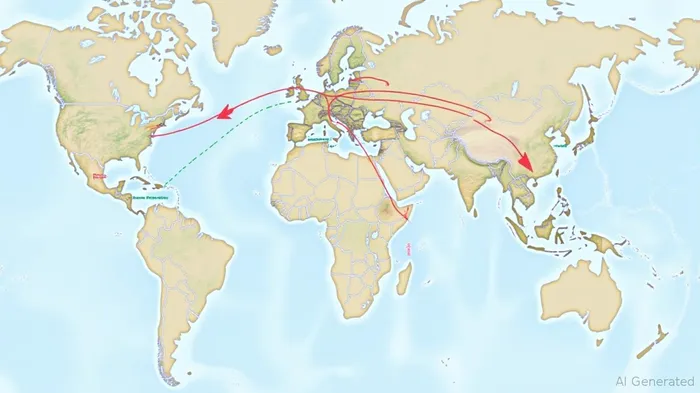
Key Takeaway: Tariffs are not static—they are dynamic weapons. Companies that treat them as temporary and unpredictable will fail. Those that build systems to monitor, absorb, and even leverage these shifts will thrive.
Supply Chain Resilience: The New Competitive Advantage
The 64% plunge in U.S. imports from China between March 24 and April 8, 2025, underscores a seismic shift. Businesses are front-loading cargo, nearshoring production, and diversifying suppliers to Southeast Asia and India. For FedEx, this means:
1. Regional Growth: Expanding air and ground networks in ASEAN and India to capture redirected trade.
2. Tech-Driven Agility: Deploying AI to reroute shipments around disrupted routes (e.g., the Suez Canal) and optimize costs.
3. Automation Investment: Scaling warehouse robotics to handle e-commerce surges, as seen in the 7.1% March air freight spike.
This data visualization would show FDX's stock performance relative to tariff escalation periods, highlighting resilience during volatility.
The Logistics Market: Volatility as an Opportunity
The ocean freight market's collapse—spot rates down to $1,600/FEU for the U.S. West Coast—masks underlying shifts. Carriers like COSCO and ONE are canceling 68 voyages to stabilize rates, but tariffs are driving a surge in premium air freight demand. FedEx's dominance in air cargo (handling 40% of U.S. express shipments) positions it to capitalize on this premium traffic.
Meanwhile, geopolitical disruptions (e.g., Panama Canal droughts, Red Sea diversions) are creating new demand for contingency planning. Companies like FedEx with global partnerships and flexible infrastructure can underprice competitors in high-risk corridors.
Regulatory Risks and Compliance Costs
New regulations, such as Canada's CARM (Rebate Prior to Payment) and Mexico's border-skipping bans, demand meticulous compliance. FedEx's investments in customs brokerage tools and regional contract logistics (e.g., Mexico's growing LTL market) are critical to avoiding penalties.
Investment Thesis: Why FedEx (FDX) Is a Trade War Winner
- Tariff Exposure Mitigation: FedEx derives only ~30% of revenue from Asia-Pacific (vs. 45% for peers like UPS). Its U.S. domestic and European networks insulate it from extreme tariff volatility.
- Strategic Diversification: Expansion into Southeast Asia's e-commerce sector (e.g., partnerships with Shein and Temu) aligns with shifting trade flows.
- Tech and Automation: Its $2.5B investment in automation and AI since 2022 reduces labor costs and improves route efficiency, countering inflationary pressures.
Risks to Consider
- Geopolitical Escalation: If the 90-day truce expires without renewal, tariffs could revert to 145%, squeezing margins.
- Capacity Overcorrection: Overcanceled voyages and front-loaded cargo could lead to a 2025 Q4 freight glut, depressing rates.
Conclusion: Tariffs Are Here to Stay—Adapt or Retreat
The U.S.-China trade war is not a temporary storm but a new normal. For FedEx, the path forward is clear: double down on tech-driven agility, expand into tariff-diverted trade corridors, and lean on its unmatched air freight network. Investors seeking exposure to global trade's “new rules” should consider FDXFDX-- as a long-term play on supply chain resilience.
As tariffs reshape global commerce, the winners will be those who turn complexity into opportunity—and FedEx is already ahead of the game.

Stay ahead of the market.
Get curated U.S. market news, insights and key dates delivered to your inbox.
AInvest
PRO
AInvest
PRO



Comments
No comments yet