
Navigating the Tariff Deadline and Energy Risks: A Playbook for Supply Chain Resilience in Q3 2025
The global economy faces two looming risks in Q3 2025: the escalating U.S.-China tariff war and the growing threat of energy shortages. These factors are reshaping supply chains, squeezing corporate margins, and creating both risks and opportunities for investors. Deutsche Bank's warnings about tariff-driven corporate delays and Allen's analysis of energy market vulnerabilities highlight the need for a defensive yet opportunistic strategy. Here's how to position your portfolio.
The Tariff Deadline: A Corporate Crossroads
Deutsche Bank has sounded the alarm on the Q3 2025 tariff deadline, referring to phased U.S. tariff hikes on Chinese goods—10% in H1 and another 10% in H2—threatening global trade flows. These measures, coupled with European energy constraints, have already caused delays in corporate deal-making and underwriting, per the bank's Q2 earnings report.
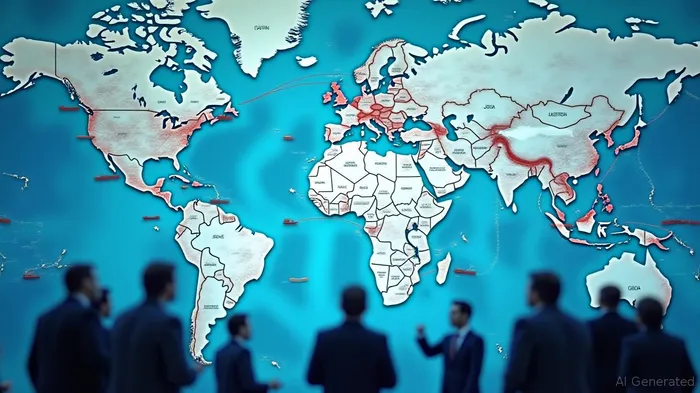
While CEO Christian Sewing expects deferred deals to rebound in Q3, the near-term uncertainty has forced companies to rethink supply chains. Sectors like automotive and semiconductors, which rely on cross-border manufacturing, are particularly exposed.
Investment Play:
- Logistics Leaders: Companies like Maersk (MAERSK-B) and FedEx (FDX) are critical to rerouting supply chains. Their stocks could benefit from higher demand for diversified shipping routes.
- Tech Resilience: Focus on cloud infrastructure and cybersecurity firms (e.g., Microsoft (MSFT), CrowdStrike (CRWD)), which face fewer tariff pressures and are central to reshoring strategies.
Energy Shortages: The Silent Crisis
Beyond tariffs, energy shortages loom as a secondary risk. Geopolitical tensions in the Middle East and Ukraine, coupled with underinvestment in renewables, could disrupt oil and natural gas supplies. Deutsche Bank's research warns of a 10% spike in energy prices by year-end, squeezing industries from manufacturing to agriculture.
Investment Play:
- Energy Infrastructure: Invest in companies like NextEra Energy (NEE) or Enel (ENEL.MI), which are scaling up renewables and grid stability projects.
- Commodity Hedges: Use ETFs like United States Oil Fund (USO) or Copper Miners ETF (COPX) to capitalize on energy-driven demand for raw materials.
A Defensive, Opportunistic Strategy
To hedge against both risks, adopt a two-pronged approach:
- Defensive Positions:
- Utilities and Infrastructure: Regulated utilities (e.g., NextEra) offer stable dividends amid volatility.
Healthcare and Financials: Sectors like Johnson & Johnson (JNJ) and JPMorgan Chase (JPM), which Deutsche BankDB-- notes are tariff-resistant, provide steady earnings.
Opportunistic Bets:
- Supply Chain Tech: Invest in logistics tech firms like Cargill (privately held) or Flexport (privately held), which are automating global trade.
- Copper and Semiconductors: Freeport-McMoRan (FCX) (copper) and ASML Holding (ASML) (semiconductors) could thrive as companies invest in reshored manufacturing.
Final Take: Stay Nimble, Stay Resilient
The Q3 2025 landscape demands investors to balance protection against tariff and energy risks while capitalizing on structural shifts. Use ETFs to diversify (e.g., iShares Global Logistics ETF (LOGI)) and favor companies with cross-border agility. As Allen's analysis underscores: “The winners will be those who adapt fastest—not just to tariffs, but to the new rules of global trade.”
In short, the playbook is clear: hedge with energy and logistics, and bet on tech that thrives in chaos.

Stay ahead of the market.
Get curated U.S. market news, insights and key dates delivered to your inbox.
AInvest
PRO
AInvest
PRO



Comments
No comments yet