
Navigating the Tariff Cliff: Sector-Specific Risks and Opportunities Ahead of July 9
The July 9 expiration of U.S. reciprocal tariffs marks a pivotal moment for global trade dynamics, with significant implications for equity markets. Sectors like automotive, tech, and industrials face heightened volatility as companies grapple with tariff pass-through costs, supply chain disruptions, and shifts in trade policy. This article dissects the vulnerabilities and opportunities across these sectors, offering actionable insights for investors seeking to position portfolios ahead of the deadline.
Automotive Sector: Reshoring Gains vs. Tariff-Driven Pain
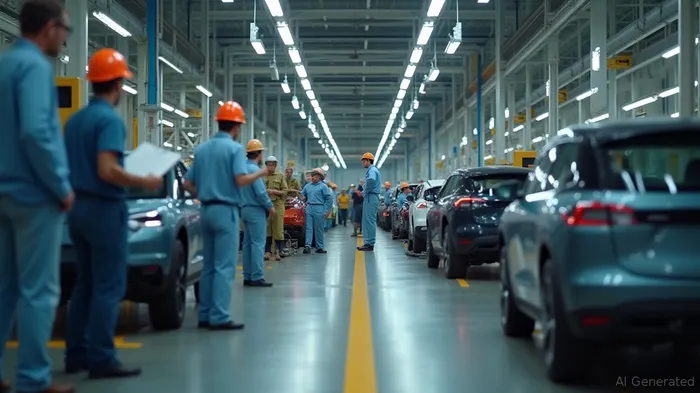
The automotive sector is a battleground of competing forces. While legacy automakers like General Motors (GM) and Ford (F) have rallied (+5.7% and +4.6% in early July) on investor rotation to tangible assets, smaller players like Howmet Aerospace (HWM) face headwinds. The sector's resilience stems from reshoring initiatives under the USMCA, which shield Mexico/Canada-based production from tariffs. However, companies reliant on Chinese components—such as Tesla (TSLA), now down 38% from its 52-week high—remain vulnerable as pre-tariff inventories dwindle.
Investment Takeaway:
Long GM/Ford for their USMCA-aligned supply chains, but avoid TeslaTSLA-- until it diversifies production beyond China. Short HWM or other aerospace suppliers exposed to stacking tariffs.
Tech Sector: Divided by Tariffs, United in Volatility
Tech stocks face a perfect storm: high tariff pass-through rates (55–90%), geopolitical risks, and valuation concerns. Advanced Micro Devices (AMD) and Palantir (PLTR) both fell over 4% in early July, while Tesla's slump (now trading at $300) reflects broader sector pessimism. The Senate's removal of clean energy tax credits from Trump's bill further dampened sentiment in green tech.
Investment Takeaway:
Favor diversified players like Flex Ltd. (electronics manufacturing in Mexico) and firms investing in domestic semiconductor production (e.g., Intel). Short pure-play China-exposed names like GoPro.
Industrials: The Sector Rotation Beneficiary
Industrials have thrived amid the rotation from tech, rising 13% in Q2. Las Vegas Sands and Wynn Resorts gained as investors sought stability in traditional sectors. Agribusinesses, however, face moderate pass-through pressures (40–70%) but are adapting via precision agriculture tools like Farmonaut's blockchain traceability.
Investment Takeaway:
Long NextEra Energy and UnitedHealth for inflation resistance. Avoid industrials tied to energy (e.g., Williams Companies) until tariff clarity emerges.
Policy Risks and Hedging Strategies
The July 9 deadline coincides with the Federal Reserve's decision-making window, amplifying uncertainty. Key risks include:- Legal Uncertainty: A court stay maintains tariffs pending appeal, but a ruling invalidating IEEPA-based tariffs could slash effective rates to 5%.- Sector-Specific Threats: Steel/aluminum tariffs (25–50%) and potential Canada DST penalties loom.
Hedging Plays:
- Inflation-Linked ETFs: Use TIP to offset equity risks.
- Short-Term Treasuries: Shelter capital in 2–3 year bonds until policy clarity emerges.
- Supply Chain Innovation: Invest in AI-driven logistics (e.g., DHL Supply Chain) to mitigate disruptions.
Conclusion: Positioning for the Post-Tariff Landscape
The July 9 deadline is a catalyst for sector divergence. Investors should:1. Rotate into defensive industrials and healthcare while avoiding tech until tariff risks subside.
2. Target reshored automakers (GM/Ford) and diversified tech players (Flex).
3. Monitor policy outcomes closely: A favorable court ruling could unlock gains in tariff-sensitive sectors, while a negative ruling would amplify volatility.
The path forward hinges on trade negotiations and supply chain agility. Navigating this tariff cliff requires a mix of sector-specific focus, hedging tools, and patience as the dust settles post-July 9.
Final Word:
The tariff deadline is not an end but a turning point. Investors who align with domestic substitutes and agile supply chains will position themselves to capitalize on the post-tariff equilibrium.

Stay ahead of the market.
Get curated U.S. market news, insights and key dates delivered to your inbox.




Comments
No comments yet