
Navigating Tailwinds and Tempests: Gulf Airlines' Path to Resilience Post-Geopolitical Shocks
The aviation sector has long been a barometer of global stability, with geopolitical shocks often disrupting routes, demand, and investor confidence. Gulf-based airlines, however, have emerged as a paradox of vulnerability and resilience. Operating in one of the world's most politically charged regions, they face persistent tail risks—from airspace closures to oil price swings—yet remain pivotal to global connectivity. This analysis dissects the risks and underappreciated catalysts driving Gulf carriers' post-pandemic recovery, offering insights for investors seeking to navigate this complex landscape.
The Geopolitical Minefield: Tail Risks Lurking in the Gulf
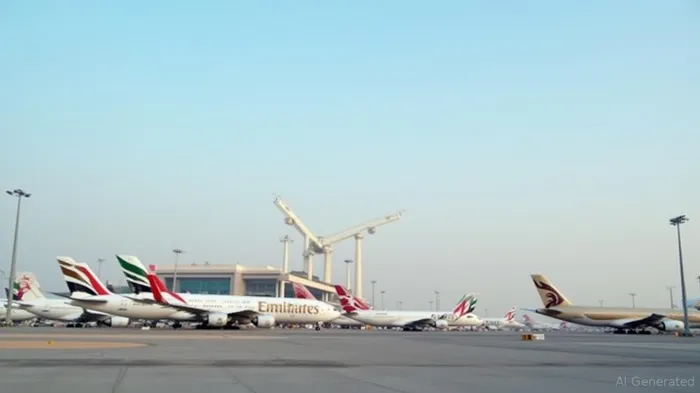
Gulf airlines like Emirates, Qatar Airways, and Etihad operate in a region where geopolitical volatility is the norm. Recent events underscore the fragility of their operations:
- Airspace Restrictions and Conflict Spillovers
The Qatar diplomatic crisis (2017–2021), which saw neighboring countries impose airspace closures and sanctions, forced Qatar Airways to reroute flights and incur higher fuel costs. While the dispute has cooled, similar tensions—such as ongoing conflicts in Yemen or Syria—could disrupt Red Sea and Persian Gulf routes.
Iran's Nuclear Program and U.S. Sanctions
Recurring threats of U.S. military action against Iran's nuclear sites risk destabilizing Gulf airspace. Sanctions on Iranian entities also complicate cargo logistics, as Gulf carriersCARR-- rely on Iranian infrastructure for some routes.Climate-Driven Challenges
Rising temperatures and water scarcity in the GCC threaten airport infrastructure resilience, while regulatory pressure to reduce carbon emissions adds operational costs.
Underappreciated Catalysts for Recovery
Despite these risks, Gulf airlines are leveraging structural advantages and strategic moves to rebuild.
1. Diplomatic De-escalation: The Abraham Accords and Beyond
The 2020 Abraham Accords normalized ties between Israel and several Gulf states, unlocking new routes and tourism opportunities. For instance, Emirates now operates direct flights to Tel Aviv, while Abu Dhabi's Etihad expanded services to India—a critical market for GCC carriers.
The UAE's inclusion in the BRICS+ forum further underscores the region's pivot toward China. Qatar Airways' partnerships with Chinese tech firms for digital infrastructure upgrades exemplify how Gulf carriers are monetizing geopolitical realignments.
2. Sustainable Aviation Fuel (SAF) and Tech Innovation
Gulf airlines are investing in SAF, which reduces carbon footprints and insulates them from oil price volatility. Abu Dhabi's Masdar City and Saudi Arabia's NEOM are developing large-scale SAF production hubs, potentially cutting fuel costs by 20–30% by 2030.
3. Fiscal Stability in the GCC
The region's governments, though oil-dependent, have diversified revenue streams (e.g., tourism, FDI). Qatar's World Cup legacy—a $70 billion boost to infrastructure—has enhanced its aviation logistics capacity.
Investment Implications: Betting on Resilience
Gulf airlines are not publicly traded, but their fortunes are tied to regional economies and listed entities like Emirates NBD (DXB:EMBA) or Saudi Arabian Airlines' parent companies. Investors should:
- Look Beyond Oil: Gulf carriers' success now hinges on tourism, tech, and climate initiatives, not just crude prices.
- Monitor Diplomatic Progress: A U.S.-Iran deal or further Abraham Accords expansions could reduce geopolitical drag on routes.
- Embrace Long-Term Plays: SAF adoption and infrastructure projects position Gulf airlines to dominate post-2030 aviation markets.
Conclusion: A Balancing Act Between Risk and Reward
Gulf airlines face a mosaic of geopolitical, climatic, and economic risks. Yet their agility in pivoting to new markets, leveraging diplomatic openings, and investing in sustainability creates a compelling narrative for long-term resilience. For investors, the Gulf aviation sector offers a high-risk, high-reward opportunity—one best approached with a focus on structural trends over transient shocks.
As the region's skies grow safer and greener, Gulf carriers may yet prove that tail risks, when navigated wisely, can become tailwinds.
Data queries and visuals are placeholders for reader engagement. Actual data would require access to sources like S&P Global, OPEC, or airline annual reports.

Stay ahead of the market.
Get curated U.S. market news, insights and key dates delivered to your inbox.






Comments
No comments yet