
Navigating the Strait: How Middle East Tensions Could Redirect Energy Investments
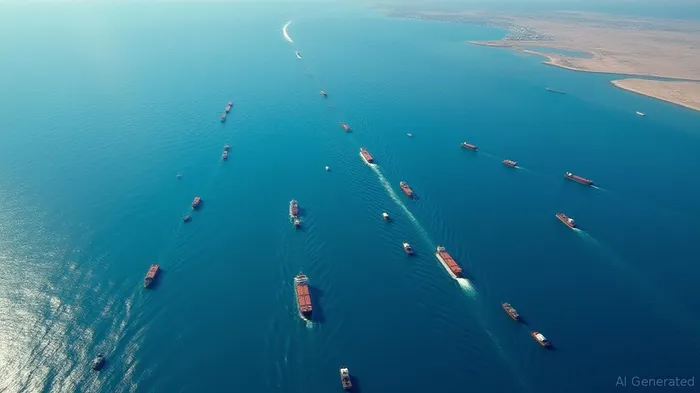
The Strait of Hormuz, a narrow waterway connecting the Persian Gulf to the Arabian Sea, has become the epicenter of a geopolitical standoff that could reshape global energy markets. With Iran's parliament recently approving a motion to blockXYZ-- the strait—a decision pending final approval by its Supreme National Security Council—the threat looms large. While experts dismiss a full closure as “absolutely minimal,” even a partial disruption could trigger volatility in oil prices and supply chains. For investors, this scenario underscores the need for strategic allocations to energy sectors amid rising uncertainty.
The Geopolitical Crossroads
Iran's threat is a retaliation to U.S. strikes on its nuclear facilities and escalating tensions with Israel and Gulf states. Yet, closing Hormuz would backfire economically. Over 20 million barrels of oil and 30% of global LNG transit the strait daily, including Iran's own exports—38% of which go to China. Analysts like Vanda Hari (Vanda Insights) note that such a move would alienate key trade partners like China and invite military retaliation. Still, the mere specter of disruption has already prompted Qatar to delay LNG shipments and the U.S. to heighten naval monitoring.
The Oil Market's Delicate Balance
A full closure could remove 17 billion barrels of oil and Qatar's 20% share of global LNG from markets annually. Pipelines, such as Saudi Arabia's 5.5 million barrels/day capacity, are insufficient to compensate. Even partial disruptions could spike Brent crude prices.
Asia, reliant on 84% of Hormuz's oil and LNG, faces the brunt. China, importing 38% of Hormuz's crude, and Australia, which sources 15% of its crude and 30% of refined fuels via the strait, could see pump prices surge. For instance, Australia's gasoline prices might hit $2.50/liter, exacerbating inflation.
Strategic Allocation for Investors
- Oil Majors and LNG Producers:
Companies with diversified assets and exposure to non-Hormuz regions—such as ExxonMobil (XOM) and Chevron (CVX)—offer resilience. Their stock performance often correlates with oil prices.
LNG exporters like Cheniere Energy (LNG) and QatarEnergy (QES) could benefit from premium pricing if Qatar's exports face delays.
Infrastructure Plays:
Pipeline operators such as Kinder Morgan (KMI) and terminal operators like Sempra Infrastructure (SRE) may see demand rise as shippers seek Hormuz alternatives.Renewables and Diversification:
Long-term, energy transition stocks—solar (like First Solar, FSLR) and wind (NextEra Energy, NEE)—remain critical. Governments' push for strategic reserves and alternative supply chains (e.g., China's 5-year stockpile) also favor companies in energy storage and distribution.Hedging with ETFs:
ETFs tracking oil prices (e.g., United States Oil Fund, USO) or energy equities (Energy Select Sector SPDR, XLE) can buffer portfolios against price spikes.
Risks and Considerations
While Iran's full closure is improbable, geopolitical posturing has historically inflated risk premiums. Investors should weigh short-term opportunities against long-term trends. A prolonged standoff could accelerate the shift toward renewables, but near-term volatility favors energy hedges.
Conclusion
The Strait of Hormuz is more than a maritime chokepoint—it's a microcosm of global energy vulnerability. Investors must balance exposure to traditional energy plays with bets on renewables. Diversification into pipeline infrastructure, LNG exporters, and strategic reserves will be key. As history shows, even minor disruptions can reverberate far beyond the Persian Gulf. In this climate, staying nimble—and informed—is the best strategy.

Stay ahead of the market.
Get curated U.S. market news, insights and key dates delivered to your inbox.


AInvest
PRO
AInvest
PRO



Comments
No comments yet