
Navigating the Storm: How Tariff Fears and Payrolls Data Shape Market Volatility


 Aime Summary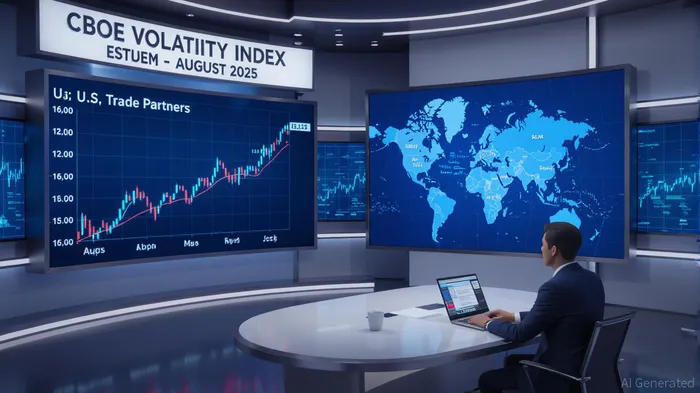
The U.S. stock market in late August 2025 finds itself at a crossroads, buffeted by a perfect storm of geopolitical tensions, earnings uncertainty, and shifting investor sentiment. The CBOE Volatility Index (VIX), often dubbed the "fear gauge," has climbed to 17.17 as of September 2, 2025, reflecting heightened anxiety over trade policy shifts and macroeconomic risks. This surge, while modest compared to historical peaks, underscores the fragility of market stability in an era of escalating tariffs and unpredictable policy moves.
The VIX Surge: A Barometer of Uncertainty
The VIX's recent climb to 17.17—a 6.5% increase from its August 29 close of 16.12—signals growing unease among investors. While the index remains within its 52-week range of 12.70–60.13, the sharp intraday swing to 19.38 on September 2 highlights the market's sensitivity to geopolitical risks. reveals a pattern of volatility clustering, driven by the Trump administration's aggressive tariff agenda.
The administration's August 7 announcement of 35% tariffs on Canadian goods, 30% on South African goods, and 20% on Vietnamese goods has sent shockwaves through global trade. These measures, part of a broader push to raise the U.S. effective tariff rate to 18–20% by year-end, have introduced a layer of uncertainty that investors are now pricing into their portfolios. The VIX's behavior mirrors this narrative: as tariffs escalate, so does the demand for hedging tools like VIX futures and options.
Geopolitical Risks: Tariffs as a Double-Edged Sword
The U.S. tariff regime has become a focal point for market volatility. J.P. Morgan analysts note that the average effective tariff rate now stands at 15.8%, up sharply from 2.3% at year-end 2024. While these tariffs aim to protect domestic industries, they also risk triggering retaliatory measures and disrupting global supply chains. For instance, the 50% tariff on Indian goods—retaliation for India's continued purchases of Russian oil—has strained U.S.-India trade relations and raised concerns about cascading economic fallout.
The legal uncertainty surrounding these tariffs further exacerbates market jitters. A potential court challenge to the administration's use of the International Emergency Economic Powers Act (IEEPA) could invalidate key tariff provisions, creating regulatory chaos. This uncertainty is reflected in the S&P 500's recent range-bound performance, which J.P. Morgan attributes to a tug-of-war between trade optimism (e.g., the U.S.-Japan tariff reduction to 15%) and protectionist headwinds. shows a narrow trading range, consistent with a market awaiting clarity.
Earnings Expectations: A Mixed Picture
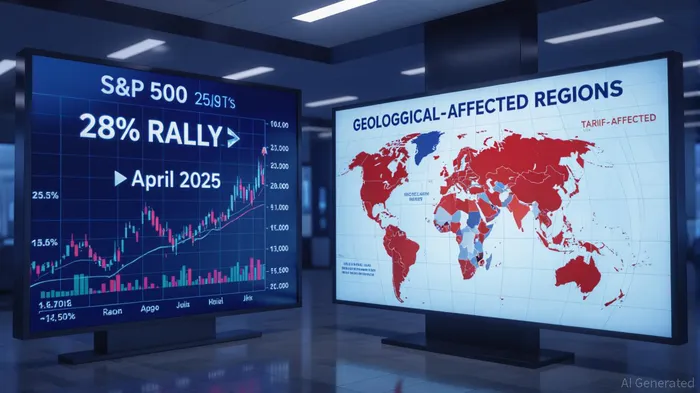
Despite the turbulence, third-quarter S&P 500 earnings expectations have edged upward. Analysts raised Q3 2025 EPS estimates by 0.5% to $67.66 between June 30 and August 28, the first increase since Q2 2024. However, this optimism is tempered by concerns about overvaluation. High-beta tech stocks, which have led the market's 28% rally since April, now trade at frothy valuations, raising fears of a mean reversion.
The disconnect between earnings growth and investor sentiment is stark. The AAII Investor Sentiment Survey reveals bearish sentiment at 44.8%, well above its historical average of 31.0%. This pessimism is compounded by the S&P Global Market Intelligence IMI's Risk Appetite index, which plummeted to -20% in August—the lowest since April 2025. paints a picture of a market bracing for the worst.
Investor Psychology: The Put/Call Ratio and Risk Aversion
Investor psychology is a critical, often overlooked, driver of market volatility. The put/call ratio—a proxy for risk appetite—has trended higher in August, indicating a defensive stance. While exact figures for the period are unavailable, historical patterns suggest a surge in put options as investors hedge against potential corrections. This behavior aligns with the VIX's upward trajectory and underscores the market's preference for downside protection.
The psychological toll of tariffs and geopolitical risks is also evident in consumer sentiment. The Conference Board's June survey noted a 5.4-point drop in confidence, reflecting fears of inflation and job insecurity. These anxieties are amplified by the Federal Reserve's cautious stance on rate cuts, with the Fed Funds rate remaining at 4.25%-4.50% despite softening inflation.
Strategic Implications for Investors
For investors, the current environment demands a balanced approach. Here are three key strategies:
1. Diversification Across Defensive Sectors: With tariffs targeting goods like textiles and electronics, sectors less exposed to global trade (e.g., healthcare, utilities) may offer safer havens.
2. Hedging with VIX-Linked Instruments: Given the VIX's elevated levels, allocating a portion of portfolios to VIX futures or inverse VIX ETFs can mitigate downside risk.
3. Monitoring Payrolls and Tariff Developments: The August nonfarm payrolls report (147,000 jobs added) and the Fed's September meeting will be pivotal. A strong labor market could delay rate cuts, prolonging volatility, while a trade détente could provide a short-term boost to equities.
Conclusion: Preparing for a Volatile Autumn
The interplay of tariffs, earnings expectations, and investor psychology has created a volatile but not necessarily bearish market. While the VIX's surge and bearish sentiment signal caution, the S&P 500's resilience suggests underlying confidence in the economy's fundamentals. Investors who adopt a disciplined, hedged approach—balancing growth exposure with defensive positioning—may navigate this storm more effectively. As the autumn session unfolds, the key will be staying agile in the face of uncertainty, with a close eye on both macroeconomic data and the ever-shifting trade landscape.

Delivering real-time insights and analysis on emerging financial trends and market movements.
Latest Articles
Stay ahead of the market.
Get curated U.S. market news, insights and key dates delivered to your inbox.






Comments
No comments yet