
Navigating the Storm: Stimulus Uncertainty and Its Ripple Effects on Markets and Consumers
 Aime Summary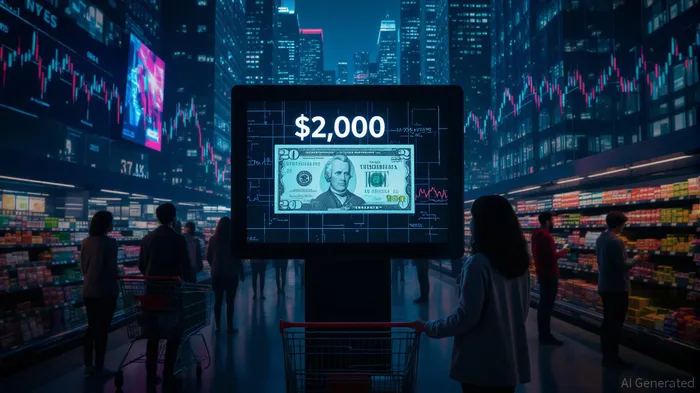
The U.S. economy in 2025 is a study in contradictions. Inflation clings stubbornly to 3.6% (core PCE), while consumer confidence wavers between optimism and skepticism. At the heart of this tension lies a single, unverified rumor: the $2,000 fourth stimulus check. Though no official legislation exists to support this claim, the narrative has taken root in social media, political rhetoric, and even financial planning. For investors and consumers alike, the implications are profound.
The Illusion of Immediate Relief
The false narrative of a $2,000 federal stimulus check has created a psychological tailwind for spending. Households anticipating a windfall have delayed major purchases, borrowed against future income, or shifted budgets to "wait for the check." This behavior mirrors the 2021 stimulus era, where early rounds of payments (e.g., the $1,400 checks) briefly boosted durable goods and discretionary spending. However, the absence of a real 2025 stimulus has left many in limbo. When the expected funds fail to materialize, the result is a double whammy: unmet expectations and a potential drop in consumer confidence.
The IRS has repeatedly clarified that no fourth stimulus is in the works. Yet, the allure of the $2,000 check persists, fueled by viral claims and a proposal from former President Trump's “DOGE Dividend” plan. While this idea—a one-time $5,000 payment based on hypothetical savings from Elon Musk's Department of Government Efficiency—remains speculative, it has added fuel to the rumor mill. The disconnect between perception and reality is stark: even if DOGE's $130 billion in projected savings were distributed, it would amount to roughly $807 per taxpayer, far below the $2,000 myth.
Market Volatility: Stimulus as a Catalyst
The stock market has historically reacted more to the promise of stimulus than its execution. During the 2020–2021 pandemic, the CARES Act and American Rescue Plan drove surges in speculative stocks like GameStopGME-- and AMCAMC--, even as the broader economy struggled. Today, the 2025 stimulus rumors are creating a similar dynamic.
Consider TeslaTSLA-- (TSLA), a company whose fortunes are tied to consumer spending on electric vehicles. While the broader economy slows, Tesla's stock has seen short-term spikes in early 2025, driven by speculation that stimulus funds might boost demand for EVs. Yet, this optimism ignores the reality that a $2,000 check is unlikely to materialize. Instead, the market is pricing in a scenario where stimulus could temporarily ease inflationary pressures, even as the Federal Reserve remains cautious about rate cuts.
The pattern is clear: investors are betting on the possibility of stimulus, not its certainty. This creates a volatile environment where asset prices swing between euphoria and correction. For example, the Russell 2000, which tracks small-cap stocks, has seen increased trading volume in recent months as investors bet on stimulus-driven relief for small businesses. Yet, these bets are speculative, with no concrete policy to back them.
The Cost of Misinformation
False narratives about stimulus checks have also fueled a surge in scams. The IRS has issued warnings about fake websites, phishing attempts, and "premature payment" schemes. These scams not only erode trust in government programs but also divert resources from legitimate relief efforts. For instance, state-level inflation relief checks (e.g., New York's $200–$400 rebates) are often overshadowed by the federal rumors, leaving many unaware of the smaller but real assistance available.
From a macroeconomic perspective, the false narrative has created a "stimulus illusion" that distorts spending and saving behavior. Consumers who rely on unverified claims may neglect to build emergency savings or invest in long-term assets. Meanwhile, businesses are left to navigate a landscape where demand is artificially inflated by expectations that may never materialize.
Strategic Asset Allocation in a Post-Stimulus World
For investors, the lesson is clear: stimulus uncertainty demands a diversified, defensive approach. Here's how to position a portfolio:
- Defensive Sectors: Prioritize dividend-paying stocks in utilities, healthcare, and consumer staples. These sectors are less sensitive to economic cycles and provide steady returns.
- Inflation Hedges: Gold and Treasury Inflation-Protected Securities (TIPS) can offset rising prices, especially if inflation persists.
- Short-Term Plays: If betting on stimulus, focus on sectors likely to benefit from targeted relief, such as technology (digital payment infrastructure) and consumer discretionary (non-essential goods).
- Risk Management: Avoid overexposure to speculative assets tied to unconfirmed policies. Use stop-loss orders and regular rebalancing to mitigate volatility.
The key is to balance optimism with realism. While a 2025 stimulus could provide a short-term boost, its absence means the economy must rely on organic growth. Investors should focus on sectors with structural tailwinds—such as AI, renewable energy, and healthcare—rather than betting on a fiscal lifeline that may not arrive.
Conclusion: Staying Grounded in Uncertainty
The 2025 stimulus debate is a cautionary tale about the power of narratives in shaping economic behavior. While the $2,000 check remains a chimera, its impact on consumer psychology and market dynamics is real. For investors, the path forward lies in separating hype from reality. By adopting a diversified, defensive strategy and staying attuned to policy developments, portfolios can weather the storm of uncertainty and emerge stronger in a post-stimulus world.

Delivering real-time insights and analysis on emerging financial trends and market movements.
Latest Articles
Stay ahead of the market.
Get curated U.S. market news, insights and key dates delivered to your inbox.






Comments
No comments yet