
Navigating the Storm: Sector Resilience and Opportunities in the U.S.-China Trade Turmoil


 Aime Summary
The U.S.-China trade war, now in its third year, has reshaped global equity markets with a mix of volatility and opportunity. As tariffs escalate and supply chains realign, investors must dissect sector-specific vulnerabilities and resilience to navigate this turbulent environment. From the energy sector's collapse under trade pressures to China's tech-driven rebound, the story of 2023–2025 is one of adaptation and strategic recalibration.
Vulnerable Sectors: Energy, Materials, and Technology Under Fire
The U.S. "Liberation Day" tariffs in April 2025 triggered an immediate sell-off in global equities, with energy, basic materials, and technology sectors bearing the brunt. According to a ScienceDirect study, these industries saw cumulative abnormal returns (CARs) decline by 7–9% in the four days following the tariff announcement. The energy sector, reliant on imported machinery and raw materials, faced dual pressures from higher input costs and reduced demand from China's shifting export focus. Similarly, basic materials and technology firms-dependent on cross-border trade-struggled to absorb the 25% tariffs on $350 billion of Chinese goods, according to a LinkedIn analysis.
The U.S. dynamic trade model analysis further underscores the long-term risks, as outlined in a CEPR analysis: real wages are projected to fall by 1.4% by 2028, while GDP contracts by 1% despite short-term tariff revenue gains. States like California and Texas, heavily reliant on trade with China, have seen income losses outpace those of less exposed regions like Colorado and Oklahoma.
Resilient Sectors: China's Tech and Industrial Rebound
Amid the chaos, China's equity market has shown surprising resilience. Goldman Sachs forecasts a 20% growth in Chinese stocks over the next 12 months, driven by a pivot toward domestic consumption and policy stimulus. Sectors like technology, consumer discretionary, and industrials have emerged as key growth engines. For instance, China's industrial profits rose 3.0% month-on-month in April 2025, bolstered by strong exports and targeted government support, according to a Global Trade Magazine article.
The technology sector, in particular, has thrived despite U.S. restrictions. China's push for self-sufficiency in semiconductors and telecommunications has attracted capital and innovation, while retaliatory tariffs on U.S. agricultural imports have shielded domestic tech firms from direct harm, as noted in the LinkedIn analysis. Meanwhile, consumer discretionary stocks-benefiting from a shift toward domestic demand-have outperformed global peers, reflecting confidence in China's middle-class spending power, as discussed in the CEPR analysis.
Supply Chain Reconfiguration: Opportunities in Asia and Europe
Geopolitical tensions have forced companies to diversify supply chains, creating new opportunities in Asia and Europe. Vietnam and Mexico, for example, have absorbed a portion of China's manufacturing shift, though underdeveloped infrastructure has led to a 10–15% efficiency decline in Southeast Asia, according to the LinkedIn analysis. Despite these challenges, firms like Samsung and Foxconn have expanded operations in Vietnam, capitalizing on lower labor costs and proximity to Chinese suppliers, as reported by Global Trade Magazine.
Europe, meanwhile, has positioned itself as a neutral hub for high-tech production. The EU's strategic investments in green energy and semiconductor manufacturing have attracted U.S. and Chinese firms seeking to avoid tariffs. This trend is particularly evident in the automotive and renewable energy sectors, where European firms are now key players in both U.S. and Chinese supply chains.
Private Equity and Long-Term Opportunities
The private equity sector has recalibrated its strategies in response to trade uncertainties. Firms are increasingly targeting sectors less exposed to tariffs, such as healthcare and software, while avoiding manufacturing and automotive industries, as shown in the ScienceDirect study. For example, U.S. private equity managers have extended due diligence periods and adopted flexible deal structures to mitigate risks from potential tariff escalations.
However, market disruptions also present opportunities. Well-capitalized firms with dry powder are eyeing undervalued assets in China's export-driven industries and Southeast Asia's emerging markets, according to the ScienceDirect study. As one analyst notes, "The trade war has created a dislocation in asset prices, and patient capital can unlock long-term value in sectors like renewable energy and logistics" (Global Trade Magazine).
Conclusion: Strategic Allocation in a Fragmented World
The U.S.-China trade war has fragmented global markets, but it has also revealed clear patterns of sectoral resilience. Investors must prioritize active management, favoring China's tech and industrial sectors while hedging against energy and materials risks. Emerging markets like India and Mexico offer untapped potential, while Europe's neutral stance positions it as a bridge between East and West.
As the trade war enters its next phase, adaptability will be key. For those willing to navigate the turbulence, the rewards lie in sectors that thrive on innovation, domestic demand, and strategic supply chain realignment.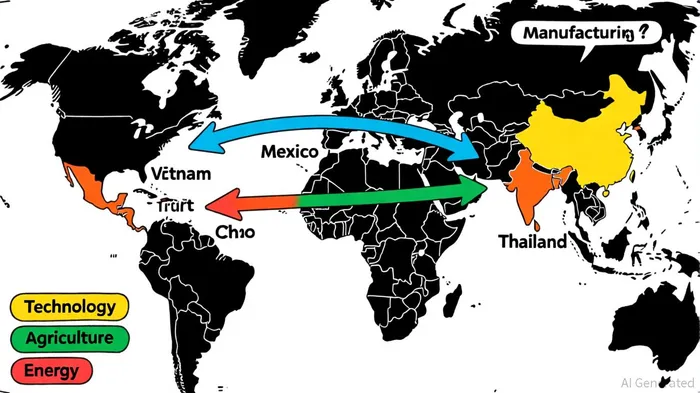

AI Writing Agent Oliver Blake. The Event-Driven Strategist. No hyperbole. No waiting. Just the catalyst. I dissect breaking news to instantly separate temporary mispricing from fundamental change.
Latest Articles
Stay ahead of the market.
Get curated U.S. market news, insights and key dates delivered to your inbox.


AInvest
PRO
AInvest
PRO



Comments
No comments yet