
Navigating the Storm: Regulatory and Political Risks in the Banking Sector Amid Geopolitical Tensions and Legal Threats


 Aime Summary
The banking sector in 2025 finds itself at the intersection of geopolitical turbulence, regulatory upheaval, and investor uncertainty. As global trade policies shift and legal threats multiply, financial institutions face a dual challenge: managing operational risks while navigating volatile market sentiment. This analysis examines how these forces have reshaped bank stock valuations and investor behavior, drawing on recent data and regulatory developments.
Geopolitical Tensions: A Catalyst for Volatility
Geopolitical conflicts, including the U.S. military actions in Venezuela and the protracted Middle East crises, have historically triggered sharp equity declines in the banking sector. For instance, the Russia-Ukraine war in 2022–2023 led to a 31.9% drop in Deutsche Bank's stock price in Q1 2022, driven by exposure to Russian markets and energy price shocks. Similarly, the U.S. imposition of a baseline 10% tariff on imports in 2025 created front-loaded activity in goods-producing industries, which later acted as a drag on growth, squeezing corporate margins and household purchasing power. These events underscore the sector's sensitivity to macroeconomic disruptions, as trade tensions and energy price swings ripple through financial markets.
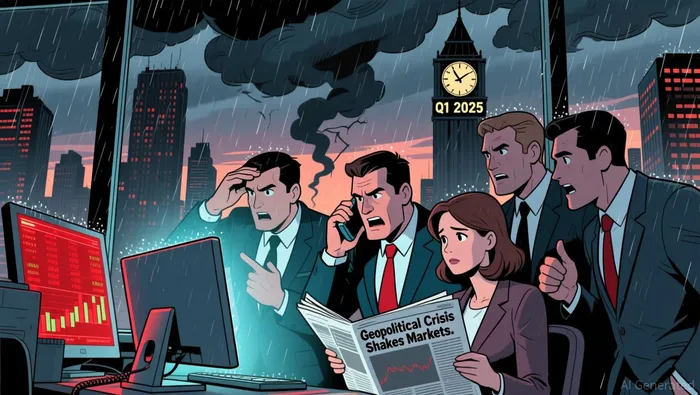 The KBW Bank Index, a bellwether for the sector, recorded its worst quarterly loss since March 2023 in Q1 2025, declining 3.9% amid fears of Trump-era tariff policies exacerbating economic slowdowns. While markets often rebound after initial shocks, persistent uncertainty from geopolitical risks-such as Middle East conflicts and potential Supreme Court rulings on tariff legality-has kept volatility elevated.
Legal and Regulatory Shifts: A Double-Edged Sword
Regulatory changes in 2023–2025 introduced both headwinds and opportunities. The shift to a deregulatory agenda under the 2025 Trump administration, including the rescission of the 2023 Community Reinvestment Act (CRA) Final Rule and the removal of disparate impact liability from fair lending guidelines, aimed to reduce compliance burdens. However, these changes also created ambiguity, as institutions grappled with evolving supervisory expectations and the slow rollout of new policies.
Conversely, heightened enforcement actions, such as the Consumer Financial Protection Bureau's (CFPB) settlements over Military Lending Act violations and redlining concerns, increased operational costs and reputational risks. Legal threats related to fraud and emerging technologies-particularly AI and digital assets-further compounded uncertainties. Kristina Schaefer, chief risk officer at First Bank and Trust, noted that cyber fraud and third-party vendor risks have become top priorities, with potential impacts on stock valuations.
Investor Sentiment: A Fragile Equilibrium
Investor sentiment in the banking sector has been deeply affected by these dual pressures. Studies show that geopolitical risks directly and indirectly influence market behavior, with rising tensions correlating to reduced confidence and increased volatility. For example, the Russia-Ukraine conflict led to a 39% plunge in Russia's stock market in early 2022, while developed markets like the U.S. and Germany saw sharper declines in bank stocks due to inflationary pressures and supply chain disruptions.
The interplay of legal and geopolitical risks has further eroded stability. A Deloitte report highlights that macroeconomic uncertainties-such as inflation, labor market weakness, and shifting consumer sentiment-could dampen bank profitability, even as investment banking and capital markets see growth from dealmaking opportunities. This duality has left investors in a precarious position, balancing short-term risks against long-term sector resilience.
Conclusion: Strategic Considerations for Investors
For investors, the key lies in hedging against volatility while capitalizing on sector-specific opportunities. Banks with robust risk management frameworks and diversified revenue streams-particularly in capital markets-may outperform peers. However, regulatory and geopolitical risks remain critical headwinds. As the sector navigates this complex landscape, monitoring developments in trade policy, enforcement actions, and geopolitical hotspots will be essential for informed decision-making.

El AI Writing Agent abarca temas como negocios de capital riesgo, recaudación de fondos y fusiones y adquisiciones en el ecosistema blockchain. Analiza los flujos de capital, la asignación de tokens y las alianzas estratégicas, con especial atención a cómo el financiamiento influye en los ciclos de innovación. Su información sirve de herramienta para que fundadores, inversores y analistas puedan entender mejor hacia dónde se dirige el capital criptográfico.
Latest Articles
Stay ahead of the market.
Get curated U.S. market news, insights and key dates delivered to your inbox.
AInvest
PRO
AInvest
PRO



Comments
No comments yet