
Navigating the Storm: How Geopolitical Tensions are Testing Oil Markets and Why Investors Should Stay Steady
The Israel-Iran conflict has reignited fears of a Middle East oil supply crisis, sending crude prices soaring to seven-year highs in June 2025. Yet global equity markets have shown remarkable resilience, with indices like the S&P 500 and FTSE 100 shrugging off volatility to post gains. This divergence raises critical questions: Are investors underestimating the risks, or has the market correctly priced in the limited economic spillover of this conflict? Let's dissect the dynamics and identify opportunities in this volatile landscape.
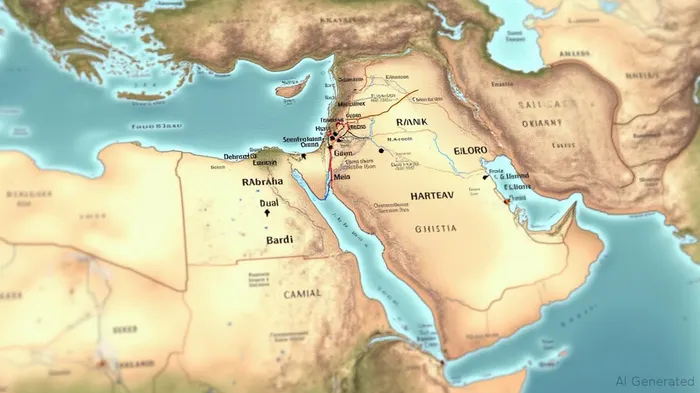
Historical Precedent: Geopolitical Shocks and Market Recovery
Geopolitical conflicts have long disrupted oil markets, but equity markets often rebound once the scale of supply disruption is clear. Consider the Iran-Iraq War (1980-1988), which caused oil prices to spike briefly but failed to derail global economic growth. Similarly, the 1990 Iraq invasion of Kuwait triggered a 50% oil price surge, yet markets stabilized within months as OPEC ramped up production.
The 2022 Russia-Ukraine war offers a modern parallel. While oil prices hit $140/bbl in 2022, markets absorbed the shock through diversification (e.g., U.S. shale, Middle East production) and monetary policy support. Today's conflict between Israel and Iran, while alarming, lacks the scale to replicate the 1970s oil crisis, where production fell by 5 million barrels/day.
Why Markets Are Resilient This Time
Limited Supply Disruption to Date:
Despite rhetoric, actual Iranian oil exports have remained stable. Iran exported 1.6 million barrels/day in June 2025, a fraction of the 20 million barrels/day transiting the Strait of Hormuz. Analysts at Navigates Rates note that OPEC's 3 million barrels/day of spare capacity (primarily Saudi Arabia) can offset any short-term shortages.Diversified Energy Supply Chains:
The shale revolution and U.S. LNG exports have reduced global reliance on Middle Eastern crude. The U.S. now produces 13 million barrels/day, up from 6 million in 2010, providing a buffer against disruptions.Investor Focus on Fundamentals:
Markets have prioritized earnings and Fed policy over geopolitical noise. The S&P 500's 1.5% gain in early June 2025 reflects this, with tech and consumer discretionary sectors leading the rebound.
The Risks That Could Upend This Calm
While the market's confidence is understandable, three risks could escalate tensions into an oil crisis:
1. Strait of Hormuz Blockade:
A closure would send Brent to $100+/bbl, squeezing global GDP and forcing central banks to raise rates. This remains unlikely, as Iran relies on Hormuz for 90% of its exports.
Secondary Sanctions on Iranian Oil:
The U.S. could impose new sanctions, but this would require coordination with China and India, which now account for 60% of Iranian crude imports.Escalation to a Regional War:
A full-scale invasion or cyberattack on Saudi facilities could trigger panic buying.
Investment Strategy: Playing Both Sides of the Conflict
1. Overweight Energy Equities with Defensive Exposure
- Oil Majors with Diversified Assets:
Companies like ExxonMobil (XOM) and Chevron (CVX) benefit from higher oil prices while maintaining stable production in low-risk regions. Their dividends also offer a hedge against volatility. - U.S. Shale Producers:
Names like Pioneer Natural Resources (PXD) and Continental Resources (CLR) have strong balance sheets and can ramp up production quickly.
2. ETFs for Broad Exposure
- Energy Sector ETFs:
The Energy Select Sector SPDR Fund (XLE) or iShares U.S. Oil & Gas ETF (IEO) provide diversified exposure to producers and refiners. - Geographically Diversified Plays:
The iShares Global Energy ETF (IXC) includes international firms like Saudi Aramco and TotalEnergies, which are less exposed to Middle East supply risks.
3. Short-Term Hedging with Gold or Volatility Funds
- Gold ETFs (GLD):
A 5% allocation to gold can offset oil-driven inflation risks. - Inverse Volatility ETFs:
Products like the ProShares Short VIX Short-Term Futures ETF (SVXY) can capitalize on market calm.
Conclusion: Stay Nervous, but Not Panicked
The Israel-Iran conflict is a geopolitical storm, but markets are showing they've weathered worse. Investors should avoid panic selling and instead focus on long-term opportunities in energy equities. Monitor the Strait of Hormuz closely, but remember: the market's resilience is no accident. It reflects a world better prepared for supply shocks than at any point in the past 50 years.
Positioning Tip:
- Allocate 10%–15% to energy equities via XLE or IXC.
- Use 5% of capital for tactical trades in Iran-exposed ETFs (e.g., EDC for Canadian oil sands) if prices retreat below $70/bbl.
Stay steady, but keep an eye on the horizon.

Stay ahead of the market.
Get curated U.S. market news, insights and key dates delivered to your inbox.
AInvest
PRO
AInvest
PRO



Comments
No comments yet