
Navigating the Storm: Geopolitical Risks and Opportunities in U.S.-India Trade Post-BRICS Tensions
The U.S.-India trade relationship has entered a precarious phase as President Trump's tariff threats intersect with India's growing involvement in the BRICS bloc. With tariffs targeting critical sectors like pharmaceuticals and copper now looming, investors must navigate a landscape of geopolitical risk and emerging market opportunities. Here's how to parse the stakes—and where to find asymmetric upside.
The Geopolitical Tightrope: Tariffs, BRICS, and India's Balancing Act
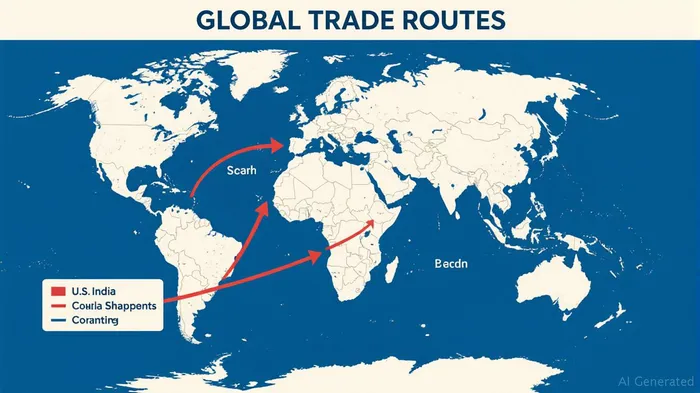
Trump's 10% tariff on all BRICS members—including India—has been framed as a defense of the U.S. dollar's global dominance. But the real pressure comes from sector-specific threats: a 200% tariff on pharmaceuticals and a 50% duty on copper imports, both set to escalate tensions. India, the world's largest generic drug exporter and a BRICS member since 2011, faces a dilemma. While it denies supporting a BRICS currency union, its strategic participation in the bloc's infrastructure projects risks U.S. retaliation. The August 1, 2025, tariff deadline looms, with negotiations for a bilateral trade deal now a matter of urgency.
The stakes are high. The U.S. is India's largest pharmaceutical market, accounting for $9.8 billion in exports in 2024-25. A 200% tariff would devastate companies like Sun Pharmaceutical () and Dr. Reddy's Laboratories, forcing them to either absorb costs or relocate production—a multiyear process. Meanwhile, India's $360 million copper exports to the U.S. are modest but could face dumping pressures from other markets, complicating domestic manufacturers' margins.
Sectors in the Crosshairs—and Hidden Opportunities
While pharmaceuticals and copper are directly targeted, other sectors could see ripple effects. Technology and manufacturing, though not explicitly named in tariffs, may face indirect impacts:
Pharmaceuticals: A Double-Edged Sword
The U.S. relies on India for 33% of its imported drugs. A 200% tariff would spike U.S. healthcare costs, but it could accelerate India's push into higher-margin markets like biologics and APIs. Investors might favor Cipla () or Biocon, which are diversifying into specialty drugs.Copper: A Commodity Play
U.S. copper tariffs could backfire, boosting global prices as Chilean and Peruvian supplies tighten. Indian producers like Hindalco () might benefit from higher prices, but dumping concerns could pressure domestic prices. A long position in copper ETFs (e.g., COPX) and shorts in USD/INR currency pairs could hedge risks.BRICS Infrastructure: The Silver Lining
India's 2026 BRICS chairmanship could unlock $50 billion in infrastructure projects funded by the New Development Bank (NDB). Sectors like renewable energy (e.g., Adani Green Energy) and smart cities may attract capital, especially if the U.S. deal limits trade fallout.
Investment Strategies: Hedging Geopolitical Risk
The path forward demands a mix of caution and opportunism:
Currency Hedging: Short USD/INR () to offset depreciation fears. Pair this with long positions in Brazilian real (BRL) or South African rand (ZAR), which are similarly pressured but offer asymmetric upside if BRICS cohesion strengthens.
Emerging Market Equities: Focus on BRICS-exposed funds like iShares MSCI Emerging Markets ETF (EEM), but tilt toward sectors insulated from tariffs. Tata Motors (autonomous vehicles) or Infosys (IT services) may thrive if trade deals preserve their U.S. access.
Commodities: Go long on copper and gold () as safe havens. BRICS energy projects could also lift oil prices, favoring Reliance Industries.
Dividend Plays: Defensive stocks with strong balance sheets, such as ICICI Bank, offer income stability amid volatility.
Conclusion: A Volatile Quarter, but Opportunities Await
The Q3 2025 tariff deadline is a catalyst for market swings, but it also marks a turning point for India's strategic calculus. If a U.S. trade deal materializes, sectors like pharma and tech could rebound swiftly. If not, investors must lean into BRICS-driven infrastructure and commodity plays while hedging currency risks. The lesson? Geopolitical storms create dislocations—those who prepare can turn them into gains.
Watch this space: The NDB's $50B roadmap could redefine EM investing.

Stay ahead of the market.
Get curated U.S. market news, insights and key dates delivered to your inbox.


AInvest
PRO
AInvest
PRO



Comments
No comments yet