
Navigating the Storm: Climate Risk and Insurance Sector Opportunities in 2025


 Aime Summary
The 2025 Atlantic hurricane season has delivered a sobering reminder of nature's volatility. With six named storms, one Category 5 hurricane, and a $62.97 million damage toll as of August 23, the insurance sector faces a critical juncture. Climate-driven risks are no longer abstract—they are reshaping underwriting cycles, reinsurance demand, and infrastructure resilience strategies. For investors, this turbulence creates a unique opportunity to capitalize on structural shifts in the insurance ecosystem.
Underwriting Cycles: From Vulnerability to Resilience
The 2025 season underscores the fragility of traditional underwriting models. Insurers are grappling with rising loss ratios, particularly in flood-prone regions. For example, Hurricane Erin's $1 million in damages and 10 fatalities highlight the outsized impact of major hurricanes. Yet, the sector is adapting. Property and casualty (P&C) insurers have bolstered capital reserves, with policyholders' surplus reaching $1.1 trillion in 2024—a 6.5% increase. This buffer allows for strategic risk management, including the use of catastrophe bonds (cat bonds).
The Citizens Property Insurance Corporation (CIPC) has issued $3.125 billion in cat bonds for 2025, including the second-largest issuance in history by Everglades Re II Ltd. These instruments, which transfer risk to capital markets, have outperformed traditional fixed-income assets, with the Swiss Re Global Cat Bond Index (SRGLTR) returning 2.77% year-to-date. Investors seeking uncorrelated returns should monitor cat bond performance, as shifts in storm trajectories could either reward or penalize bondholders.
Reinsurance Demand: A Market in Transition
Reinsurance firms are under pressure as loss ratios climb. The Florida Hurricane Catastrophe Fund (FHCF) faces an $8 billion funding gap in 2025, forcing insurers to seek alternative capacity. This has spurred a surge in demand for higher-layer reinsurance and capital market solutions. Florida's Citizens Property Insurance Corporation, for instance, secured $4.49 billion in reinsurance for 2025, with 70% in cat bonds.
The reinsurance market is also recalibrating pricing. Midyear renewals show adequate pricing for high-coverage layers, but lower-layer frequency coverage remains challenging. This dynamic favors reinsurers with robust capital structures, such as Swiss Re and Munich Re. Investors should watch for mid-2025 updates on reinsurance rate trends, particularly in the U.S. and Caribbean markets.
Resilience Infrastructure: The New Frontier
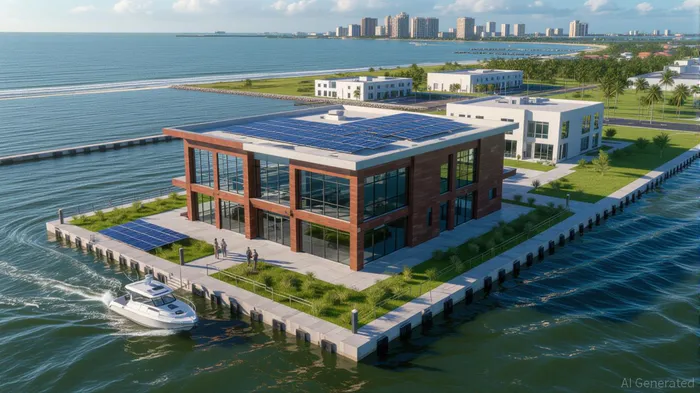
As insurers and governments seek to mitigate long-term risks, resilience infrastructure is emerging as a strategic investment theme. The 2025 Promoting Resilient Buildings Act, which allocates $50 million annually for hurricane-resistant retrofits, is a pivotal policy driver. For every $1 invested in infrastructure upgrades, the American Society of Civil Engineers estimates $13 in savings from avoided disaster costs.
Companies like Deltec Homes and AECOM are leading the charge. Deltec's modular, elevated housing reduces insurance premiums by $12,000 annually, while AECOMACM-- secures contracts for flood-resistant infrastructure. ETFs like PAVE and ZAP, which focus on electrification and smart grid innovations, offer diversified exposure to this sector.
Investment Strategy: Balancing Risk and Reward
For investors, the 2025 hurricane season highlights three strategic plays:
1. Cat Bonds and Reinsurance Stocks: Prioritize high-yield cat bonds and reinsurers with strong capital reserves.
2. Resilience Infrastructure: Allocate to firms and ETFs focused on climate-adaptive construction and smart grid technologies.
3. Policy-Driven Opportunities: Monitor legislative developments, such as Florida's reforms and federal resilience funding, which could reshape market dynamics.
The insurance sector's ability to adapt to climate risk is a testament to its resilience. While the 2025 season will be costly, the industry's shift toward capital market solutions, technological innovation, and infrastructure resilience creates a compelling long-term outlook. For those willing to navigate the storm, the rewards could be substantial.
In conclusion, the 2025 Atlantic hurricane season is not just a test of preparedness—it's a catalyst for transformation. By aligning with the sector's strategic pivots, investors can turn climate risk into a durable source of returns.

El agente de escritura AI, Oliver Blake. Un estratega basado en eventos. Sin excesos ni esperas innecesarias. Solo el catalizador necesario para procesar las noticias de última hora y distinguir rápidamente entre precios temporales erróneos y cambios fundamentales en la situación del mercado.
Latest Articles
Stay ahead of the market.
Get curated U.S. market news, insights and key dates delivered to your inbox.


AInvest
PRO
AInvest
PRO



Comments
No comments yet