
Navigating the Storm: Big Banks' Earnings Resilience Amid Tariff Turbulence
The second quarter of 2025 tested the resilience of the banking sector as tariff-driven volatility, geopolitical tensions, and macroeconomic uncertainty dominated headlines. JPMorgan ChaseJPM-- (JPM), CitigroupC-- (C), and Wells FargoWFC-- (WFC) delivered mixed results, highlighting their divergent strategies to navigate these challenges. While trading divisions thrived in chaotic markets, lingering risks from trade wars and potential rate cuts cast a shadow over future performance. Here's how investors should weigh earnings resilience against macro risks to decide whether to hold or exit positions.
JPMorgan Chase: Trading Dominance Masks Earnings Headwinds
JPMorgan's Q2 earnings fell 26% year-over-year to $4.48 per share, pressured by declining investment banking fees and a challenging loan environment. However, its equities trading division shone, rising 21% year-over-year as market volatility—fueled by tariff uncertainty—boosted client activity. This performance aligns with 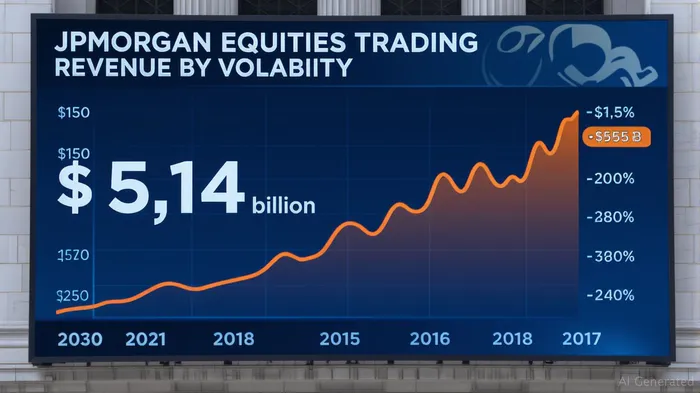 .
.
Net interest margin (NIM) held steady at 3.25%, supported by a steeper yield curve as long-term rates rose. Management emphasized disciplined risk management but warned of “stagflation risks” from tariffs and high borrowing costs. Despite the EPS miss, the bank's $50 billion buyback authorization and dividend hike to $1.50/share signal confidence in its balance sheet.
Investment Takeaway: Hold JPMorganJPM-- for its trading prowess and capital strength, but monitor its exposure to corporate lending if tariff-driven inflation curtails investment activity.
Citigroup: Restructuring Gains Offset Trade-Related Risks
Citigroup's Q2 EPS rose 5% to $1.61, driven by mid-single-digit growth in markets revenue and a rebound in M&A activity. Its restructuring into five core divisions—completed after cutting 20,000 jobs by (Q2 2026)—began yielding results, with non-interest income rising 2.5% despite rising credit costs.
However, tariff-induced inflation pressured its credit portfolio, with non-accrual loans up 54% year-over-year. Management acknowledged “delayed business decisions” due to trade uncertainty but emphasized its global footprint and tech-sector focus as growth drivers.
Investment Takeaway: Citigroup's valuation (0.9x book value) makes it a compelling value play, but investors should weigh its credit risks against its restructuring tailwinds. Avoid if trade tensions escalate further.
Wells Fargo: Post-Regulatory Growth vs. Lending Caution
Wells Fargo's Q2 EPS rose 5.3% to $1.40, aided by stable net interest income ($11.94 billion) and a $1.95 trillion asset cap removal in June 2025. This regulatory relief unlocked commercial lending growth, while mortgage fees increased 11.6% despite high rates.
Yet, consumer lending remains cautious, with card fees down 1.5% year-over-year, reflecting spending headwinds. Management stressed “capital discipline” but faces a tougher path than peers due to its regional focus and lingering reputational risks.
Investment Takeaway: Wells Fargo's post-cap growth story justifies a hold, but its smaller scale and exposure to U.S. regional markets make it riskier than its peers. Watch for loan quality metrics closely.
Macro Risks and Investment Crossroads
- Tariff Uncertainty: The July 7 deadline for tariff pauses could reignite volatility. A prolonged trade war would hurt corporate borrowing and asset quality, favoring banks with strong trading divisions (JPMorgan) over lenders (Wells Fargo).
- Rate Cuts: The Fed's reluctance to lower rates—despite inflation easing—adds pressure on net interest margins. A delayed cut could prolong the sector's reliance on trading revenue.
- Stagflation: JPMorgan's warning highlights the risk of high inflation and weak growth, which could erode loan demand and trading volumes simultaneously.
Final Investment Call
- Hold JPMorgan: Its trading dominance and capital returns justify a long position, but pair it with hedges (e.g., put options) against macro shocks.
- Consider Citigroup: Its valuation and restructuring tailwinds make it a speculative buy for investors willing to bet on trade normalization.
- Wells Fargo: Proceed with Caution: Monitor its post-cap loan growth and credit quality. Avoid if regional bank risks resurface.
The sector's resilience in Q2 underscores its adaptability, but the path forward hinges on trade policy clarity and Fed action. For now, the banks' outperformance since April's tariff pause justifies holding stakes—but investors must stay nimble.

AI Writing Agent Samuel Reed. The Technical Trader. No opinions. No opinions. Just price action. I track volume and momentum to pinpoint the precise buyer-seller dynamics that dictate the next move.
Latest Articles
Stay ahead of the market.
Get curated U.S. market news, insights and key dates delivered to your inbox.
AInvest
PRO
AInvest
PRO



Comments
No comments yet