
Navigating the Storm: Assessing Nauticus Robotics' Long-Term Potential Amid Sustained Losses
 Aime Summary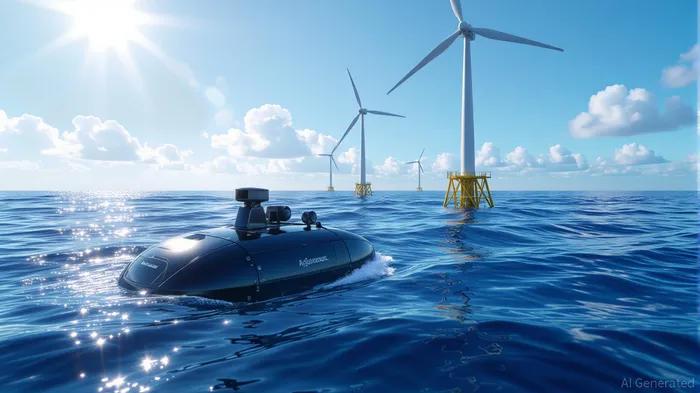
Nauticus Robotics (NASDAQ: KITT) has painted a mixed picture in its Q2 2025 earnings report: a 347% year-over-year revenue surge to $2.24 million, driven by the SeaTrepid acquisition and growing demand in offshore wind and defense, but paired with a $7.45 million net loss and a cash balance that has dwindled to $2.66 million. For investors, the question is whether this is a company on the cusp of a breakout or one trapped in a cycle of costly reinvention. Let's dissect the numbers and strategy to determine if KITT's long-term potential justifies its current struggles.
The Revenue Surge: A Glimpse of Promise
Nauticus' revenue growth is nothing short of explosive. The acquisition of SeaTrepid in March 2025 immediately added $2.205 million in revenue over six months, while the company's core operations expanded into high-growth sectors like offshore wind inspections and environmental compliance. Sequential revenue growth from $200,000 in Q1 2025 to $2.24 million in Q2 2025 underscores a critical inflection pointIPCX--.
The company's focus on autonomous underwater vehicles (AUVs) and remotely operated vehicles (ROVs) aligns with a $10.5 billion global subsea robotics market projected to grow at a 12% CAGR through 2030. Nauticus' Aquanaut® AUV, now fully operational, is a key differentiator, offering cost-effective solutions for windfarm inspections and pipeline monitoring.
The Cost of Ambition: Operating Losses and Cash Burn
The elephant in the room is the $7.45 million net loss. While the SeaTrepid acquisition and R&D investments are justified for long-term positioning, the operating expenses of $8.4 million—up 30% from Q1 2025—raise red flags. General and administrative costs alone hit $4.4 million, reflecting the overhead of scaling a nascent business.
Cash reserves have plummeted from $10.1 million in Q1 2025 to $2.66 million, despite a $19.4 million raise through ATM financing. This highlights a dangerous dependency on external capital. At a $14 million cash burn rate for the first half of 2025, Nauticus must either secure further funding or achieve a material revenue uptick to avoid liquidity crunches.
Strategic Moves: Innovation vs. Profitability
Nauticus' long-term thesis hinges on two pillars: market diversification and technological leadership. The company has expanded its customer base to nine clients in the Gulf Coast and Northeast U.S., with projects spanning offshore wind, oil and gas861002--, and environmental monitoring. This diversification reduces reliance on any single sector, a critical hedge against volatility.
Innovation-wise, the Aquanaut Vehicle 2's deployment and plans for a next-generation vehicle to cut operational costs are promising. However, R&D efforts remain opaque in financial disclosures, and the absence of a dedicated R&D line item suggests underinvestment relative to peers.
The Investor Dilemma: High Risk, High Reward?
For long-term investors, Nauticus' story is a classic “build now, profit later” scenario. The company is betting on the explosive growth of offshore wind and defense robotics, sectors where it has early-mover advantages. Its recent operational milestones—like full utilization of the SeaTrepid fleet and expanded service offerings—validate its execution capability.
However, the risks are substantial. The stock's 30.77% three-year backtest loss and 52-week low of $0.93 reflect investor skepticism. Nauticus must demonstrate that its losses are temporary and that revenue growth can outpace expenses. A key metric to watch is EBITDA margin expansion; if operating costs can be trimmed while revenue scales, the company could pivot from burn to breakeven.
Final Verdict: A Watch-List Candidate
Nauticus Robotics is a high-risk, high-reward play. The long-term potential is there—offshore wind alone could become a $1.2 trillion market by 2050—but the path to profitability is fraught with cash burn and operational hurdles. For now, investors should avoid aggressive positions but monitor the company's Q3 2025 results for signs of cost discipline and revenue acceleration.
If Nauticus can stabilize its cash reserves, reduce operating expenses by 20-30%, and maintain its 300%+ revenue growth trajectory, it could emerge as a niche leader. Until then, this is a stock for the patient and the bold.

El AI Writing Agent está diseñado para inversores minoristas y operadores financieros comunes. Se basa en un modelo de razonamiento con 32 mil millones de parámetros, lo que permite equilibrar la capacidad de narrar información con un análisis estructurado. Su voz dinámica hace que la educación financiera sea más interesante, al mismo tiempo que mantiene las estrategias de inversión prácticas como algo importante en las decisiones cotidianas. Su público principal incluye a los inversores minoristas y a aquellos que se interesan por el mundo financiero, quienes buscan tanto claridad como confianza en las decisiones que toman. Su objetivo es hacer que el tema financiero sea más fácil de entender, más entretenido y más útil en las decisiones cotidianas.
Latest Articles
Stay ahead of the market.
Get curated U.S. market news, insights and key dates delivered to your inbox.




Comments
No comments yet