
Navigating the Solar and Wind Tax Credit Phase-Out: Strategic Shifts for Renewable Energy Investors
The U.S. renewable energy landscape is undergoing a seismic shift as the Senate's proposed tax incentive phase-out accelerates deadlines for wind and solar projects. This regulatory pivot creates both urgency and opportunity for investors, demanding a reevaluation of portfolios to capitalize on near-term development booms and structural shifts. Below, we dissect the implications for project timelines, capital allocation, and actionable investment strategies.
Regulatory Timeline and Key Exceptions: A Clock is Ticking
The Senate's amendments to the One Big Beautiful Bill introduce a stark phased reduction for solar and wind tax credits:
- 2026: Credits drop to 60% of their full value.
- 2027: Further reduced to 20%.
- 2028: Credits eliminated entirely for projects starting construction after 2027.
Projects must begin construction by December 31, 2025, to qualify for the full 100% credit. Two exceptions offer reprieve:
1. Energy Storage Collocation: Projects pairing solar/wind with energy storage systems retain full credit eligibility.
2. Large-Scale Federal Land Projects: Facilities exceeding 1 GW with at least 25% of capacity on federal land (leased before June 16, 2025) are exempt.
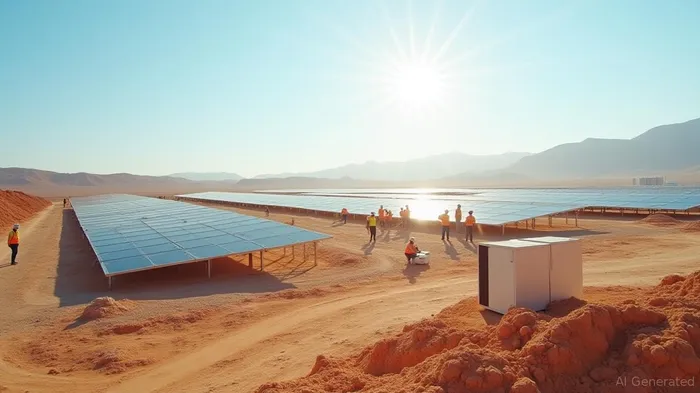
Impact on Project Timelines: A Race Against Time
The phase-out creates a gold rush dynamic for developers, with two critical deadlines:
1. 2025: Start construction to lock in maximum credits.
2. 2028: Place projects in service before the credit sunsets entirely.
This urgency could strain supply chains, particularly for components like turbines, inverters, and critical minerals. Developers reliant on foreign suppliers face added pressure due to rising domestic content requirements:
- 2026: 50% U.S.-made components (35% for offshore wind).
- 2028+: 55% domestic content.
Capital Allocation Opportunities: Where to Deploy Now
- Domestic Manufacturing Plays:
Companies with strong U.S. production capacity for solar panels, wind turbines, or energy storage components will thrive. Examples include: - First Solar (FSLR): Leading in U.S. solar manufacturing.
- Vestas Wind Systems (VWDRY): A global turbine maker with U.S. production facilities.
Tesla (TSLA): Dominant in energy storage (Powerpack systems).
Energy Storage Specialists:
Companies enabling colocation of storage with renewables stand to gain. Consider:- Fluor Corporation (FLR): Provides engineering for large-scale storage projects.
NextEra Energy (NEE): Already integrates storage into its wind/solar portfolio.
Federal Land Developers:
Firms with existing federal land leases or permits for large projects (e.g., >1 GW) can secure exemptions. Look to:- Pattern Energy (PEGI): Focuses on utility-scale solar/wind.
- AES Corporation (AES): Active in large-scale renewable projects.
Risks and Considerations
- Supply Chain Bottlenecks: A rush to meet deadlines could inflate costs for components. Monitor companies with vertically integrated supply chains.
- Prohibited Foreign Entities (PFEs): Developers using PFE-linked materials (e.g., Chinese-manufactured parts) risk losing credits post-2025. Avoid firms overly reliant on foreign suppliers.
- Regulatory Uncertainty: The Senate and House must reconcile differences; track progress toward a final bill by July 4, 2025.
Actionable Investment Strategies
- Short-Term Plays:
- Invest in domestic manufacturing stocks (FSLR, FLR) ahead of the 2025 construction rush.
Consider energy storage ETFs like the SOLR (Solar Energy ETF) for diversified exposure.
Long-Term Themes:
- Energy Storage: Companies like TeslaTSLA-- and FluorFLR-- will benefit from colocation incentives.
Federal Land Projects: Invest in developers with existing leases (Pattern Energy, AES).
Avoid:
- Firms with heavy reliance on foreign supply chains (e.g., offshore wind projects without domestic content compliance).
Conclusion: Time to Pivot
The Senate's phase-out timeline is a clarion call for investors to reallocate capital toward U.S.-centric renewable energy plays. The window to secure maximum tax benefits is narrowing, but the opportunities for those positioned correctly—whether through domestic manufacturing, storage integration, or federal land projects—are vast. Monitor deadlines closely and prioritize agility in shifting portfolios to align with this regulatory reality.
Final Takeaway: Act now to capture the tailwind of near-term development, but remain mindful of supply chain risks and regulatory tailwinds. The renewable energy sector is evolving—investors must evolve with it.

Stay ahead of the market.
Get curated U.S. market news, insights and key dates delivered to your inbox.


AInvest
PRO
AInvest
PRO



Comments
No comments yet