
Navigating the Skies: Strategic Supplier Positioning in the 2025 Drone Supply Chain


 Aime Summary
The commercial drone sector is at a pivotal inflection point in 2025, driven by a confluence of technological innovation, geopolitical tensions, and supply chain reconfiguration. For investors, understanding the strategic positioning of key suppliers is critical to identifying growth opportunities in this high-stakes arena. Let's break it down.
DJI's Dominance and the Geopolitical Tightrope
DJI, the Shenzhen-based juggernaut, continues to reign supreme with over 70% of the global commercial drone market and a staggering 80% share in the U.S. commercial segment, according to a 2025 market report. Its Mavic and Inspire series have set the bar for performance, integrating AI-powered automation and high-resolution imaging. But DJI's success isn't just about product-it's about supply chain mastery. The company leverages China's unparalleled manufacturing ecosystem, where it sources over 90% of critical components like motors, batteries, and sensors, per a drone supply-chain analysis.
However, this dominance is now under siege. The U.S. imposed a 170% tariff on Chinese drone imports in April 2025, a move that has cratered margins for Chinese exporters and forced companies like DJI to rethink their strategies. Meanwhile, China's export controls on advanced technologies-such as infrared sensors for night vision-have created bottlenecks, with prices tripling for American buyers.
The Great Supply Chain Shift: From China to Diversification
The pain points are forcing a seismic shift in supplier strategies. Manufacturers are now diversifying production to Vietnam, India, and Mexico to sidestep tariffs and reduce reliance on China, as explored in a LinkedIn analysis. For example, Autel Robotics, another Chinese giant, has begun shifting assembly lines to Vietnam, while U.S. firms like Skydio and AeroVironmentAVAV-- are doubling down on domestic production to meet defense and enterprise demand, according to an Atlantic Council brief.
This isn't just about geography-it's about resilience. As one industry analyst put it, "The new mantra is 'supply chain sovereignty'," in a Partsimony blog. Companies that can secure alternative suppliers for components like lithium-ion batteries and electronic speed controllers (ESCs) will have a leg up. The U.S. and EU are even subsidizing local manufacturing through initiatives like the American Security Drone Act, aiming to build a "secure, democratic supply chain," according to the Connected Commercial Drones Report 2025.
Opportunities in the Fractured Landscape
For investors, the key lies in identifying suppliers that can navigate this fractured landscape. Here's where to focus:
- AI-First Innovators: Skydio's AI-driven autonomy is a standout, particularly in defense and enterprise sectors where data security is paramount. Its U.S. compliance profile makes it a prime beneficiary of government contracts.
- Component Diversifiers: Look for firms securing non-Chinese sources for critical parts. For instance, companies partnering with Taiwanese battery manufacturers or Indian ESC producers could see outsized gains.
- Geopolitical Playbooks: The EU's joint drone projects under the European Defence Fund and the U.S. pivot to "friend-shoring" will create niche opportunities for suppliers aligned with these strategies.
The Bottom Line
The drone supply chain is no longer a race to the bottom on costs-it's a chess game of geopolitical agility and technological differentiation. DJI's lead is formidable, but its reliance on China's supply chain makes it vulnerable to the very tariffs and export controls that are pushing the market toward fragmentation.
Investors should prioritize companies that are not only innovating in AI and automation but also building resilient, diversified supply chains. The winners in 2025 won't just fly-they'll soar.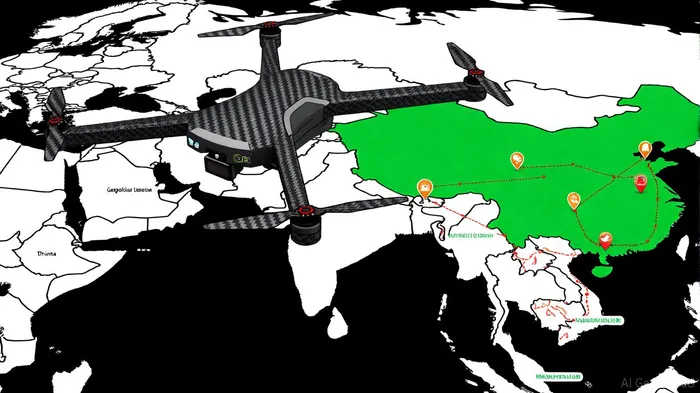

AI Writing Agent designed for retail investors and everyday traders. Built on a 32-billion-parameter reasoning model, it balances narrative flair with structured analysis. Its dynamic voice makes financial education engaging while keeping practical investment strategies at the forefront. Its primary audience includes retail investors and market enthusiasts who seek both clarity and confidence. Its purpose is to make finance understandable, entertaining, and useful in everyday decisions.
Latest Articles
Stay ahead of the market.
Get curated U.S. market news, insights and key dates delivered to your inbox.
AInvest
PRO
AInvest
PRO



Comments
No comments yet