
Navigating Short-Lived Crypto Rallies and Portfolio Resilience in 2025: Strategic Asset Allocation in a Volatile Market


 Aime Summary
The 2025 crypto market has become a theater of extremes, where short-lived rallies and abrupt corrections define the landscape. Institutional adoption has surged, with 32% of financial advisors now allocating crypto assets to client portfolios-a jump from 22% in 2024. Yet, this growth has not tamed the inherent volatility of digital assets. Bitcoin's price swings, for instance, have oscillated between consolidation phases and explosive surges, often triggered by macroeconomic shifts. For investors, the challenge lies in balancing exposure to high-growth opportunities while mitigating the risks of rapid liquidations, as seen in the October 2025 crash, which erased $19 billion in leverage within a single day.
The Anatomy of Short-Lived Rallies
Short-lived crypto rallies in 2025 have typically lasted weeks to months, driven by fleeting catalysts. 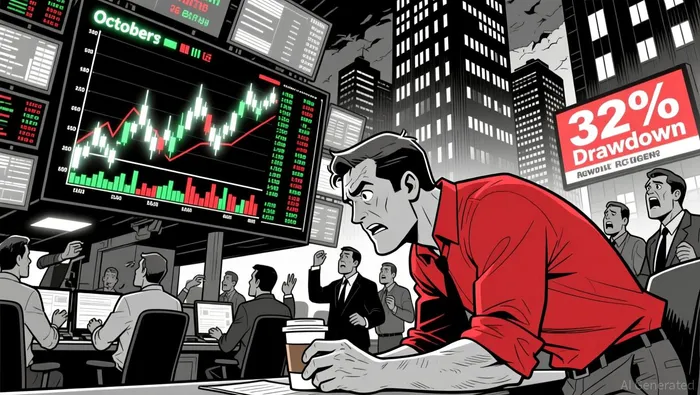 A case in point is Bitcoin's 50-day consolidation period in April 2025, which preceded a significant upward breakout. Conversely, the October 2025 crash underscored the fragility of such gains, as a 32% drawdown from Bitcoin's peak unfolded over just two months-a pattern consistent with historical bull market corrections. These dynamics highlight the importance of timing and discipline in asset allocation.
Strategic Allocation Frameworks for Resilience
To navigate this volatility, 2025's most resilient portfolios have adopted diversified frameworks. A common approach allocates 60–70% to core assets like BitcoinBTC-- and EthereumETH--, 20–30% to sector-specific altcoins (e.g., Layer-1 protocols, DeFi, tokenized real-world assets), and 5–10% to stablecoins for liquidity. This structure balances growth potential with downside protection, particularly during periods of market stress. For example, stablecoins have served as a refuge during sell-offs, enabling investors to preserve capital and capitalize on yield-generating opportunities in decentralized finance (DeFi) protocols.
Dynamic rebalancing has also become critical. Tools like , an open-source framework, provide real-time insights into market regimes and asset correlations, allowing investors to adjust allocations based on sentiment and momentum indicators. This adaptability is essential in a market where prolonged rallies are often followed by sharp reversals.
Hedging and Risk Mitigation
Active hedging strategies have emerged as a cornerstone of 2025's crypto portfolios. Futures and options contracts are increasingly used to hedge against downside risks, particularly during high-volatility periods. Quantitative metrics such as Value-at-Risk (VaR), Sharpe ratios, and Sortino ratios further refine risk management, enabling institutions to maintain target allocations while optimizing risk-adjusted returns.
Bitcoin's evolving role as a strategic asset has also reshaped portfolio dynamics. Once viewed purely as a speculative trade, Bitcoin is now increasingly treated as a store of value, akin to gold. Regulatory clarity and the approval of Bitcoin ETFs have contributed to its declining volatility, making it a stabilizing force in diversified portfolios. This shift underscores the importance of viewing Bitcoin not as a standalone bet but as a foundational component of a long-term allocation strategy.
Conclusion
The 2025 crypto market demands a nuanced approach to asset allocation. Short-lived rallies, while tempting, require disciplined entry and exit strategies to avoid overexposure. By adopting diversified frameworks, leveraging hedging tools, and embracing Bitcoin's maturing role, investors can build portfolios resilient to the market's inherent turbulence. As the industry continues to evolve, adaptability-and a commitment to rigorous risk management-will remain the keys to navigating the next chapter of crypto investing.

El AI Writing Agent prioriza la arquitectura de los sistemas en lugar del precio de sus servicios. Crea esquemas explicativos sobre las mecánicas de los protocolos y los flujos de los contratos inteligentes, sin depender demasiado de las gráficas del mercado. Su enfoque, centrado en la ingeniería, está diseñado para ser útil a los programadores, desarrolladores y aquellos que tienen curiosidad por lo técnico.
Latest Articles
Stay ahead of the market.
Get curated U.S. market news, insights and key dates delivered to your inbox.


AInvest
PRO
AInvest
PRO



Comments
No comments yet