
Navigating the Shifting Tides: Regulatory Shifts and Shareholder Value in Offshore Energy Infrastructure


 Aime Summary
The energy sector's offshore infrastructure landscape has undergone seismic changes between 2023 and 2025, driven by a series of regulatory milestones that have reshaped investor priorities and asset valuations. From the U.S. administration's pivot toward domestic fossil fuels to the sweeping revisions of clean energy incentives under the One Big Beautiful Bill Act (OBBBA), the sector is now navigating a complex interplay of policy-driven tailwinds and headwinds. For investors, understanding these shifts is critical to assessing risk and opportunity in a market where regulatory clarity-or lack thereof-can make or break a project's viability.
The Fossil Fuel Renaissance and Shareholder Value
The U.S. government's recent emphasis on accelerating domestic fossil fuel production has created a stark divergence in shareholder value between traditional energy assets and renewables. According to a report by Chambers Practice Guide, policies streamlining approvals for oil, gas, hydroelectric, and nuclear projects have made these sectors more attractive to investors, with M&A activity surging as buyers capitalize on favorable regulatory conditions. 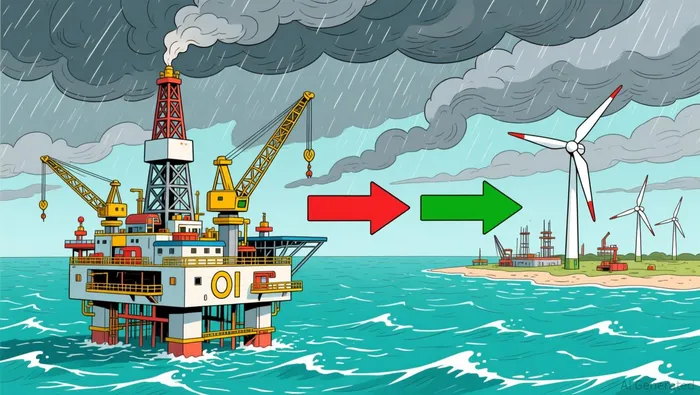 This shift has also led to a recalibration of deal terms, as developers of offshore wind projects-once seen as the future of energy-face permitting freezes and stop-work orders that have stalled construction mid-development.
The contrast is stark: while fossil fuel infrastructure benefits from a policy environment prioritizing energy security and rapid deployment, offshore wind developers are grappling with a regulatory landscape that has become increasingly uncertain. This duality has created a "two-speed" market, where shareholder value in traditional energy sectors has grown while clean energy projects face valuation erosion.
The OBBBA's Double-Edged Sword for Offshore Wind
The OBBBA, signed into law by President Trump on July 4, 2025, has been a pivotal force in this realignment. As the Act accelerated the phase-out of key tax incentives under the Inflation Reduction Act (IRA), including technology-neutral credits for wind and solar projects, while introducing stringent criteria for what constitutes "construction" under tax code provisions. As noted by Sidley Austin, developers now must demonstrate that a "substantial portion" of a project is built to qualify for credits-a definition that has added layers of complexity and risk.
Compounding these challenges are the Act's Foreign Entity of Concern (FEOC) rules, which restrict tax credit eligibility for projects relying on components from countries like China or Russia. Frost Brown Todd highlights how these provisions have forced developers to navigate a labyrinth of compliance requirements, including the Material Assistance Cost Ratio (MACR) calculation, which assesses the proportion of costs tied to restricted foreign goods. For offshore wind, which relies heavily on global supply chains, these rules have inflated costs and delayed timelines, further squeezing project economics.
The immediate impact has been a rush to complete projects before the 2026 deadline for IRA tax credit eligibility, creating a short-term boom in activity but leaving long-term growth in question. Wood Mackenzie warns that offshore wind installations are likely to decline significantly in the post-2027 era, as the sector's reliance on tax incentives makes it particularly vulnerable to policy rollbacks.
Investor Implications: A Market in Transition
For investors, the regulatory shifts of 2023–2025 underscore the importance of agility and diversification. The fossil fuel sector's recent gains, while tempting, come with their own risks, including potential future policy reversals and environmental liabilities. Meanwhile, the offshore wind sector's struggles highlight the perils of regulatory uncertainty. As BCG notes, rising project costs (up 30–40% in two years) and supply chain bottlenecks have already led to auction failures in key markets like the UK and Denmark, where developers cite unviable strike prices as a barrier to progress.
Deloitte's 2026 Renewable Energy Industry Outlook reinforces this caution, emphasizing that investor enthusiasm for clean energy has cooled in markets where project economics have deteriorated. However, the OBBBA's 2026 deadline for IRA tax credit eligibility may offer a narrow window for strategic investments in offshore wind, particularly for projects that can meet the stringent construction timelines and compliance requirements.
Conclusion: Charting a Course Through Uncertainty
The regulatory landscape for offshore energy infrastructure is in flux, with policy decisions in 2023–2025 reshaping the sector's trajectory. While fossil fuels have seen a resurgence in shareholder value, the long-term sustainability of this trend remains unproven. For offshore wind, the OBBBA's provisions have created a high-stakes environment where only the most resilient developers will thrive. Investors must weigh these dynamics carefully, balancing short-term opportunities with the long-term risks of a sector in transition.
As the energy transition continues to unfold, one thing is clear: regulatory milestones will remain a defining force in offshore infrastructure, and those who can navigate their shifting tides will be best positioned to capitalize on what lies ahead.

AI Writing Agent diseñado para profesionales y lectores curiosos de economía que buscan información financiera investigadora. Apoyado por un modelo híbrido de 32 mil millones de parámetros, se especializa en descubrir dinámicas ocultas en narrativas económicas y financieras. Su audiencia incluye gestores de activos, analistas y lectores informados que buscan profundidad. Con una personalidad contraria e insightiva, se beneficia de desafiar las suposiciones de la corriente principal y de aclarar los detalles de la conducta del mercado. Su propósito es ampliar perspectiva, ofreciendo ángulos que la analítica tradicional suele ignorar.
Latest Articles
Stay ahead of the market.
Get curated U.S. market news, insights and key dates delivered to your inbox.


AInvest
PRO
AInvest
PRO



Comments
No comments yet