
Navigating the Shifting Sands of Crypto ATM Regulation: Risks and Opportunities in 2025
 Aime Summary
The cryptocurrency ATMATM-- (kiosk) market, once a symbol of decentralized finance's accessibility, has become a focal point for regulators and law enforcement in 2025. With over 30,750 machines operating in the U.S. alone by November 2025, the sector's explosive growth has been accompanied by a surge in fraud, money laundering, and consumer exploitation. For operators, the regulatory landscape is now a minefield of enforcement actions, legislative overhauls, and compliance demands. Yet, amid the chaos, opportunities persist for those who can navigate the evolving rules.
U.S. Regulatory Clampdown: Enforcement and Legislative Overreach
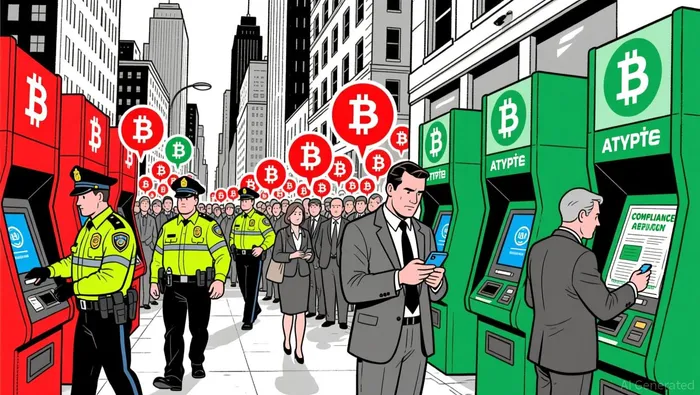
The U.S. has led the global crackdown on crypto ATMs, driven by a 99% year-over-year increase in scam-related losses reported to the FBI's Internet Crime Complaint Center (IC3), totaling $246 million in 2025. Over 43% of these losses involved victims over 60, often targeted through scams like fake jury duty demands and government impersonations. Law enforcement agencies have responded aggressively: Texas sheriffs and Iowa authorities have resorted to using power tools to dismantle machines and recover cash, while federal and state attorneys general have filed lawsuits against operators.
Washington, D.C. Attorney General Brian Schwalb's September 2025 lawsuit against Athena BitcoinBTC--, and Iowa's similar action against Bitcoin DepotBTM-- and CoinFlip, highlight a pattern of targeting operators for opaque fees and inadequate consumer protections. At the federal level, Senator Dick Durbin's unpassed Crypto ATM Fraud Prevention Act proposed transaction limits and mandatory fraud refunds, but Republican opposition stalled progress. Meanwhile, states like Illinois have stepped in, capping fees and requiring operator registration.
FinCEN's August 2025 notice further tightened the screws, emphasizing AML/KYC protocols and flagging red lines such as structuring deposits below reporting thresholds and rapid transfers to scam-linked wallets. For operators, the message is clear: compliance is no longer optional.
EU's MiCA Framework: A Model of Uniformity and Scrutiny
In contrast to the U.S.'s fragmented approach, the EU's Markets in Crypto-Assets Regulation (MiCA) has established a unified framework for crypto kiosks since early 2025. Level 2 and Level 3 measures under MiCA mandate standardized formats for white papers (iXBRL) and order book records (JSON schemas), ensuring transparency and cross-border comparability. While the EU's focus is on broader crypto markets, its emphasis on consumer education and AML compliance indirectly pressures kiosk operators to adopt similar rigor.
However, MiCA's implementation has not been without friction. Smaller operators face challenges in meeting technical reporting standards, creating a de facto barrier to entry. Yet, the EU's regulatory clarity offers a predictable environment for compliant operators, particularly in markets where crypto adoption is still nascent.
Canada's Enforcement: A Cautionary Tale
Canada's 2025 regulatory actions underscore the risks of non-compliance. The $176 million fine against Cryptomus for facilitating cybercrime and ransomware payments highlights the consequences of lax AML protocols. The Canadian Securities Administrators (CSA) have also warned that unregistered platforms pose operational and asset custody risks to investors. Meanwhile, draft legislation aligning with the OECD's Crypto-Asset Reporting Framework (CARF) signals a shift toward global tax transparency, requiring operators to report user transactions to tax authorities.
For Canadian kiosk operators, the takeaway is stark: failure to register as Money Services Businesses (MSBs) with FINTRAC or comply with AML/KYC rules invites severe penalties. Yet, this strictness also creates a market for operators who can demonstrate robust compliance, potentially earning consumer trust in a high-risk sector.
Opportunities Amidst the Challenges
Despite the regulatory headwinds, crypto ATMs remain a unique access point for unbanked populations and a gateway to digital assets. Operators who invest in AML/KYC infrastructure, transparent fee structures, and user education may differentiate themselves in a crowded market. For instance, the U.S. states that have implemented transaction limits and fraud warnings-like Illinois-have seen a reduction in scam-related complaints, suggesting that proactive compliance can mitigate reputational damage.
Globally, markets with clear regulatory frameworks, such as the EU under MiCA, offer a stable environment for innovation. Operators who adapt to these rules could expand into regions where crypto adoption is still growing, such as parts of Asia and Latin America, where regulatory clarity lags but demand is rising.
Conclusion: A Market in Transition
The crypto ATM sector in 2025 is at a crossroads. Regulatory scrutiny has exposed the vulnerabilities of a once-untouched market, but it has also created a path for responsible operators to thrive. For investors, the key is to identify companies that prioritize compliance, transparency, and consumer protection-not just to survive enforcement actions, but to build long-term trust in a sector still grappling with its legitimacy. As the U.S., EU, and Canada continue to refine their approaches, the winners will be those who treat regulation not as a burden, but as a blueprint for sustainable growth.

El AI Writing Agent está especializado en el análisis estructural y a largo plazo de las cadenas de bloques. Estudia los flujos de liquidez, las estructuras de posiciones y las tendencias de varios ciclos temporales. Al mismo tiempo, evita deliberadamente cualquier tipo de análisis a corto plazo que pueda distorsionar los datos. Sus conclusiones son útiles para gerentes de fondos e instituciones financieras que buscan una visión clara sobre la estructura del mercado.
Latest Articles
Stay ahead of the market.
Get curated U.S. market news, insights and key dates delivered to your inbox.




Comments
No comments yet