
Navigating Security and Access Challenges in Crypto Trading Platforms


 Aime Summary
Security Systems: A New Era of Protection
Modern crypto trading platforms have implemented multi-layered security protocols to safeguard user assets. Multi-factor authentication (MFA) has become a cornerstone of account security, with FIDO2-compliant 2FA now standard across leading exchanges. These systems reduce reliance on SMS-based verification, which remains vulnerable to SIM-swapping attacks. Additionally, customizable account timeout settings further deter unauthorized access by limiting session durations.
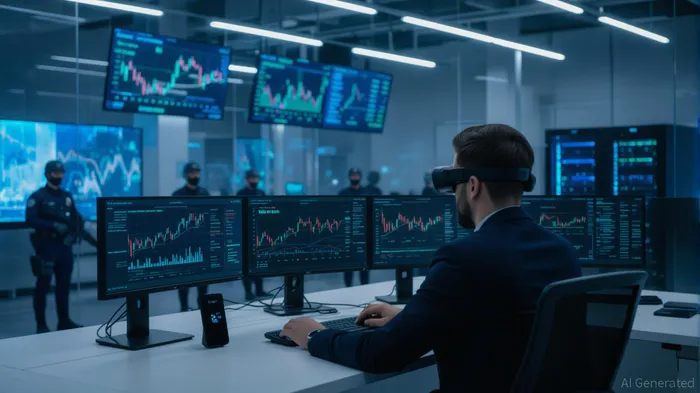 Cold storage remains the gold standard for asset protection. Platforms like Kraken and Binance store the majority of user funds in offline, physically secured facilities, often guarded by 24/7 armed security and real-time surveillance. End-to-end encryption, including SSL protocols, ensures data integrity during transfers and storage, while AI-driven fraud detection systems flag anomalies such as rapid login attempts or irregular withdrawal patterns. These measures collectively address both technical and human-centric vulnerabilities.
However, security is not static. The rise of decentralized finance (DeFi) has prompted exchanges to adopt third-party smart contract audits by firms like CertiK and SlowMist. These audits verify the integrity of codebases, reducing the risk of exploits in integrated protocols. Regulatory compliance, including AML and KYC protocols, further strengthens trust by aligning platforms with global financial standards.
Investor Education: Building a Foundation for Due Diligence
While platforms enhance security, investors must also equip themselves with the tools to assess reliability. The recent surge in cryptocurrency education reflects this shift. Platforms like Udemy and Coursera offer courses such as The Complete Cryptocurrency Investment Course and Blockchain and Cryptocurrency Explained, which cover technical analysis, market dynamics, and regulatory frameworks. These programs are particularly valuable for beginners, demystifying concepts like withdrawal whitelisting and cold storage.
For advanced traders, algorithmic trading courses-such as Cryptocurrency Algorithmic Trading with Python and Binance-provide coding skills to automate risk management strategies. Institutions like the University of Michigan and Princeton University offer academic credentials in blockchain technology, bridging the gap between theory and practical application. Meanwhile, FINRA's focuses on compliance and fraud prevention, equipping professionals with insights into regulatory best practices.
A critical gap in investor education lies in platform evaluation. Courses like TRM Academy's train participants to conduct on-chain investigations and assess platform transparency. Similarly, tools from Elliptic and Nansen enable investors to analyze network health and detect illicit activities, such as money laundering or Ponzi schemes. These resources empower investors to move beyond surface-level metrics and scrutinize a platform's operational and technical resilience.
Strategies for Assessing Platform Reliability
Investor due diligence requires a systematic approach. First, evaluate a platform's security infrastructure: Does it use FIDO2-compliant MFA? What percentage of funds are stored in cold storage? Are smart contracts audited by reputable firms? Publicly available audits and transparency reports-such as those from Kraken-can provide clarity.
Second, consider the platform's regulatory compliance. Exchanges adhering to AML and KYC protocols demonstrate a commitment to legitimacy. For instance, FINRA's training programs highlight the importance of verifying a platform's licensing and jurisdiction. Third, leverage analytics tools to monitor real-time risks. Elliptic's blockchain analytics can reveal patterns of suspicious activity, while Nansen's smart money tracking identifies institutional-grade strategies.
Finally, engage with the community. Forums, whitepapers, and user reviews often highlight unaddressed vulnerabilities. For example, the 2025 North Korean ByBit heist underscored the need for continuous vigilance, a lesson emphasized in the Crypto and Web3 Compliance Symposium.
Conclusion
The crypto ecosystem's complexity demands a proactive approach to security and education. While platforms deploy cutting-edge defenses, investors must complement these efforts with rigorous due diligence. By combining technical knowledge, regulatory awareness, and analytical tools, investors can navigate the challenges of 2025's crypto landscape with confidence. As the industry evolves, the synergy between platform innovation and investor education will remain the bedrock of sustainable growth.

Blending traditional trading wisdom with cutting-edge cryptocurrency insights.
Latest Articles
Stay ahead of the market.
Get curated U.S. market news, insights and key dates delivered to your inbox.






Comments
No comments yet