
Navigating Sector Volatility: How Treasury Bill Yields Shape Investment Strategies in 2026
 Aime Summary
The 4-week Treasury Bill yield, a barometer of short-term interest rate expectations, has swung dramatically over the past three years. After peaking at 6.13% in early 2024 amid aggressive Federal Reserve tightening, it has now retreated to 3.58% as of January 2026—a 0.70 percentage point drop year-over-year. This decline signals a potential shift in monetary policy and underscores the critical need for investors to recalibrate their strategies. Historically, Treasury Bill yields have acted as a double-edged sword, amplifying risks for some sectors while creating opportunities for others.
The Yield-Driven Sector Divide
Rising short-term rates have consistently hurt consumer durables and automotive sectors. When borrowing costs climb, households delay large purchases like appliances, vehicles, and home furnishings. Data from 2023–2025 shows that consumer durables underperformed when 4-week yields exceeded 4.0%, as inflation and higher financing costs eroded demand. Similarly, the automotive sector faced headwinds in 2024, with auto loan rates spiking to 8.5% by mid-2024, deterring buyers. However, by late 2024, pent-up demand and supply chain normalization began to offset these pressures, particularly for premium EV brands with strong pricing power.
Conversely, ground transportation and banking sectors have shown resilience—or even outperformed—during periods of rising yields. Ground transportation companies with recurring revenue models (e.g., logistics firms, EV charging networks) have insulated themselves from rate volatility by leveraging operational efficiency and long-term contracts. Banks, meanwhile, have historically benefited from higher net interest margins (NIMs) as lending rates outpace deposit costs. Yet, the 2025 tightening cycle exposed vulnerabilities: regional banks with short-term liabilities saw margins compress, while large-cap banks with diversified funding sources thrived.
Strategic Adjustments for 2026
As yields trend downward, investors must consider how to hedge against—or capitalize on—this shift. Here's a sector-by-sector breakdown:
- Consumer Durables & Automotive:
- Risk: Lower yields may reignite demand for big-ticket purchases, but lingering supply chain fragility and consumer debt levels remain concerns.
Tactic: Underweight long-duration consumer discretionary plays until rate cuts confirm a sustained easing cycle. Instead, focus on subsectors with pricing power, such as premium EVs or automotive technology firms.
Ground Transportation:
- Opportunity: A declining yield curve could boost infrastructure spending and fleet modernization. Logistics firms and EV infrastructure providers are well-positioned to benefit.
Tactic: Overweight companies with recurring revenue streams and low debt burdens. Consider ETFs like the iShares Transportation Average ETF (IYT) for diversified exposure.
Banking:
- Risk vs. Reward: While lower yields may pressure NIMs, they also signal potential rate cuts, which could spur loan growth. Large-cap banks with robust capital ratios are better equipped to navigate this duality.
- Tactic: Allocate to regional banks with strong loan portfolios and avoid overexposure to short-term deposit-dependent institutions.
Tactical Hedging and Duration Management
The 4-week Treasury Bill yield's inverse relationship with long-term bonds highlights the importance of duration management. Short-duration fixed income and high-yield corporate bonds have historically outperformed in rising rate environments, while long-term Treasuries lag. Investors should consider:
- Short-duration bond funds to mitigate interest rate risk.
- Sector rotation into financials and transportation as yields stabilize.
- Derivatives like Treasury futures to hedge against sudden rate spikes.
Conclusion: Aligning with the Yield Curve
The 4-week Treasury Bill yield is more than a technical indicator—it's a lens through which to view sector-specific vulnerabilities and opportunities. As the Fed's policy pivot gains traction, investors who adjust their portfolios to reflect yield curve dynamics will be best positioned to navigate 2026's uncertainties. By underweighting rate-sensitive consumer sectors, overweighting resilient financials and transportation, and employing duration-conscious strategies, portfolios can both hedge against volatility and capitalize on the next phase of monetary easing.
The key takeaway? In a world where short-term rates drive long-term outcomes, adaptability is the ultimate competitive advantage.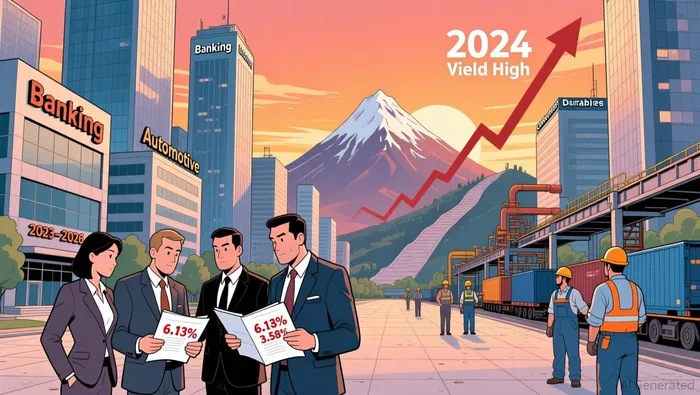

Stay ahead of the market.
Get curated U.S. market news, insights and key dates delivered to your inbox.


AInvest
PRO
AInvest
PRO



Comments
No comments yet