
Navigating Sector Rotation: U.S. Durables Ex Defense and the Outlook for Electrical Equipment and Mortgage REITs
 Aime Summary
The U.S. Durables Ex Defense data for August 2025 revealed a complex narrative of economic resilience and fragility. After a sharp 9.4% decline in July—the largest drop since April 2020—the sector rebounded with a 2.9% monthly gain in August, driven by a 7.9% surge in transportation equipment orders and a 50.1% spike in defense aircraft. However, the defense-excluded segment, a critical barometer for broader manufacturing health, rose only modestly by 1.9%, underscoring the sector's reliance on policy-driven tailwinds rather than organic demand. This duality has profound implications for sector rotation strategies, particularly for Electrical Equipment and Mortgage REITs (mREITs), which are sensitive to macroeconomic shifts and policy-driven volatility.
Electrical Equipment: A Tale of AI-Driven Resilience and Structural Headwinds
The Electrical Equipment sector, a key component of durable goods, experienced a marginal 0.2% decline in August 2025, ending a four-month growth streak. This divergence from the broader durable goods rebound highlights the sector's unique challenges. While AI-driven infrastructure demand and energy grid connectivity have fueled long-term growth—evidenced by a 1.5% surge in September—short-term headwinds persist. Tariff front-loading, elevated borrowing costs, and supply chain bottlenecks have created a volatile environment.
The sector's performance is closely tied to capital investment cycles. For instance, core capital goods orders (excluding defense and aircraft) rose 0.6% in August, reflecting ongoing business investment in AI and automation. However, the August dip in electrical equipment orders suggests a temporary pause in capital spending, possibly due to inventory adjustments or policy uncertainty. Investors must weigh these factors against the sector's long-term fundamentals.
For Electrical Equipment, the path forward hinges on two key variables: the pace of AI infrastructure deployment and the resolution of trade policy uncertainty. A sustained rebound in durable goods orders ex defense—projected to stabilize at 0.80% in 2027—could signal renewed confidence in capital spending. However, until tariffs and inflationary pressures abate, the sector may remain range-bound.
Mortgage REITs: Navigating a High-Rate Environment
Mortgage REITs, which thrive on interest rate spreads, face a challenging landscape in 2025. The Federal Reserve's 500-basis-point hiking cycle has compressed net interest margins (NIMs), while the steepening yield curve—a result of prolonged high rates—has introduced new risks. For example, a 10-year Treasury yield of 4.2% (as of August 2025) compared to a 5.3% 2-year yield has widened the spread, but this comes at the cost of increased prepayment risk as borrowers refinance.
The Durables Ex Defense data indirectly impacts mREITs by influencing broader economic conditions. A slowdown in durable goods orders—particularly in sectors like machinery and fabricated metals—could signal weaker industrial activity, potentially reducing demand for commercial mortgages. Conversely, a resilient manufacturing sector supports stable credit conditions, which benefit mREITs with exposure to commercial real estate loans.
Investors in mREITs must also consider the interplay between monetary policy and sector rotation. Defensive positioning in Utilities and Healthcare has outperformed cyclical sectors like Industrials by 2–3% annually in high-rate environments. For mREITs, this means a focus on short-duration assets and hedging strategies to mitigate interest rate volatility. The VanEck Mortgage REIT Income ETF (MORT), which offers diversified exposure to mREITs, has emerged as a preferred vehicle for managing these risks.
Strategic Implications for Investors
The Durables Ex Defense data underscores a broader theme: the need for tactical sector rotation in a fragmented economic environment. For Electrical Equipment, the focus should be on companies with strong AI and energy infrastructure exposure, while avoiding those reliant on imported components. For mREITs, the emphasis should shift to short-duration, well-hedged portfolios that can capitalize on a steepening yield curve without overexposing to prepayment risks.
In conclusion, the August 2025 Durables Ex Defense report highlights a market at a crossroads. While the rebound in transportation and defense sectors offers short-term optimism, the fragility of the defense-excluded segment and the challenges facing Electrical Equipment and mREITs demand a cautious, data-driven approach. Investors should prioritize defensive allocations, monitor policy developments, and remain agile in adjusting sector weights as macroeconomic signals evolve.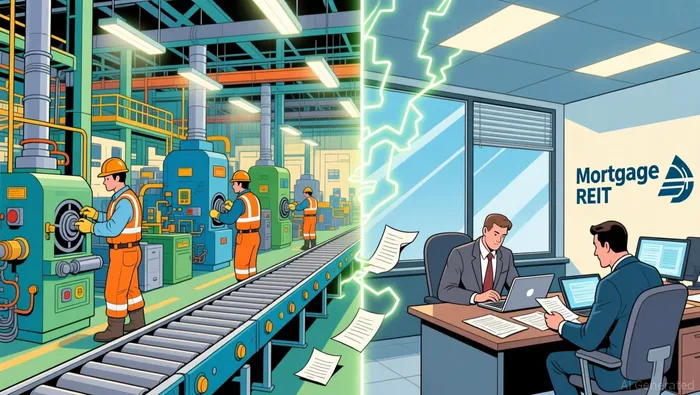

Stay ahead of the market.
Get curated U.S. market news, insights and key dates delivered to your inbox.


AInvest
PRO
AInvest
PRO



Comments
No comments yet