
Navigating Sector Rotation: How Core CPI Undershoots Reshape Bank and Healthcare Opportunities
 Aime Summary
The December 2025 U.S. Core CPI report, which fell to 2.6%—0.1 percentage points below forecasts—has reignited debates about sector rotation strategies. Historically, such undershoots have acted as a catalyst for divergent performance between the banking and healthcare sectors, driven by their unique sensitivities to inflation and monetary policy. For investors, understanding these patterns is critical to capitalizing on emerging opportunities while mitigating risks.
The Banking Sector: A Tailwind in Low-Inflation Climates
When inflation moderates, banks often emerge as beneficiaries. The S&P Bank Select Sector Index has historically outperformed the S&P 500 by an average of 4.2% in the three months following a core CPI undershoot. This trend is rooted in two key factors: net interest margin (NIM) expansion and reduced interest rate volatility.
During periods of stable inflation, such as the 2021–2022 transition, banks capitalized on a predictable rate environment. Regional banks, in particular, saw demand for small business loans surge as borrowers anticipated prolonged low-rate conditions. The December 2025 CPI reading, signaling a potential Fed pivot toward rate cuts in 2026, further amplifies this dynamic. With NIMs poised to widen and lending pipelines strengthening, banks are positioned to outperform in 2026.
The Healthcare Sector: Structural Pressures in a Deflationary Shift
Conversely, healthcare has historically lagged during inflationary moderation. The S&P Health Care Select Sector Index underperformed the S&P 500 by an average of 2.1% post-CPI undershoots. This underperformance stems from the sector's inflexible cost structure and regulatory constraints. Unlike banks, which thrive on stable pricing environments, healthcare providers face rising labor costs, drug development expenses, and reimbursement rates tied to administrative rather than market-driven mechanisms.
For example, hospital operators and pharmaceutical firms often see margin compression when inflation slows, as their cost models are slow to adjust. The December 2025 CPI print, which suggests a prolonged low-inflation trajectory, could exacerbate these pressures. Investors may also question the sector's growth narrative in an environment where capital flows to sectors with clearer margin visibility.
Strategic Implications for 2026: Rebalancing Portfolios
The current macroeconomic backdrop mirrors historical patterns where sector rotation between banking and healthcare has yielded alpha. With the Fed signaling a potential rate cut in Q2 2026, banks—especially regional lenders with strong NIMs and loan growth—could see renewed investor interest. ETFs like XLB offer a concentrated way to capture this trend.
Conversely, healthcare's structural challenges suggest caution. While the sector remains defensive in downturns, its underperformance during inflationary moderation highlights the need to underweight it in a low-inflation regime. Investors might consider hedging healthcare exposure with short-term Treasury allocations or high-quality consumer staples.
Final Assessment: Timing the Rotation
The December 2025 CPI reading is a pivotal signal. If inflation remains below 2.5% in early 2026, the case for rotating into banks and out of healthcare strengthens. However, investors should remain vigilant about idiosyncratic risks—such as regional bank credit quality or healthcare regulatory shifts—that could disrupt broader trends.
For now, the data supports a strategic tilt toward banking sector ETFs and a cautious approach to healthcare. As always, diversification and active monitoring of Fed policy will be key to navigating this evolving landscape.
This article is for informational purposes only and does not constitute investment advice. Past performance is not indicative of future results.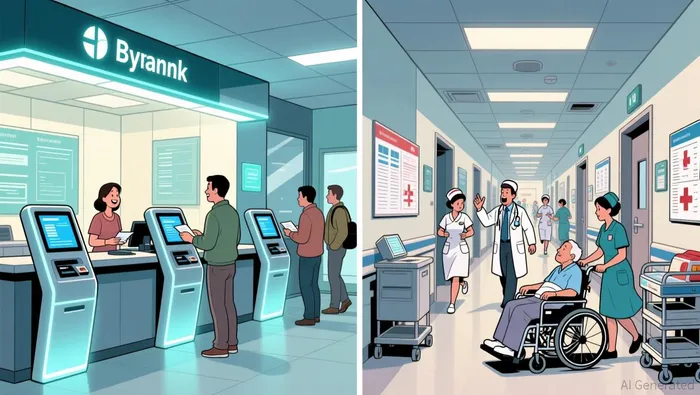

Stay ahead of the market.
Get curated U.S. market news, insights and key dates delivered to your inbox.


AInvest
PRO
AInvest
PRO



Comments
No comments yet