
Navigating Risks and Rewards in Egypt's Energy Sector Post-Gulf of Suez
The Gulf of Suez incident in July 2025, which saw the capsizing of the oil-drilling barge Admarine 12, has become a pivotal moment for Egypt's energy sector. While the accident itself did not disrupt the Suez Canal's operations—a critical artery for global trade—it has intensified scrutiny of operational risks and opportunities in the Red Sea's oil infrastructure. For investors, the interplay of geopolitical volatility, infrastructure resilience, and emerging green energy projects demands a nuanced approach.
Operational Risks: Geopolitical Tensions and Financial Pressures
The Red Sea has become a flashpoint for geopolitical instability, driven by Houthi rebel attacks on shipping lanes since 2023. These attacks forced a 70% drop in Suez Canal transit volumes by early 2024 and rerouted 74% of cargo to the Cape of Good Hope—a detour adding 10–14 days to Asia-Europe voyages. 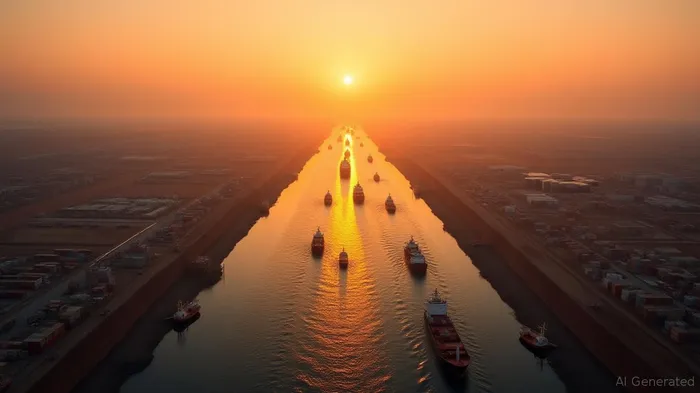
The fallout extends beyond shipping delays. War-risk insurance premiums for Red Sea transits surged to 1–2% of a vessel's value, up from 0.05% pre-2023, raising operational costs for oil producers. Meanwhile, Egypt's financial strategy—such as collateralizing Red Sea land for Islamic bonds (sukuk) to address $155 billion in external debt—has drawn criticism for potential sovereignty risks. Critics argue that such moves could cede control of strategic assets to international investors.
Strategic Opportunities: Infrastructure Resilience and Green Energy
Despite these challenges, Egypt's energy sector retains compelling opportunities. The Suez Canal's record $9.4 billion in annual revenue (2022–23) underscores its enduring economic clout. The government has prioritized infrastructure upgrades, including a 2015 canal expansion that doubled two-way transit capacity.
Additionally, the Red Sea's energy future is diversifying beyond crude. The Ras Shukeir area, a hub for oil production, is now a focal point for green hydrogen projects. Egypt's collaboration with Gulf investors, such as the $35 billion deal with Abu Dhabi's ADQ for the Ras el-Hekma development, signals a shift toward renewable integration. These projects align with global decarbonization trends, offering long-term value for forward-thinking investors.
Investment Considerations: Balancing Risk and Reward
Geopolitical Mitigation:
Investors should prioritize companies with robust security partnerships. For example, firms like ADES Holding, which operates in the Gulf of Suez, may benefit from Egypt's naval patrols and international coalitions (e.g., U.S.-led Operation Prosperity Guardian).Infrastructure Resilience:
Ports and pipelines in the Red Sea region, such as the Sumed Pipeline linking the Red Sea to the Mediterranean, could see demand as rerouting costs rise.Green Energy Plays:
The Ras Shukeir green hydrogen projects offer exposure to a low-carbon future. While capital-intensive, these ventures align with EU emissions regulations and could attract institutional funding.Sovereignty Risks:
Proceed with caution on sukuk-linked assets. While they provide liquidity, the long-term dilution of state control may deter conservative investors.
Conclusion: A Calculated Gamble
Egypt's energy sector remains a high-reward, high-risk proposition. The Gulf of Suez incident and ongoing Houthi threats necessitate a portfolio approach: diversify holdings between traditional oil producers (e.g., EGPC), infrastructure firms with canal exposure, and green energy ventures. Investors willing to navigate geopolitical headwinds may find Egypt's strategic position—and its $3.9 million bpd oil transit volumes—a compelling bet for the next decade.
Ruth Simon's analysis emphasizes the need for vigilance in volatile markets. Monitor geopolitical developments closely, and favor companies with adaptive security measures and exposure to decarbonization.

Stay ahead of the market.
Get curated U.S. market news, insights and key dates delivered to your inbox.






Comments
No comments yet