
Navigating the Ripple Effects: Assessing Sector Resilience and Investment Risk After the 2025 Shredded Cheese Recall Crisis


 Aime Summary
, TargetTGT--, and Aldi-has sparked a critical conversation about food safety, consumer trust, and the financial resilience of the retail sector. This recall, linked to potential metal contamination in products manufactured by Great Lakes Cheese Co., underscores the fragility of supply chains and the far-reaching implications for investors. While no illnesses were reported, the incident highlights the growing frequency of food recalls and their capacity to erode brand loyalty, disrupt operations, and test crisis management protocols.
The Recall and Its Immediate Implications
The FDA classified the recall as a Class II event, indicating that consumption of the affected products could lead to temporary or medically reversible adverse health effects, such as dental damage or internal lacerations
according to AllRecipes. The recall spanned 31 U.S. states and Puerto Rico, impacting a wide array of store-brand labels
according to Today.com. Retailers faced immediate pressure to remove products from shelves and issue refunds, while consumers grappled with heightened anxiety over food safety. According to a report by Today.com, the recall added to a broader pattern of 2025 food safety incidents, including contaminated shrimp and pasta, contributing to "recall fatigue" among shoppers
according to StockTwits.
Market Reactions and Financial Implications
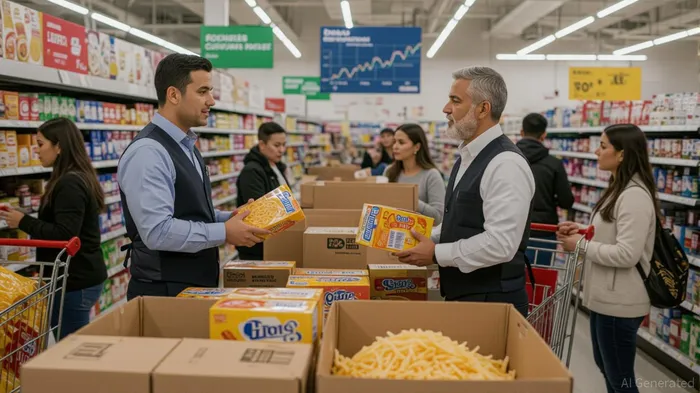 Despite the scale of the recall, direct financial data on stock price movements for Aldi, WalmartWMT--, or Target post-December 2025 remains elusive. However, broader trends suggest that retailers are adopting affordability-focused strategies to mitigate reputational and financial risks. For instance, Walmart and Target have emphasized price reductions on essential items and increased promotional efforts to retain customer loyalty amid rising household debt and weak consumer sentiment
according to Yahoo Finance. These tactics reflect a sector-wide shift toward transparency and value-driven messaging, aimed at balancing short-term losses with long-term brand stability.
The recall also exposed vulnerabilities in supplier relationships. As noted by the FDA, the contamination originated from raw materials delivered by third-party suppliers
according to Newsweek, underscoring the need for stricter supplier vetting. For investors, this raises concerns about the financial exposure of retailers reliant on complex, globalized supply chains.
Sector Resilience and Crisis Management
Retailers' responses to the crisis highlight the sector's evolving resilience. Companies like Aldi and Walmart have prioritized customer empathy and transparency, issuing swift refunds and public apologies to rebuild trust
according to Yahoo News. Additionally, they have avoided permanently lowering prices-a move that could anchor consumer expectations-to instead deploy temporary promotions, preserving profit margins while addressing affordability concerns
according to a consumer insights site.
The recall also accelerated investments in supply chain oversight. According to the , , prompting retailers to adopt more sophisticated risk management frameworks
according to The Hill. These include enhanced supplier audits, real-time contamination detection technologies, and contingency planning for rapid product recalls.
Investment Risk Assessment
For investors, the 2025 cheese recall serves as a case study in sector-specific risks. While the immediate financial impact on stock prices appears muted, the long-term implications are more nuanced. Frequent recalls can degrade brand equity, particularly in a market where consumer trust is already strained. A report by Bloomberg notes that companies with robust crisis management protocols-such as transparent communication and swift corrective actions-are better positioned to weather such events
according to Today.com.
Moreover, the recall underscores the importance of diversification. Retailers with diversified supplier bases and strong contingency plans are likely to outperform peers in volatile environments. Conversely, those with opaque supply chains or limited crisis response capabilities face heightened exposure to reputational and financial losses.
Conclusion
The 2025 shredded cheese recall is a microcosm of the challenges facing the consumer goods and retail sectors. While the immediate financial fallout for major retailers appears limited, the incident highlights systemic risks tied to supply chain complexity and consumer trust. For investors, the key takeaway lies in evaluating companies not just by their current performance, but by their capacity to adapt to crises through transparency, innovation, and strategic resilience. As the sector navigates an era of heightened scrutiny, those that prioritize proactive risk management will likely emerge as long-term winners.

Stay ahead of the market.
Get curated U.S. market news, insights and key dates delivered to your inbox.
AInvest
PRO
AInvest
PRO



Comments
No comments yet