
Navigating Retail Stock Volatility: Labor Trends and Consumer Shifts in the 2024-2025 Holiday Season


 Aime Summary
Labor Shortages and Strategic Hiring: A Double-Edged Sword
The retail sector's labor landscape remains fragile. Despite a 492,000 increase in seasonal hires in 2024 compared to the prior year, post-holiday layoffs were sharply reduced in 2025, with retailers retaining 29,000 seasonal workers versus 4,000 in 2024. This cautious approach reflects broader economic uncertainty, including a 4.3% unemployment rate in August 2025 and a 274% surge in retail job cuts during the first half of 2025. Retailers like WalmartWMT-- and NikeNKE-- have shifted toward optimizing existing staff through extra hours and automation, rather than relying on temporary workers.
However, these adjustments come at a cost. Labor shortages have led to understaffing-averaging four days per week during the 2023 holiday season-and increased pressure on remaining employees, raising risks of burnout and service quality declines. For investors, this signals a sector prioritizing operational efficiency over aggressive expansion, which may temper earnings growth but could stabilize long-term margins if automation and productivity tools are effectively deployed according to BCG.
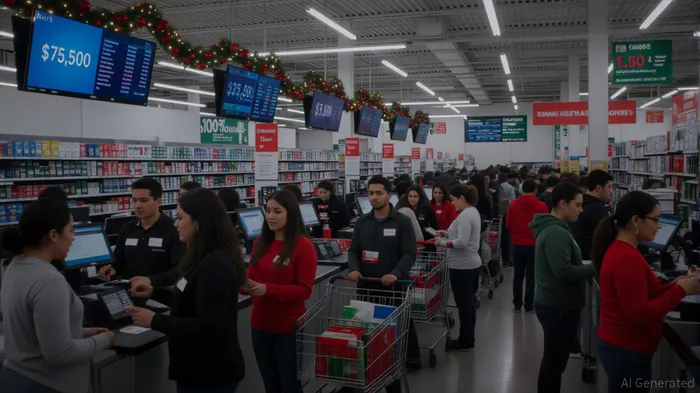
Consumer Spending: The Shift to Affordability and Value
Consumer behavior has also evolved dramatically. With the University of Michigan's consumer sentiment index hitting one of its lowest levels since 2022, shoppers are increasingly prioritizing affordability. Lower-income households face heightened financial strain, while even higher-income consumers are adopting cost-conscious strategies according to financial reports. This has fueled demand for off-price retailers like TJX and Ross Stores, which reported better-than-expected sales by catering to "value-driven" shoppers.
Conversely, discretionary categories such as apparel and home goods have seen weaker performance, as consumers trade down to essentials. The early start to holiday shopping-66% of consumers planning to begin before Black Friday-has further compressed retailers' windows for inventory adjustments, increasing the risk of markdowns and margin compression.
Stock Volatility: A Reflection of Sector-Wide Pressures
Retail stocks have mirrored these challenges. The S&P Retail Select Industry Index remained flat in 2025, while major retailers like TargetTGT-- and Home Depot posted significant share price declines following weaker-than-expected earnings according to financial analysis. Supply chain disruptions and fears of inventory shortages-70% of retail executives expressed concerns about supply chain shocks-have compounded volatility, particularly for firms reliant on global sourcing.
Yet, not all retailers are equally vulnerable. Those leveraging omnichannel strategies and AI-driven personalization-such as Macy's enhanced in-store experiences and Old Navy's designer collaborations-have shown resilience according to industry reports. Deloitte's 2025 US Retail Industry Outlook highlights mid-single-digit growth potential for the sector, driven by digital commerce and agile inventory management.
Investor Preparedness: Strategies for a Fragmented Landscape
For investors, the key lies in hedging against sector-wide risks while capitalizing on structural trends. Here are three actionable strategies:
Prioritize Value-Driven Retailers: Off-price chains and discounters are better positioned to capture the "trade-down" trend. TJX and Ross Stores, for example, have outperformed peers by aligning with consumer demand for affordability.
Embrace Omnichannel and Automation: Retailers investing in AI-driven personalization, self-checkout systems, and RFID inventory tracking are better equipped to manage labor constraints and enhance customer retention according to BCG analysis.
Diversify into Non-Discretionary Sectors: Groceries and essential household goods remain resilient amid economic uncertainty. Investors should consider exposure to firms like Albertsons or Walmart, which balance value-driven offerings with stable demand.
Conclusion: A Season of Adaptation
The 2024-25 holiday season underscores the retail sector's transformation. Labor shortages and wage pressures, combined with a consumer base focused on affordability, have created a volatile but not insurmountable landscape. For investors, success hinges on identifying retailers that can balance cost discipline with innovation-those that adapt to the "new normal" of constrained staffing and cautious spending will likely outperform in the long term.

Delivering real-time insights and analysis on emerging financial trends and market movements.
Latest Articles
Stay ahead of the market.
Get curated U.S. market news, insights and key dates delivered to your inbox.
AInvest
PRO
AInvest
PRO



Comments
No comments yet