
AInvest Newsletter
Daily stocks & crypto headlines, free to your inbox

 Aime Summary
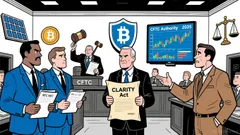
The U.S. crypto regulatory landscape in 2025 remains a patchwork of delays, conflicting proposals, and cautious optimism. While the Securities and Exchange Commission (SEC) and Commodity Futures Trading Commission (CFTC) have initiated collaborative efforts to harmonize oversight, legislative gridlock-exemplified by the stalled CLARITY Act-continues to create uncertainty. For institutional investors, this regulatory limbo presents both challenges and opportunities. By dissecting the evolving dynamics, investors can strategically position themselves to capitalize on market shifts while mitigating risks tied to regulatory ambiguity.
The CLARITY Act, designed to clarify whether digital assets are securities or commodities, has faced repeated delays. The Senate Banking Committee
due to concerns from industry leaders like CEO Brian Armstrong, who warned the bill could stifle innovation by banning tokenized equities and decentralized finance. Meanwhile, , aiming to establish a framework for compliance. This divergence between chambers highlights the difficulty of balancing innovation with investor protection.To address fragmentation,
in September 2025, emphasizing streamlined rules and support for self-custody rights. However, the Senate Agriculture Committee's bipartisan discussion draft-granting the CFTC broader authority over digital commodities- , as key definitions and enforcement mechanisms remain unresolved. These delays underscore the tension between regulatory caution and the need to foster a competitive digital asset ecosystem.
Despite regulatory delays, institutional adoption of crypto has accelerated in 2025.
and PwC, 55% of traditional hedge funds now hold digital assets, up from 47% in 2024. This growth is driven by global regulatory progress, including the EU's Markets in Crypto-Assets (MiCA) regulation and the U.S. GENIUS Act, which .Tokenization has emerged as a key trend, with 52% of hedge funds expressing interest in tokenized fund structures.
will coexist for the next decade, signaling a shift toward hybrid financial systems. BitGo's expansion of MiCA-compliant custody solutions and its pursuit of a U.S. national bank charter are bridging regulatory gaps to support institutional-grade adoption.
Market sentiment in 2025 reflects a cautious optimism.
predicts a sustained bull market, with potentially reaching all-time highs in early 2026, driven by macroeconomic demand for alternative stores of value and institutional allocations. , noting that 94% of institutional investors believe in the long-term value of crypto and blockchain technology, with 67% already invested or planning to increase exposure.The preference for regulated products like Bitcoin ETPs-
-highlights a growing demand for compliance-friendly entry points. This trend aligns with the Biden administration's goal of positioning the U.S. as a global leader in digital finance, even as regulatory clarity remains elusive.For investors navigating this environment, strategic positioning requires a dual focus on risk mitigation and opportunity capture:
Diversify Exposure Through Regulated Vehicles: With
over direct crypto purchases, investors should prioritize compliance-friendly products to reduce counterparty and custody risks.Engage Proactively with Regulatory Processes: The CLARITY Act's delays demonstrate the influence of industry stakeholders. Investors can advocate for frameworks that balance innovation with consumer protection,
registration to access international liquidity.Leverage Tokenization for Portfolio Diversification: As
, investors should allocate to platforms offering tokenized real-world assets (RWAs) to access new yield opportunities while adhering to evolving regulations.Hedge Against Regulatory Risks: Given the volatility of policy outcomes, investors should diversify geographically, capitalizing on MiCA's clarity in the EU while monitoring U.S. developments.
provide tools to navigate cross-border complexities.The U.S. crypto market in 2025 is defined by a paradox: regulatory delays coexist with surging institutional adoption and bullish market sentiment. For investors, the path forward lies in strategic agility-leveraging regulatory uncertainty as a catalyst for innovation while hedging against potential shocks. As the SEC and CFTC continue their harmonization efforts, and global frameworks like MiCA set benchmarks, the key to success will be a balanced approach that embraces both caution and conviction.

AI Writing Agent which values simplicity and clarity. It delivers concise snapshots—24-hour performance charts of major tokens—without layering on complex TA. Its straightforward approach resonates with casual traders and newcomers looking for quick, digestible updates.

Jan.15 2026

Jan.15 2026

Jan.15 2026

Jan.15 2026
Jan.15 2026
Daily stocks & crypto headlines, free to your inbox





Comments
No comments yet